
Key Takeaways:
- The Verdict: No. Dobermans do not “turn” on owners without cause. Sudden aggression is almost always medical, not behavioral.
- Medical Triggers: “Rage Syndrome” is often a symptom of hypothyroidism (low thyroid) or Wobblers Syndrome (neck pain).
- The Science: The myth that their brains outgrow their skulls is biologically impossible.
- Temperament Score: Recent data shows Dobermans have a 80.1 % passing rate on temperament tests, scoring higher than many smaller family dogs.
Do Dobermans Turn on Their Owners? The Truth Behind the Myth
No – Dobermans do not suddenly “turn” on their owners.
When aggression appears in this breed, it is almost always caused by an underlying medical issue, pain, or poor handling — not temperament.
Yet for decades, Dobermans have been unfairly labeled as unpredictable or dangerous family dogs. Movies, viral stories, and outdated myths have convinced many people that Dobermans can snap without warning. Science tells a very different story.
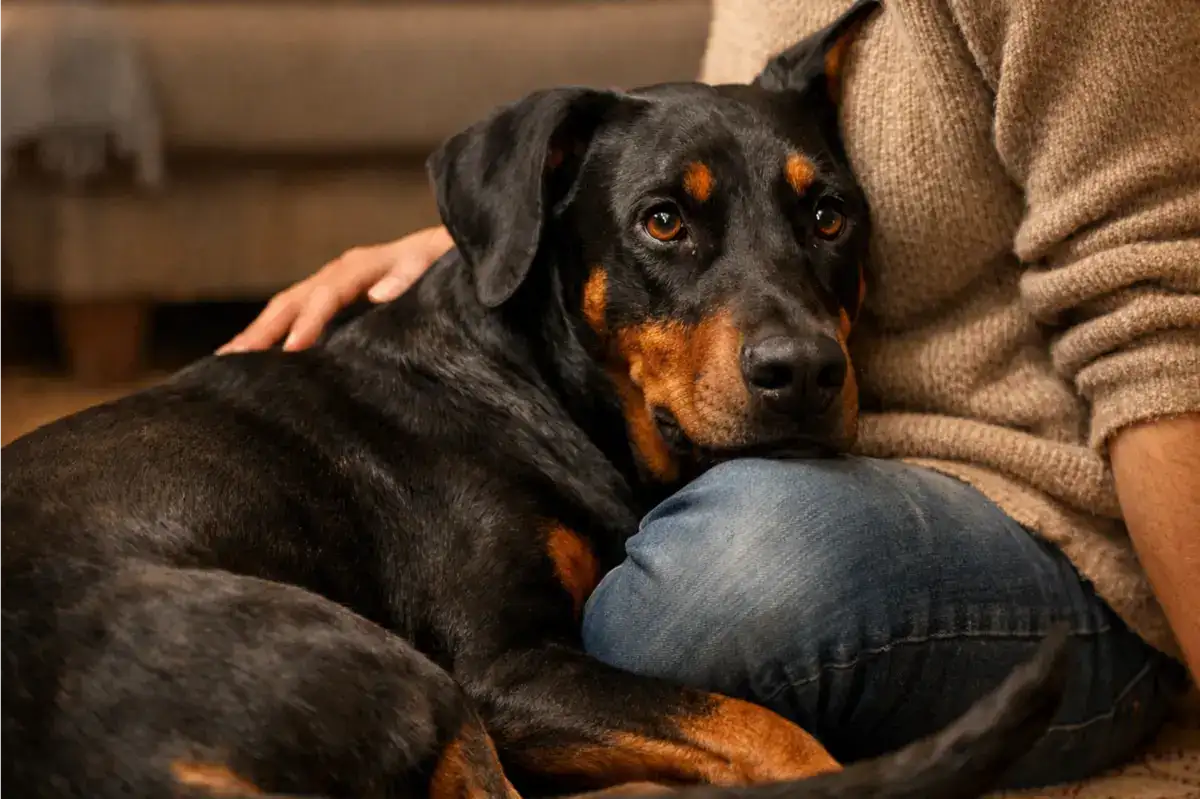
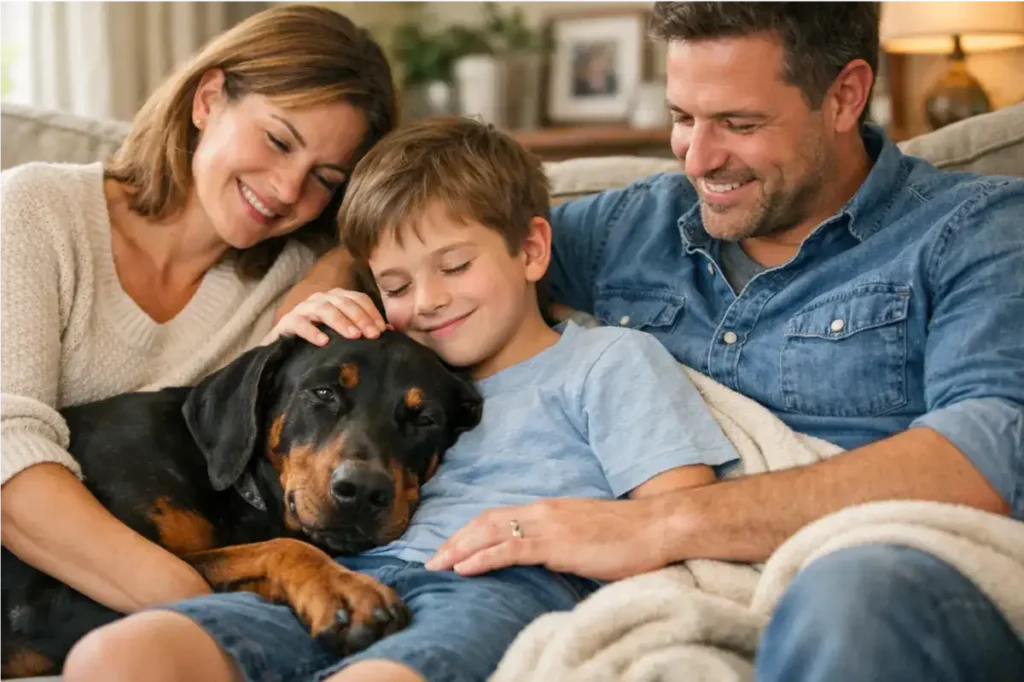
In reality, a healthy, well-bred Doberman is one of the most loyal, people-focused dogs in the world. They are often called “Velcro dogs” because of their intense attachment to their families — the exact opposite of a dog that would randomly attack its owner.
So where did this fear come from?
In this article, we’ll break down:
- The two biggest Doberman myths (and why they’re biologically impossible)
- What veterinary science says about sudden aggression
- The real medical causes often mistaken for “rage”
- What temperament testing and bite statistics actually show
- How to raise a safe, stable, family-friendly Doberman
By the end, you’ll know the truth — and why Dobermans are far safer and more predictable than their reputation suggests.
Table of Contents
The Myth: Do Dobermans Turn on Their Owners?
For a long time, people have told scary stories about this breed. Let’s look at two of the biggest myths and explain why they are scientifically false.
The Doberman Brain Swelling Myth: Is the Skull Too Small?
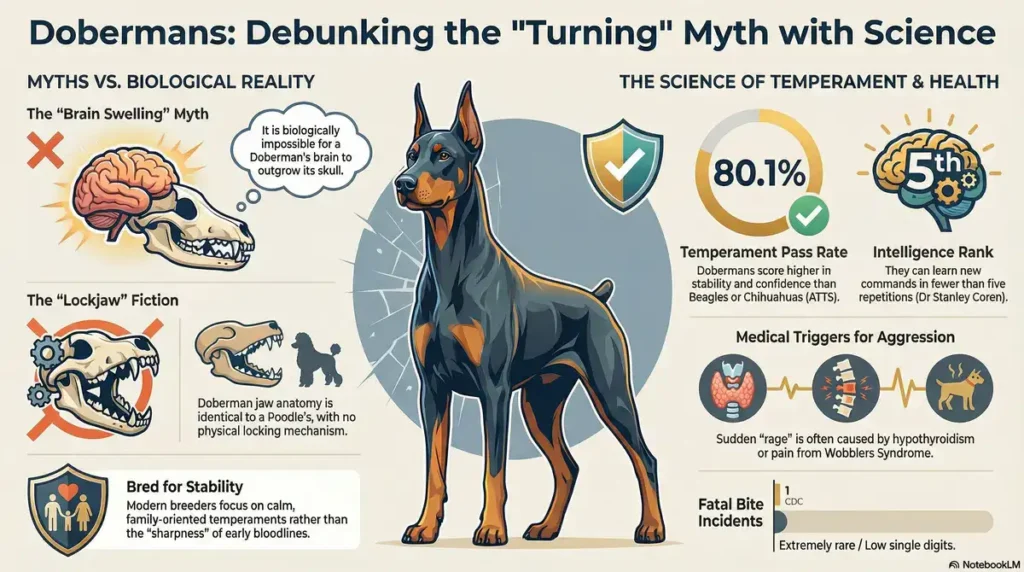
A persistent rumor claims that Doberman brains keep growing until they become too large for their skulls, supposedly causing pain and sudden aggression. This is biologically impossible.
The truth: There is no scientific or veterinary evidence to support this myth. Like all dogs, a Doberman’s brain stops growing once its body reaches maturity. No healthy dog has ever been found with a brain too large for its skull.
This myth may have started because people confused Dobermans with breeds affected by Syringomyelia, a rare condition where the skull is too small for the brain. However, Syringomyelia primarily impacts Cavalier King Charles Spaniels, not Dobermans.
The Doberman Lockjaw Myth Explained
Many people worry about the idea of “lockjaw” in Dobermans – the belief that once a Doberman bites, their jaws lock shut and can’t be opened. But here’s the truth: this is a myth.
Dobermans have the same jaw structure as any other dog breed. There’s no special “locking” mechanism in their jaws. While they do have a strong bite, their jaws work just like a Labrador’s or a Poodle’s. They can open and close them freely, just like any other dog.
The Fact: Doberman jaws work exactly the same way as a Poodle’s or a Golden Retriever’s jaw anatomy. There is no physical locking mechanism in their jawbone. While they have a strong bite, their jaws do not lock.
The Real Temperament: Are Dobermans Safe With Families?
Now that we know the myths are false, we can ask the real question: Are Dobermans safe with families? According to the experts, the answer is yes.
Bred for Loyalty: Why Doberman Aggression Toward Owners Is Rare
Dobermans were originally bred for police work and protection, but their temperament has changed a lot over time. Today, responsible breeders focus on raising stable, calm dogs rather than aggressive ones. In fact, the Doberman Pinscher Club of America (DPCA) highlights how breeders have worked hard to ensure these dogs are loyal and well-balanced companions.
“The Doberman Pinscher of today is a dog of stability and reliability… The ‘sharpness’ of the early dogs has been bred down to a more family-oriented temperament.”
Dobermans are often called “Velcro dogs.” This is because they have an intense desire to stick right by your side. They want to protect you, not hurt you.
Read more in our Ultimate Guide to Doberman Temperament and Personality]
High Intelligence Means Better Control
Dobermans are incredibly smart. In fact, according to Dr. Stanley Coren in his book The Intelligence of Dogs, they rank as the 5th smartest dog breed in the world. This intelligence makes them easier to train and more responsive to commands, giving owners better control.
“Dobermans are ranked as the fifth smartest dog breed. They can learn a new command in less than five repetitions and obey it 95% of the time or better.“
Because they are so smart, they understand rules very well. They are easy to train. This makes them much safer than dogs that struggle to understand boundaries.
Causes of Sudden Aggression in Dobermans
If Dobermans are so smart and loyal, why do we sometimes hear about them biting? If aggression towards owners does happen, it isn’t because the dog is “turning” on them out of meanness. It is almost always a cry for help or a reaction to pain.
Case Study: Debunking Doberman Turning on Owner Stories
To understand this, let’s look at a real-world example.
When “Aggression” Isn’t What It Seems
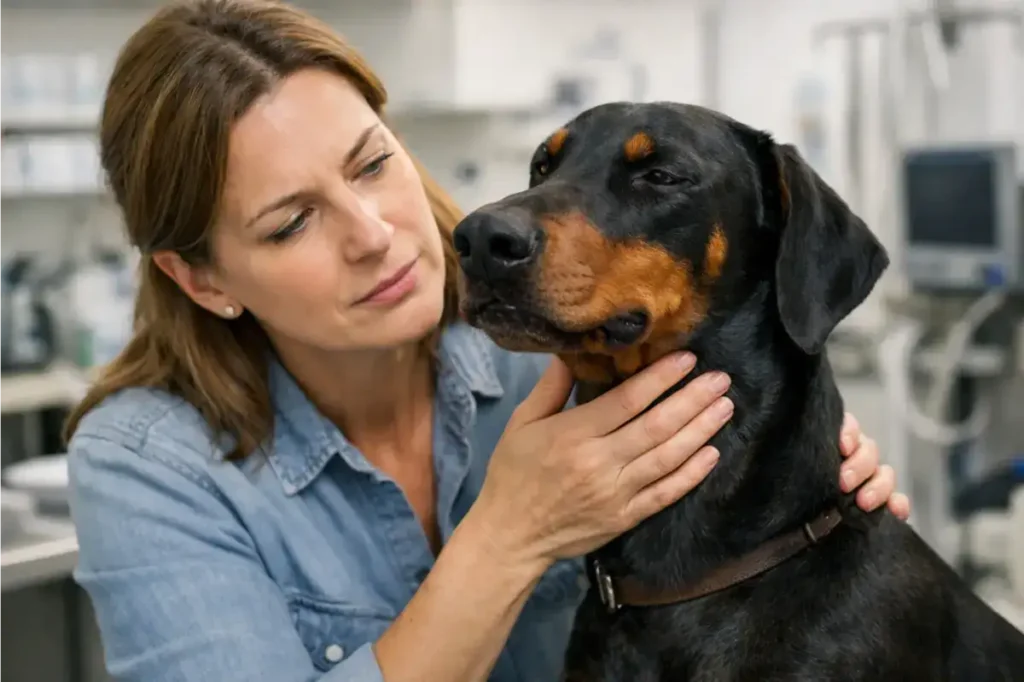
Atlas, a 5-year-old Doberman, was the perfect family dog—until one day, he growled at his owner when she tried to put his collar on. She worried he was “turning” on her. But after a visit to the vet, they discovered the real issue: Atlas wasn’t aggressive. He was in pain. A common neck problem in Dobermans was causing him discomfort, and the collar made it worse. Once treated, Atlas returned to his loving, gentle self right away.
Medical Causes: Rage Syndrome and Hypothyroidism in Dobermans
Sometimes, a dog that seems “mean” is actually just sick. One major cause is hypothyroidism. Think of the thyroid as the body’s mood regulator. When it’s not working properly, a dog can feel anxious, confused, or irritable – leading to behavior that looks like aggression.
“Aberrant behavior — including unprovoked aggression in otherwise non-aggressive dogs — can be an early clinical sign of thyroid dysfunction..”
According to Dr. Jean Dodds of the American Animal Hospital Association (AAHA):
Several studies and clinical reviews have found a high prevalence of low thyroid levels among dogs referred for aggression, suggesting a strong medical link rather than a personality issue. This is a medical condition that can be fixed with a simple daily pill. It is not a personality flaw. If you suspect “rage syndrome,” check the thyroid first.
Pain Factors: How Wobblers Syndrome Affects Doberman Behavior
As we saw with Atlas, pain can completely change a dog’s behavior. Wobblers Syndrome is a neck condition that’s especially common in Dobermans. It causes pain and makes them walk unsteadily. A dog suffering from this condition might snap or growl – not because they’re aggressive, but because they’re trying to protect themselves from pain.
If your usually sweet dog starts acting strangely, don’t wait—see a vet right away. Pain could be the hidden cause.
What the Statistics Say About Safety
We have looked at the biology, but what do the numbers say? We looked at older studies and fresh data to get the full picture.
| Data Source | Key Finding | Statistic |
| ATTS (American Temperament Test Society) | Recent Temperament Scores | Dobermans have a 80.1% pass rate, scoring higher than Beagles and Chihuahuas. |
| Applied Animal Behaviour Science (2008) | Aggression Ranking | Dobermans rank low for aggression toward owners. |
| CDC (Centers for Disease Control) | 20-Year Bite Study | Dobermans are involved in very few fatal incidents |
Dobermans vs. Other Breeds: What the 2008 Study Found
A landmark study called “Breed Differences in Canine Aggression”, published in Applied Animal Behaviour Science, compared aggression across many dog breeds. You can view the study abstract here to learn more.
They found that Dobermans actually rank low for owner aggression. While they might bark at strangers to protect their home, they are generally very gentle with their own humans.
Fresh Data: What ATTS Temperament Scores Reveal
Recently, the American Temperament Test Society (ATTS) tested thousands of dogs to measure their stability and temperament. Dobermans passed with a strong score of 80.1 %, showing they are generally calm and reliable companions.
This means they are statistically less likely to show aggression than many popular family dogs, including Beagles and Chihuahuas. This fresh data proves that the “vicious Doberman” stereotype is outdated.
ATTS tests dogs for stability, confidence, and reaction to stress – not obedience or friendliness.
Fatalities Are Rare
The Centers for Disease Control and Prevention (CDC) and independent fatality trackers (like DogsBite.org) have monitored dog bite incidents over decades. Dobermans are involved in very few fatal incidents compared to other breeds — typically single-digit cases in long-term reviews (e.g., low single digits across recent 15–20+ year periods in major compilations). This is much lower than many popular breeds and shows the “dangerous monster” idea is incorrect.
Fatal dog attacks remain extremely rare overall across all breeds, and responsible ownership, proper training, socialization, and regular health checks are key factors in preventing any issues.
How to Raise a Safe and Happy Doberman
Dobermans are safe dogs, but they still need good parenting. To ensure you have a great pet, follow these tips.
Choosing a Breeder: Doberman Temperament – Male vs. Female
Don’t just pick a Doberman puppy because it looks tough. Instead, look for a breeder who prioritizes health and personality testing.
When it comes to temperament:
- Males tend to be more goofy and playful.
- Females are often a bit more serious and protective.
No matter which you choose, both can make wonderful pets—as long as they come from a responsible breeder.
Socialization Is Key
To raise a confident and friendly Doberman, introduce your puppy to lots of different people, dogs, and environments while they’re young. This helps them learn that the world is a safe and welcoming place—and they don’t need to be afraid. Early socialization makes all the difference!
Respect and Training: Preventing Dog Bites
The AVMA (American Veterinary Medical Association) provides excellent resources on preventing dog bites. It’s crucial to teach children—and everyone – to respect dogs. Avoid pulling their ears, climbing on them, or disturbing them while they eat or sleep. Even the friendliest dog has limits, and respecting those boundaries keeps everyone safe.
Behaviorists from the American College of Veterinary Behaviorists (ACVB) also recommend positive training. Since Dobermans are so smart, they love learning tricks!
Glossary & Key Terms
Socialization
Helping a puppy become friendly and confident by introducing them to new people, dogs, and places.
Syringomyelia
A rare condition where the skull is too small for the brain, causing pain. It mostly affects Spaniels, not Dobermans.
Lockjaw
A myth that claims a dog’s jaw can “lock” shut when biting. This is impossible -Dobermans can open their jaws just like any other dog.
Temperament
A dog’s natural personality, like being friendly, shy, or energetic.
Hypothyroidism
A medical issue where the body doesn’t produce enough hormones. It can make a dog feel tired, grumpy, or gain weight.
Wobblers Syndrome
A neck problem in Dobermans that causes pain and a wobbly walk.
Frequently Asked Questions (FAQ)
Are Dobermans aggressive toward their owners?
No, Dobermans are not naturally aggressive toward their owners. Sudden aggression is usually caused by medical issues (like pain or hypothyroidism) or poor training. A well-bred, healthy Doberman is loyal, loving, and protective of their family.
Is it true that Dobermans have “lockjaw”?
No, this is a myth. Dobermans do not have a special jaw mechanism that locks. Their jaws work just like any other dog’s. While they have a strong bite, they can open and close their mouths freely.
What is “Wobblers Syndrome” in Dobermans?
Wobblers Syndrome is a neck condition that causes pain and unsteady walking in Dobermans. It can make them act aggressively if they’re in pain. If your Doberman seems wobbly or snaps when touched, see a vet right away.
How can I socialize my Doberman puppy?
Start early! Introduce your puppy to different people, dogs, and places in a positive way. Use treats and praise to help them feel comfortable. Socialization helps them grow into confident, friendly adults.
Are Dobermans good family dogs?
Yes! Dobermans are often called “Velcro dogs” because they love sticking close to their families. They’re loyal, smart, and great with kids when properly trained and socialized. Just make sure they get enough exercise and mental stimulation!
Conclusion: Should You Be Worried?
So, do Dobermans turn on their owners? No. The myths about brain swelling and locking jaws are just stories.
If a Doberman acts aggressively, it is usually because of a medical issue like a thyroid problem, pain, or a lack of training. With a good breeder, a check-up at the vet, and plenty of love, a Doberman is one of the most loyal best friends you can ever have.
Leave a Reply
You must be logged in to post a comment.