
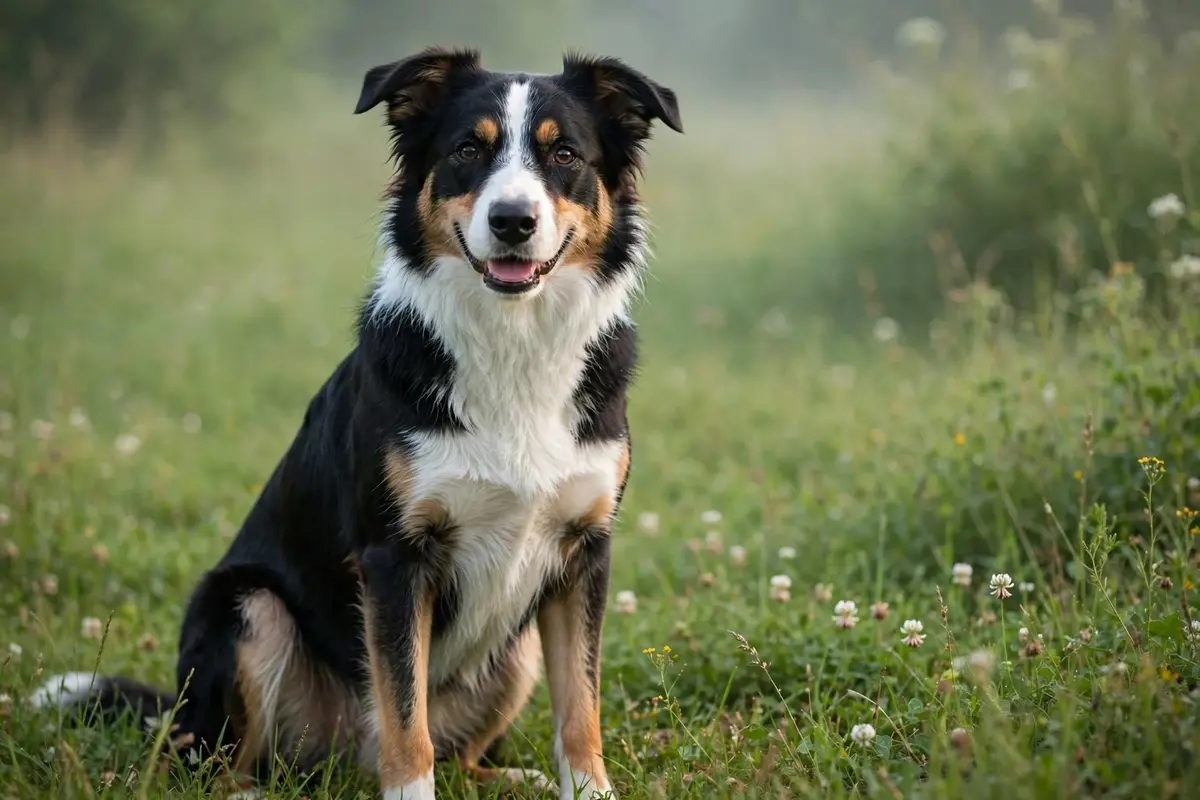
Border Jack: Border Collie Jack Russell Mix
A Border Jack is a cross between a Border Collie and a Jack Russell Terrier. This intelligent, energetic mix may inherit the Border Collie’s herding instincts and the Jack Russell’s strong prey drive and independent nature. Border Jacks can make active, engaging companions, but their size, temperament, coat and exercise needs vary from dog to dog. This guide covers what to expect, including training, grooming, health, lifespan and whether a Border Jack could suit your home.
Border Jack Quick Facts
- ✅ Intelligent and alert — may inherit the Border Collie’s learning ability and the Jack Russell’s quick responses
- ✅ Compact to medium-sized — generally smaller than a typical Border Collie, though size varies
- ✅ Can be affectionate and loyal — individual temperament and socialisation matter
- ✅ May make an alert watchdog — barking tendencies vary
- ❌ Often energetic — needs regular exercise, enrichment and rest
- ❌ May be independent — consistent, reward-based training is important
- ❌ May suit active, first-time owners who are prepared — experience, time and training commitment matter
- ❌ May chase or react to other animals — early, positive socialisation and ongoing management can help

Border Jack Quick Facts Table
| Parent Breeds | Border Collie & Jack Russell Terrier |
| Other Names | Border Jack Russell, Jack Collie |
| Size | Medium; roughly 15–20 inches tall (estimate) |
| Weight | Approximately 22–35 pounds (estimate) |
| Lifespan | 12–15 years (estimate) |
| Coat | Short to medium; varies |
| Energy Level | Often high; individual needs vary |
| Best For | Active homes prepared for an energetic, individual dog |
Table of Contents
What Is a Border Jack?
The Border Jack is a cross between a Border Collie and a Jack Russell Terrier. Neither parent was bred to be a lapdog, and this mix shows it.
Physically, Border Jacks tend to fall somewhere between both parents. They may be smaller and stockier than a typical Border Collie but leggier and more athletic than a standard Jack Russell.
What Does a Border Jack Look Like?
There is no standardized Border Jack appearance. Ears may be floppy like a Border Collie’s or semi-erect like a terrier’s. Coat colors vary — black and white, tan and white, tricolor, and brindle may all occur. Coat length ranges from short (more like a Jack Russell) to medium with feathering (more like a Border Collie). Some have a smooth, dense terrier-type coat; others carry a thicker double coat with heavier shedding.
The Border Collie side traces back to the Anglo-Scottish borderlands, where the breed was refined over centuries for herding sheep with silent intensity. The Jack Russell side comes from 19th-century England, bred by Reverend John Russell for fox hunting — compact, fearless, and endlessly persistent. Together, those lineages can produce a dog with strong working instincts and a mind of its own.
Border Jack Temperament
The Border Jack temperament can combine intelligence, energy, and independence. You’re bringing together the Border Collie’s intensity with the Jack Russell’s terrier drive. That’s a lot of dog in a medium-sized body.
Border Jacks are usually clever and pick up patterns quickly. But unlike a Border Collie, which is often highly responsive to training, a Border Jack may also show terrier independence: “I know what you’re asking. I’ll decide if I want to do it.”
Many are affectionate with their people. Some may be very people-focused and follow their owners from room to room. Some may be alert and vocal, though how much a given dog barks varies.
Around strangers and other animals, the Border Jack can be wary. The herding instinct from the Collie side may drive them to chase, while the terrier instinct adds a layer of “small animal = prey.” That’s why early socialization is important for this mix.
Exercise Needs
Border Jacks are generally active dogs that need regular physical exercise and mental stimulation. There’s no fixed daily requirement that works for every Border Jack. The right amount depends on the dog’s age, health, fitness, temperament, and inherited working drive.
Many Border Jacks enjoy brisk walks, fetch, scent games, hiking and dog sports. Aim for a mix of physical activity, training, sniffing time, and rest.
Pay attention to how your dog responds. Restlessness or destructive behaviour may mean the dog’s physical, mental or social needs aren’t being met, but these behaviours can also have other causes. Build exercise gradually, especially for puppies and dogs not used to vigorous activity.
- High-intensity cardio — running, fetch, frisbee, swimming
- Mental stimulation — puzzle toys, nose work, obedience drills
- Structured play — agility, flyball, or treibball
- Walks and hikes — adjust duration and intensity to your dog’s age, fitness and health, with time for sniffing and exploration.
Border Jacks may enjoy dog sports such as agility, flyball, or scent-based activities. However, not every dog will enjoy or need the same level of intensity. If you’re considering this mix, read our Border Collie energy-level guide to understand some of the activity needs that may be inherited.
Training
Training a Border Jack may require patience, consistency and flexibility. The Border Collie parent is known for its trainability, while the Jack Russell Terrier brings an independent terrier background. Individual dogs can inherit different combinations of these traits.
Reward-based training is a good starting point. Use treats, toys, praise, or other rewards your dog enjoys to encourage desired behaviours. Keep sessions positive and adjust your approach to your dog’s confidence, motivation, and attention span. Avoid harsh or intimidating methods, which can create stress and make learning harder for some dogs.
Keep training sessions short and varied, especially if your dog loses interest in repetitive exercises. Practise useful skills such as “leave it,” “wait,” and recall in safe, controlled settings. Because some Border Jacks may have a strong chase instinct, don’t rely on recall alone to keep your dog safe around roads or wildlife.
Impulse control is especially useful for a dog that may be tempted to chase. Practise these skills in safe, controlled settings, and use a lead or secure area whenever needed. Even a well-trained dog may not reliably ignore wildlife or other distractions.
For more structured training approaches, check out our Border Collie obedience training guide — the brain-first approach works well here too.
Health and Lifespan
The Border Jack has a typical lifespan of 12 to 15 years. The Border Jack may inherit health conditions associated with either parent breed. Although crossbreeding can increase genetic diversity, it does not guarantee a healthier dog or eliminate inherited disease.
The Border Collie and Jack Russell Terrier have different health risks, and some conditions may overlap. A puppy’s health depends on several factors, including parental genetics, responsible breeding, appropriate health screening, and ongoing veterinary care.
The conditions below are associated with one or both parent breeds, but reliable data on their frequency in Border Jacks specifically is limited. This list is not a prediction that your dog will develop these conditions. A veterinarian can help you decide which health checks are appropriate based on your dog’s history, symptoms, and parentage.
Here are some conditions to be aware of:
- Patellar luxation — a trick knee that slips out of place, common in small terriers. Mild cases can be managed; severe cases may need surgery.
- Deafness — congenital deafness is known in both parent breeds, especially in dogs with lots of white on their heads.
- Eye issues — progressive retinal atrophy (PRA), Collie eye anomaly (CEA), and glaucoma can affect one or both parent breeds. A veterinarian can advise on eye screening based on the dog’s parentage and health history.
- Hip dysplasia — less common than in larger breeds but still possible. Keep your dog lean to reduce joint stress.
- Epilepsy — seizure disorders can occur in both Border Collies and Jack Russells.
- Legg-Calvé-Perthes disease — a condition where the thighbone’s blood supply is disrupted, causing degeneration of the hip joint. Seen more in small breeds.
Regular vet checkups, a high-quality diet, and maintaining a healthy weight go a long way. If you’re considering a Border Jack puppy, ask for documented health-screening results for both parents. A veterinarian can also advise which preventive checks are appropriate for your individual dog.
Grooming
Most Border Jacks have short to medium coats that don’t require professional grooming, though coat type varies with the parents. Weekly brushing with a rubber curry brush or soft slicker removes loose hair and keeps their coat shiny.
Shedding levels vary with the coat. Many shed moderately year-round with heavier seasonal blows; short-coated dogs are often easier to maintain than those with a longer Border Collie-type coat.
- Bathe when needed, based on coat and lifestyle. Frequent unnecessary bathing may dry or irritate some dogs’ skin.
- Ears — check weekly for wax, debris, or redness. Clean with a vet-approved ear cleaner.
- Nails — trim every 3 to 4 weeks. Active dogs on pavement may wear them naturally.
- Teeth — brush several times a week with dog-safe toothpaste.
Border Jack Puppies: What to Ask a Breeder
If you’re considering a Border Jack puppy, ask the breeder for documented health-testing results for both parents. Recommended screening depends on each parent’s breed-specific risks and should be discussed with a veterinarian or responsible breeder — for example, eye and hip screening, DNA tests relevant to the parent lines, and hearing testing where there is a known risk of congenital deafness.
- Ask to meet the parents, if possible, and observe their energy levels and behavior.
- Ask how the puppies are socialized before they go home.
- Check that puppies have had veterinary checks and age-appropriate vaccinations.
- Ask the breeder about the litter’s energy levels, temperament, and any health concerns.
Rescue and adoption are also options. Check breed-specific rescues for Border Collies and Jack Russell Terriers.

Is a Border Jack Right for You?
This mix can be a good companion for the right owner, but it requires a real commitment of time and energy. Let’s break it down honestly.
A Border Jack Could Be a Good Fit If…
- You’re an experienced dog owner who has handled high-energy or stubborn breeds before
- You can commit to substantial daily exercise, rain or shine
- You have a fenced yard (a secure one — these dogs can jump and dig)
- You’re interested in dog sports like agility, flyball, or barn hunt
- You want a compact, athletic dog who can join you on hikes and runs
- You have the patience for consistent, positive-reinforcement training
- You’re prepared for a Velcro dog who wants to be with you constantly
A Border Jack Might Not Be Right If…
- You have limited time for exercise, training, enrichment, or learning how to manage an active dog
- You work long hours or travel often
- You cannot provide enough daily activity, enrichment, training, and suitable outdoor access, regardless of whether you live in a house or apartment
- You want a calm, low-energy dog who will lounge around
- You have small pets like rabbits, guinea pigs, or cats you can’t separate
- You’re not prepared for stubbornness during training
- You can’t handle regular barking and alertness
Border Jack vs. Other Border Collie Mixes
This is a general comparison of what each cross may be like, based on parent-breed tendencies — not a guarantee for any individual dog.
| Trait | Border Jack | Borador | Border Heeler |
|---|---|---|---|
| Parent breeds | Border Collie × Jack Russell Terrier | Border Collie × Labrador Retriever | Border Collie × Australian Cattle Dog |
| Size | Roughly 22–35 lb (estimate) | Varies; often medium to large | Varies; often medium-sized |
| Energy | May be high to very high | Often active; varies | May be high to very high |
| Temperament | Intelligent, alert; may be independent | May be sociable and energetic | May be alert, active, and persistent |
| Trainability | Varies; reward-based training can help | Varies by individual | Varies by individual |
| With children | Supervision and training are important | Supervision and training are important | Supervision and training are important |
| With other pets | Prey drive or chasing may be a concern | Introductions and socialisation matter | Herding or chasing behaviours may occur |
| Best suited to | Homes prepared for an active, individual dog | Homes prepared for an active dog | Homes prepared for an active, working-type dog |
These are general parent-breed-informed comparisons, not guarantees. Individual dogs can differ considerably, even within the same cross.
Each Border Collie mix can inherit a different combination of traits from its parents. A Borador may be sociable and active, while a Border Heeler may show strong herding instincts. A Border Jack may be compact and energetic, but its temperament and needs depend on the individual dog. Meet the dog, learn about its parents, and consider its behaviour and activity level rather than choosing a mix based on breed labels alone.
Frequently Asked Questions
How big does a Border Jack get?
Most Border Jacks stand 15 to 20 inches tall at the shoulder and weigh between 22 and 35 pounds. Females tend toward the smaller end, males toward the larger end. Their build is athletic and lean, not bulky.
Are Border Jacks good with children?
Border Jacks can be affectionate family companions, but their suitability depends on the individual dog’s temperament, training, and experience around children. Some may chase or herd running children, and any dog may react if frightened or handled roughly. Supervise interactions, teach children to respect a dog’s space, and provide a safe place where the dog can rest undisturbed.
How much exercise does a Border Jack need?
Border Jack exercise needs vary. Some may need substantial daily exercise, while others are more moderate. Build up gradually and watch your individual dog’s response. Mental stimulation — training, puzzle toys, nose work — matters as much as physical activity.
Do Border Jacks shed a lot?
Shedding varies with coat type and the individual dog. Some Border Jacks may shed moderately throughout the year, with heavier seasonal shedding. Weekly brushing is a useful starting point, but dogs with longer or denser coats may need more frequent grooming.
Are Border Jacks easy to train?
Many may learn quickly, but independence and motivation can vary. Patient, reward-based training is a useful approach. If you’ve trained a terrier before, you’ll have some idea of what to expect.
Do Border Jacks get along with other dogs?
It varies. Some are social and playful, especially if raised with other dogs from puppyhood. Others may be selective or reactive around other dogs; introductions and management should be tailored to the individual. Careful introductions and managing multi-pet households are a must.
How long do Border Jacks live?
A rough estimate is 12 to 15 years, though there is no well-established breed-specific average for this cross. A quality diet, regular exercise, preventative vet care, and maintaining a healthy weight all contribute to longevity.
Are Border Jacks good family dogs?
Border Jacks can be affectionate family companions, but their suitability depends on the individual dog’s temperament, training, and exercise needs. Some may chase or herd children, so supervision and teaching children how to interact safely with dogs are important.
Can a Border Jack live in an apartment?
Some Border Jacks may adapt to apartment living if their exercise, enrichment, training, and rest needs are met. A garden can be useful, but it does not replace walks, training, or mental stimulation. Consider barking, access to outdoor space, and your daily schedule before choosing this mix.
Are Border Jacks hypoallergenic?
No. Border Jacks are not considered hypoallergenic. Both parent breeds shed, although the amount varies with coat type and the individual dog. No dog is completely allergen-free.
Can a Border Jack be left alone?
Tolerance for alone time varies. Some may be fine for reasonable periods with appropriate exercise and enrichment beforehand. Others may develop separation-related behaviors. Puppies need gradual training to build comfort with alone time. Don’t treat distress as disobedience.
Glossary
- Patellar Luxation — A condition where the kneecap (patella) slips out of its normal groove, causing lameness or an unusual skipping gait. Common in small and medium breeds.
- BAER Test — Brainstem Auditory Evoked Response test. A hearing screening used to detect congenital deafness in puppies, especially important in breeds with white coat patterns.
- Hybrid Vigor — The potential genetic advantage that mixed-breed dogs may have over purebreds, though crossbreeding does not guarantee a healthier dog or eliminate inherited disease.
- Progressive Retinal Atrophy (PRA) — A degenerative eye disorder that gradually causes vision loss and can lead to blindness. Both Border Collies and Jack Russells can carry the gene.
- Prey Drive — A dog’s natural instinct to chase, catch, and sometimes kill small animals. The Border Jack may inherit this from either parent breed, though expression varies.
Sources
- AKC — Border Collie breed information
- AKC — Jack Russell Terrier breed information
- PetMD — Patellar luxation in dogs
- PetMD — Progressive retinal atrophy in dogs
- VCA Animal Hospitals — Deafness in dogs
- Orthopedic Foundation for Animals — Canine Hip Dysplasia
- Orthopedic Foundation for Animals — Patellar Luxation
Medical Disclaimer: This article is for informational and educational purposes only and does not constitute veterinary advice. Every dog is an individual, and health conditions, temperaments, and care needs can vary widely. Always consult a licensed veterinarian for any health concerns or before making decisions about your dog’s diet, exercise, or medical treatment. The sources listed above provide additional evidence-based information.
Leave a Reply
You must be logged in to post a comment.