

Border Collie Mixes Compared
Fourteen Border Collie mixes have full guides on this site. The Labrador and Golden Retriever crosses may be an easier starting point for active families. The Great Pyrenees and Rottweiler crosses suit people comfortable handling a large, independent dog. All fourteen may inherit herding instinct, high energy, and quick learning. None is a breed, so no two litters look or act the same.
How the numbers work here. No registry sets a size, coat, or temperament standard for any of these crosses, and no large study tracks them. Every weight and lifespan on this page describes a parent breed. None of it predicts what an individual puppy will grow into. Where the page describes the mix, it says may or sometimes, because that is the honest limit of what anyone knows.
Table of Contents
Which Border Collie Mix Is Right for You?
Start with your situation rather than a breed name. Each cross below has its own guide, and our Border Collie breed guide covers the purebred Border Collie.
- You want a retriever-influenced mix: consider a Borador (Border Collie Lab mix) or a Coltriever (Golden Retriever cross). Both may inherit the friendly, people-focused traits of their retriever parent, alongside Border Collie working instincts.
- You want a dog with a serious engine: a Border Aussie, Border Heeler or Border Husky. All three pair two working breeds.
- You are in a small home with limited outdoor space: a Borgi, a Border Jack or a Border Beagle may fit the space more easily. A smaller body does not mean a smaller need for daily activity, so read those guides before deciding.
- You have cats, rabbits, or chickens: look closely at the individual dog before choosing a Border Jack, Border Husky, or Border Aussie. Chasing is hard to train out completely, and managing it may be a lifelong job.
- You have a fenced acre and want a big dog: a Border Pyrenees or a Rottie Collie. Both need prior experience with a large guarding breed.
- You have never trained a dog: research the individual parents carefully. A retriever influence may appeal, but no cross is guaranteed to be easy for a first-time owner.
All 14 Border Collie Mixes at a Glance
The Border Collie parent is 30 to 55 pounds and lives 12 to 15 years, so it appears once here rather than in every row. The table shows the other parent’s published weight and life-expectancy ranges. Each cross has its own guide, linked in the table below.
| Mix | Other parent’s weight | Other parent’s life expectancy | Possible coat | Main consideration |
|---|---|---|---|---|
| Borador | Labrador Retriever, 55–80 lb | 11–13 yr | Short to medium double | Needs more than routine walks |
| Coltriever | Golden Retriever, 55–75 lb | 10–12 yr | Medium to long, feathered | Grooming and shedding |
| Border Aussie | Australian Shepherd, 40–65 lb | 12–15 yr | Medium double | Two herding parents |
| Border Heeler | Australian Cattle Dog, 35–50 lb | 12–16 yr | Short double | Nips and chases when bored |
| Shollie | German Shepherd, 50–90 lb | 12–14 yr | Medium to long double | Size and wariness of strangers |
| Boxollie | Boxer, 50–80 lb | 10–12 yr | Short and close-lying | Heat sensitivity and short muzzle |
| Bordoodle | Standard Poodle, 40–70 lb | 10–18 yr | Wavy to curly | The coat is a lottery |
| Borgi | Pembroke Welsh Corgi, up to 30 lb | 12–13 yr | Medium double | Back and joints |
| Border Beagle | Beagle, under 20 lb or 20–30 lb | 10–15 yr | Short to medium | The nose beats recall |
| Border Jack | Jack Russell Terrier, 13–17 lb | 13–15 yr | Short to rough | Prey drive and digging |
| Rottie Collie | Rottweiler, 80–135 lb | 9–10 yr | Short to medium double | Strength and guarding |
| Border Pyrenees | Great Pyrenees, 85 lb and up | 10–12 yr | Heavy double | Barking, roaming, giant size |
| Bodacion | Dalmatian, 45–70 lb | 11–13 yr | Short, dense | Very high exercise needs |
| Border Husky | Siberian Husky, 35–60 lb | 12–14 yr | Thick double | Recall and fencing |
These are parent-breed ranges, not predicted weights for the crosses. Three notes. Beagles come in two sizes: under 20 pounds at 13 inches and under, and 20 to 30 pounds at 13 to 15 inches. Boxer figures cover both sexes, with females about 15 pounds lighter than males. Where a registry publishes separate weights for males and females, the table combines both ranges. The Jack Russell Terrier figure comes from VCA Animal Hospitals. The AKC recognised the Parson Russell Terrier in 1997 and the Russell Terrier in 2012, and registers neither under the name Jack Russell Terrier.
Coat descriptions are possibilities drawn from the parent breeds. Puppies from one litter can differ in coat length, texture, and shedding. For the Border Collie half in full, see our guide to Border Collie size.
The Retriever Crosses: Borador and Coltriever
These two are what most people picture when they hear “Border Collie mix”. The AKC describes the Labrador as outgoing and eager to please, and the Golden as friendly and devoted. Those traits may make these crosses easier for active households. Individual puppies can inherit very different mixes of them.
The Borador may inherit the Labrador’s eagerness to please, which can make training more forgiving than with a pure Border Collie. You still get the herding half, so a Borador often needs a job with a name. A bored one invents its own.
The Coltriever may inherit the Golden Retriever’s friendly, people-focused nature and a longer coat. The Golden parent often brings feathering on the legs and tail, and a Coltriever may need regular brushing if that coat comes through. Choose between these two on the individual dog and your tolerance for grooming, not on an assumption that one will be easier.
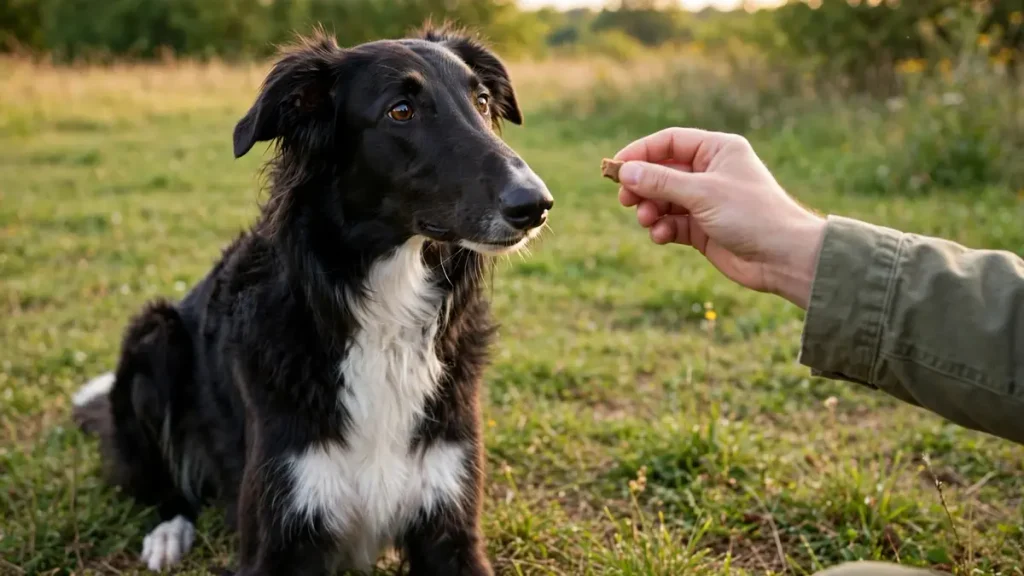
The Herding and Boxer Crosses: Border Aussie, Border Heeler, Shollie and Boxollie
Three of these crosses pair the Border Collie with another herding breed. The Boxollie adds a different kind of working dog, the Boxer. All four can be active, capable dogs, but their needs and natures vary.
The Border Aussie adds an Australian Shepherd, another herding breed with strong drive. Two herding parents can mean a dog that wants a sport rather than a walk. If you have never tried agility, flyball, or a herding lesson, budget for one. Our comparison of Border Collies and Border Aussies goes through the drive question.
The Border Heeler pairs the Border Collie with an Australian Cattle Dog, the breed that moves cattle by nipping at their heels. A Border Heeler may inherit the tendency to chase or nip at the heels of moving children and cyclists. Teach a replacement behaviour early, because heel-nipping is easier to prevent than to stop.
The Shollie brings in a German Shepherd, so you get a large, capable dog that may bond closely with familiar people. Some Shollies are wary of new people, and some are not. Decide whether you want a dog with a guarding edge before you meet one.
The Boxollie is the odd one in this group. A Boxer is playful, people-focused, and slow to grow up, which may give a Boxollie a playful, people-focused side. The AKC warns that Boxers have little tolerance for extreme heat or cold, so plan exercise around the weather rather than your schedule.
The Guardian Crosses: Rottie Collie and Border Pyrenees
Both are big, and both bring a breed that was kept to guard. That is a different job from herding, and it changes who should own one.
The Rottie Collie combines a large guardian breed, with Rottweilers weighing around 80 to 135 pounds, and a herding dog. Both parents are smart and both are strong. A Rottweiler parent may add wariness of strangers and a guarding instinct. Early socialization and reward-based training carry more weight here than on any other cross on this page.
The Border Pyrenees is one of the largest crosses here, because a Great Pyrenees male is 100 pounds or more. The breed was kept with livestock and bred to make decisions without a person. You may get a calm dog with a stubborn streak rather than an obedient one. A Great Pyrenees may bark to alert its family to unfamiliar sights and sounds, so be ready to manage noise.
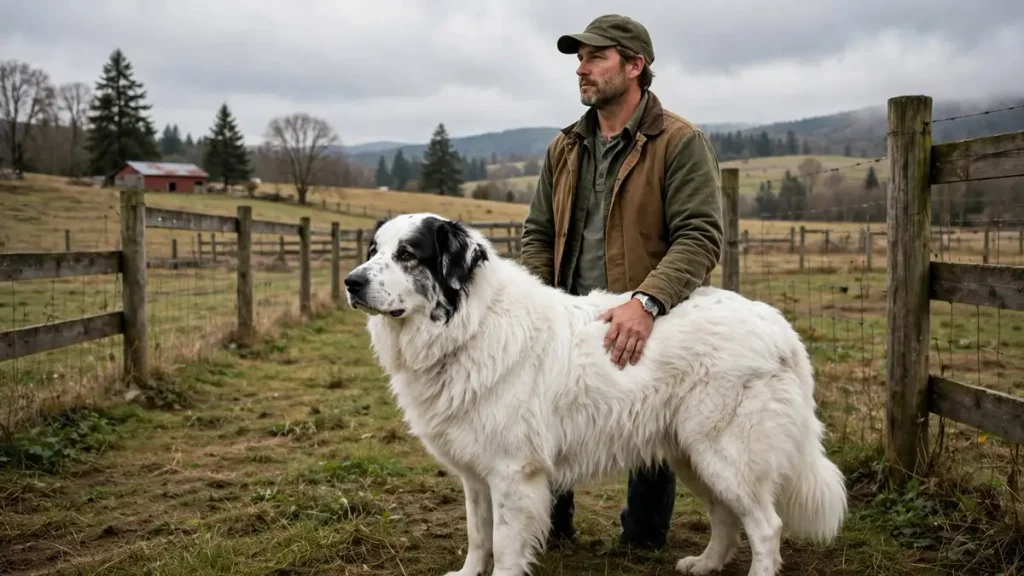
The Hound, Corgi and Terrier Crosses: Border Beagle, Borgi and Border Jack
Three crosses combine the Border Collie’s working instincts with smaller parent breeds. Do not read smaller as easier. Recall deserves attention with all three, especially the Border Beagle and Border Jack, whose scent and terrier instincts can compete with a handler’s instructions.
The Border Beagle adds a scent hound that follows its nose past every distraction. A Beagle parent can weigh under 20 pounds or up to 30, so size varies a lot. The Beagle’s scent instincts can make recall hard, even in a cross that also inherits Border Collie trainability. A secure fence is worth more than a perfect recall.
The Borgi may be the shortest of the fourteen if it inherits the Corgi build. Pembroke Welsh Corgis stand about 10 to 12 inches at the shoulder. Short legs do not mean a short walk. A Borgi still has the Border Collie’s working drive, so you swap distance for training games. Their build is the one to watch. Pembroke Welsh Corgis are among the breeds predisposed to chondrodystrophy and the disc disease that can follow. A genetic variant can raise the risk of early disc degeneration, and the Cornell Riney Canine Health Center explains how it works. Keep the dog at a healthy weight and cut unnecessary jumping, especially on and off furniture.
The Border Jack has one of the smallest parents on this page, a Jack Russell Terrier listed at 13 to 17 pounds by VCA. That terrier was bred to go to ground after rats and foxes, so a Border Jack may have two reasons to chase anything that runs. It needs a fence, a lead in open space, and an owner who finds that manageable rather than alarming.
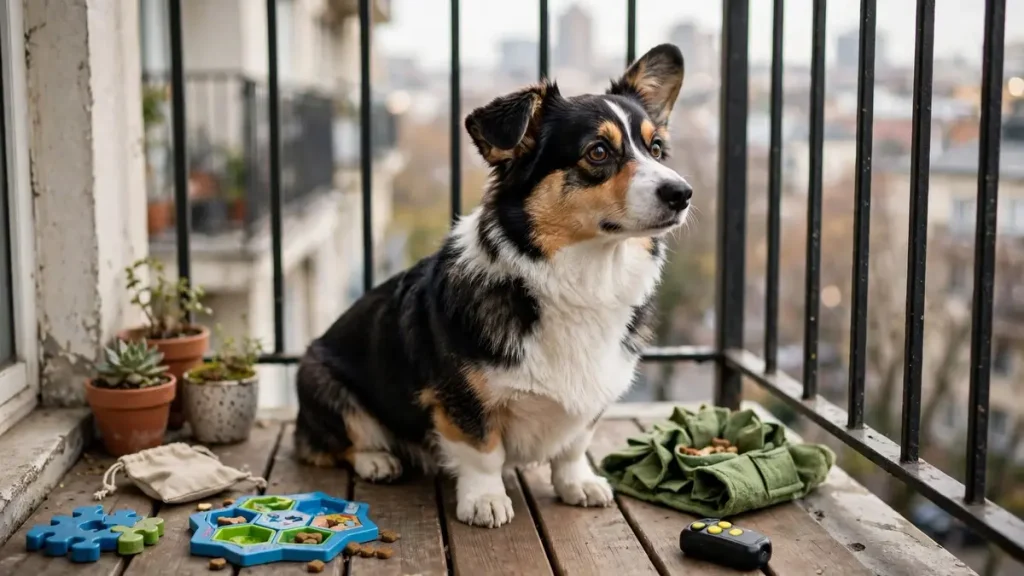
The Coated and Spotted Outliers: Bordoodle and Bodacion
Two crosses sit outside the pattern, one on coat and one on stamina.
The Bordoodle is the only cross here with a Poodle parent, and it may shed less if it inherits a Poodle-like coat. Doodle breeders sometimes advertise these dogs as hypoallergenic. That claim is unreliable in a first cross, because a litter can produce any coat type and every dog produces allergens. Meet the puppy’s parents before you count on a low-shed coat, and budget for clipping if the Poodle coat comes through.
The Bodacion adds a Dalmatian, a breed historically used to run alongside horse-drawn carriages. A Bodacion may inherit the Dalmatian’s strong endurance, and it is one of the crosses this site most often recommends for experienced owners. Read that guide before you fall for the spots.
The Sled-Dog Cross: Border Husky
The Border Husky earns its own heading because it brings a different working instinct. A Siberian Husky was developed to work in packs, pulling loads over long distances. The AKC notes the breed’s strong desire to run and recommends keeping one on a lead or in a securely fenced area. A Border Husky may inherit that drive, so never assume recall alone makes off-leash exercise safe.
What to Plan for With a Border Collie Mix
Four things are worth planning for, and they matter more than which cross you pick.
A job. Border Collies were bred to control the movement of other animals. A mix may stare at passing cars, chase bicycles, or try to herd running children and other pets. These behaviours may come from herding or chase instincts rather than aggression, though the cause depends on the individual dog. Training and suitable outlets can redirect them, and supervision still matters. Give your dog something appropriate to do: a sport, a scent game, or a training session with a goal.
Mental work, not just mileage. These dogs solve problems for a living. A tired Border Collie mix is often a mentally tired one. Ten minutes of teaching a new trick adds mental work alongside the daily walks. Our guide to Border Collie intelligence explains why.
An off-switch you teach. A working dog does not arrive knowing how to rest. Most need practice at settling, which means rewarding calm before the dog is exhausted.
A plan for the voice. Herding dogs bark to move stock and to warn. Some of these crosses are quiet, and some are not. Expect to manage noise as well as train against it. Our guide to Border Collie barking covers what is normal.
On exercise, no published daily requirement exists for any of these crosses. Rather than give one mix an hour and another two, build a routine around the dog’s age, health, fitness and inherited traits. Most do well with walks, some running or play, sniffing time, and short training sessions. Puppies, seniors, and dogs with health conditions need a plan suited to their stage of life. Our Border Collie exercise guide has the details.
Size and Lifespan of Border Collie Mixes
Adult size is hard to predict from parent weights alone. The figures in the table are parent-breed reference ranges, not predicted weights for the mixes. A puppy may take after either parent, and dogs from one litter can grow differently. Ask about both parents’ adult size, and about older dogs from the same lines.
There is no published average lifespan for any of these fourteen crosses. Parent life expectancy is useful background, but it cannot tell you how long an individual mix will live. Size, inherited health, and the care a dog gets all play a part.
Border Collie Mix Coat Types and Grooming
Many of these mixes may inherit a double coat, especially when both parents have one. Border Collies come in rough and smooth coats, and both are dense. The other parent’s coat shapes the puppy’s length, texture, and shedding. Double-coated dogs often shed more during seasonal coat changes, though the timing and the amount vary. Weekly brushing is a fair starting point for most medium coats, with more when the coat is shedding or tangling. The Boxer parent may bring a shorter, close-lying coat. The Poodle parent may bring one that grows and needs clipping. Neither is guaranteed.
Coat colour depends on the parents, with one pattern worth asking about. Merle can appear in Border Collies, and a merle-to-merle pairing risks deafness and eye problems in the puppies. The AKC explains the genetics, and our Border Collie colour guide shows the patterns.
Border Collie Mix Health Screening
A cross is not automatically healthier than a purebred. A Border Collie mix can pick up a condition linked to either parent, so the questions you ask should cover both.
On the herding side, the AKC lists hip evaluation and an ophthalmologist exam as the recommended tests for a Border Collie. The Border Collie Foundation keeps a fuller list of known genetic diseases, including collie eye anomaly. MDR1 drug sensitivity is on that list too, with an estimated incidence under 0.5%. A dog carrying one copy can still react to some medicines, though reactions are usually milder than in a dog with two. Ask about testing, and tell your vet the result before any prescription.
On the other side, the list changes with the breed. Corgi crosses bring the disc question, and the OFA runs a CDDY and IVDD test. For a Boxer parent, ask about screening for Boxer cardiomyopathy, including Holter monitoring. The American Boxer Club recommends it from 12 months of age and annually for dogs in a breeding programme. A Holter records the heart’s electrical activity during normal daily life and can pick up abnormal rhythms a routine exam misses. A Rottweiler parent adds more again. Ask about hip and elbow evaluation, a cardiac exam and an eye exam. There is also a DNA test for juvenile laryngeal paralysis and polyneuropathy. Dalmatian crosses bring a uric acid question, because some Dalmatians pass too much uric acid and form urate bladder stones.
Whatever the cross, ask for the parents’ OFA records. A CHIC number confirms the recommended tests were done and the results published. It does not confirm every result came back normal.
Is a Border Collie Mix Right for Your Lifestyle?
Good fit if you:
- Want a dog to train every day
- Can provide daily physical activity, training, and time to use a dog’s nose and brain
- Have a fenced space or a safe place to run
- Like a dog that watches you and learns fast
Probably not a fit if you:
- Want a dog that settles without a job
- Work long hours away from home
- Have very young children and no plan for supervision
- Rent a home with size or breed limits
Many of these dogs may form strong bonds with their families. Teach a young dog to spend time alone before it has to, and build the time up slowly.
Frequently Asked Questions
How many Border Collie mixes are there?
Any breed can be crossed with a Border Collie, so the number is open-ended. Fourteen mixes have full guides on this site. Nothing like a registry keeps count, so no official total exists.
Which Border Collie mix is the calmest?
There is no reliable way to name the calmest from parent breeds alone. A guardian cross may bring more independence, while herding and working parents can bring a strong need for activity. Meet the parents and look for a dog that settles, not just one that looks quiet.
What is the smallest Border Collie mix?
There is no reliable way to name the smallest from parent weights alone. The Jack Russell Terrier is one of the smallest other parents here, at 13 to 17 pounds. A Borgi may be the shortest if it inherits the Corgi build. A Border Beagle may inherit the smaller Beagle variety.
What is the biggest Border Collie mix?
There is no reliable way to name the biggest from parent weights alone. A Border Pyrenees can inherit Great Pyrenees size, and a Rottie Collie can inherit the Rottweiler’s build. Both can become very large. Adult size depends on which parent the dog takes after.
Do Border Collie mixes shed a lot?
Many do, particularly those that inherit a double coat. Some shed more at seasonal coat changes, while others shed all year. A Bordoodle may shed less with a Poodle-like coat, but a first cross is not guaranteed to be low-shedding.
How big does a Border Collie mix get?
A Border Jack may be smaller than many other crosses, but adult size depends on what it inherits from both parents. A Labrador or Golden cross sits between the Border Collie’s 30 to 55 pounds and the retriever’s larger range. A Great Pyrenees cross can pass 100 pounds. None of that predicts an individual puppy.
How long do Border Collie mixes live?
No published average exists for these crosses. Parent-breed lifespans in the table are background only, not a prediction for any individual dog. Size, inherited health, and daily care all affect how long a dog lives.
Are Border Collie mixes hypoallergenic?
No cross is reliably hypoallergenic. A Bordoodle may shed less if it inherits a Poodle coat, and may shed normally if it does not. Meet the individual dog before you rely on an allergy claim.
Are Border Collie mixes good with cats?
It depends on the dog and how it was raised. Chasing may persist even with training, so assess the individual dog and manage introductions closely. A dog that stares at the cat or chases it needs training and management, not a longer walk.
Can a Border Collie mix live in an apartment?
Sometimes, if you replace the garden with daily activity, training, and time outdoors. A smaller cross fits the space more easily than a big one. None suits a quiet building without a noise plan. Our guide to Border Collies in apartments covers the routine.
Glossary
- Double coat: A soft undercoat under a longer topcoat. It insulates in cold and sheds in seasonal bursts.
- Prey drive: An instinct to notice, chase, and sometimes catch moving animals. Training can improve control, but management may still be needed for life.
- Off-switch: A dog’s ability to settle when nothing is happening. Working breeds usually need it taught.
- CHIC number: An OFA record showing that a dog’s recommended health tests were done and published.
- Merle: A mottled coat pattern. Two merle parents can produce puppies with hearing and eye problems.
Sources
- American Kennel Club. Border Collie breed page.
- American Kennel Club. Labrador Retriever breed page.
- American Kennel Club. Golden Retriever breed page.
- American Kennel Club. Australian Shepherd breed page.
- American Kennel Club. Australian Cattle Dog breed page.
- American Kennel Club. German Shepherd Dog breed page.
- American Kennel Club. Boxer breed page.
- American Kennel Club. Poodle breed page.
- American Kennel Club. Pembroke Welsh Corgi breed page.
- American Kennel Club. Beagle breed page.
- American Kennel Club. Rottweiler breed page.
- American Kennel Club. Great Pyrenees breed page.
- American Kennel Club. Dalmatian breed page.
- American Kennel Club. Siberian Husky breed page.
- VCA Animal Hospitals. Jack Russell Terrier breed guide.
- American Kennel Club. Merle in dogs.
- American Kennel Club. Do hypoallergenic dogs exist?
- Border Collie Foundation. Genetic diseases in Border Collies.
- American Boxer Club. Health screening recommendations.
- Cornell Riney Canine Health Center. Drug sensitivity and the MDR1 gene.
- Orthopedic Foundation for Animals. CDDY and IVDD testing.
- Cornell Riney Canine Health Center. Chondrodystrophy and intervertebral disc disease.
- Orthopedic Foundation for Animals. CHIC programs.
- VCA Animal Hospitals. Urate bladder stones in dogs.
Medical Disclaimer
This guide is for information only and is not a substitute for veterinary advice. Health risks, exercise limits, and diet should be discussed with your veterinarian, who can assess your individual dog.

Leave a Reply
You must be logged in to post a comment.