
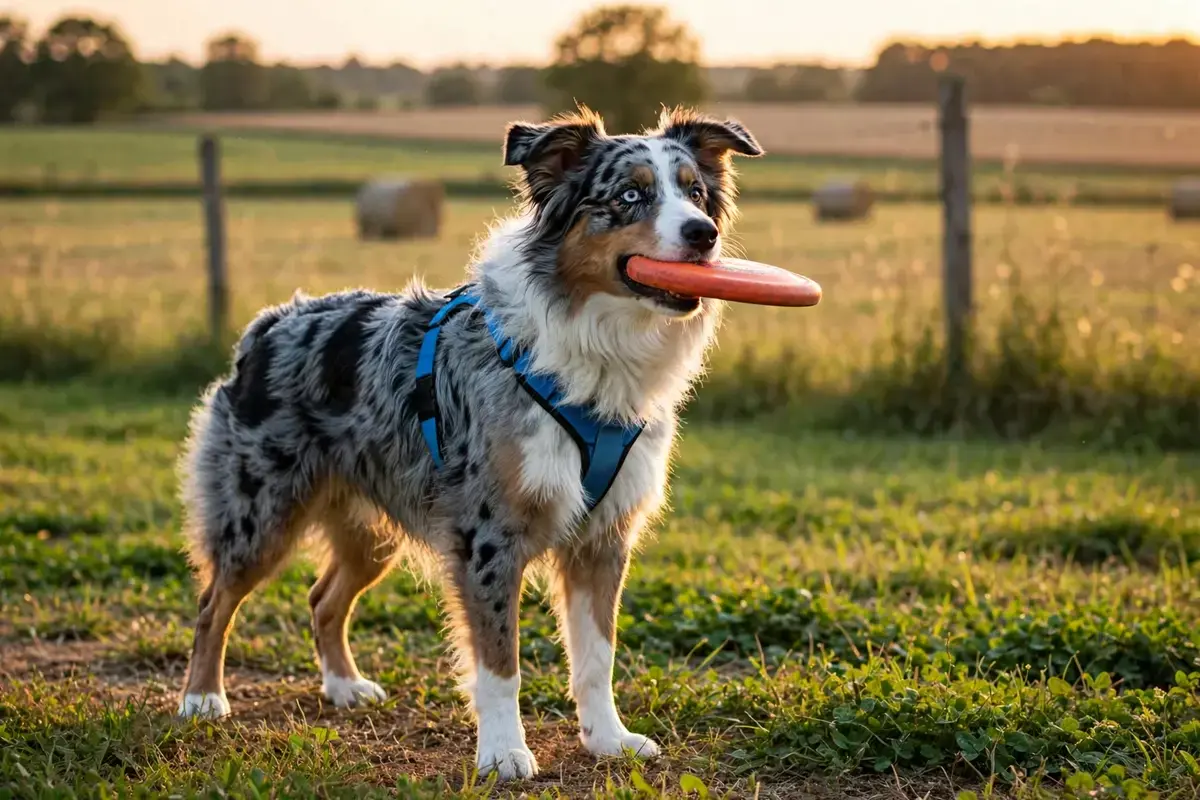
What Is a Border Aussie?
Because this is a mixed breed rather than a standardized breed with a recognized breed standard: No single book describes exactly what every Border Aussie will look or act like. The information below draws heavily from what we know about both parent breeds. Individual dogs may match one parent more than the other, fall somewhere in between, or surprise you entirely. Any numbers — weight, lifespan, prevalence of health conditions — are rough estimates, not guarantees. Always consult your veterinarian for decisions about your individual dog.
Reviewed and edited by Norman with review input from veterinary sources. Last updated October 2026.
Quick Facts
- Type: Border Collie × Australian Shepherd mix
- Size: Medium — roughly 17–23 inches tall and 30–65 pounds, depending on the parents
- Coat: Medium double coat; texture and length can vary
- Colors: Black and white, red and white, blue merle, red merle, tri-color and other combinations
- Exercise needs: High — requires substantial daily physical activity and mental stimulation
- Lifespan: Roughly 12–15 years based on parent breed ranges
- Energy level: High
- Trainability: Often highly trainable, though independence can vary
- Good with children: Can be good with kids when properly socialized, trained, and supervised
- Good with other pets: May try to herd cats or smaller animals; supervision recommended
- Shedding: Moderate to heavy, with seasonal “blowing coat” periods
- Barking tendency: May be vocal, particularly if inheriting Border Collie tendencies
Key Takeaways
Origin: A cross between two herding breeds, not a recognized standardized breed. Individual dogs inherit unpredictable combinations of their parents’ traits.
Size: Generally medium-sized, though range varies by parent genetics.
Energy: Both parent breeds are highly active, making exercise demand consistently high across most individual dogs.
Temperament: Intelligence and herding drive are common, but how they manifest differs widely between individual dogs.
Health: Screen both parents before acquiring a puppy. Recommended testing includes hips, eyes, and relevant DNA panels.
Training: Reward-based methods work best. Herding instincts require redirection into structured activities.
Table of Contents
Border Aussie: Size, Temperament, Care & Lifespan
Border Aussies are a Border Collie and Australian Shepherd mix. These medium-sized dogs may inherit high intelligence, intense work drive, and strong herding instincts from both parents. They tend to be athletic, vocal learners who bond closely with their families. Their coat, color, height, and personality can differ dramatically even within the same litter — there is no breed standard, and individual variation is the norm rather than the exception.
If you are looking for a reliable off-switch, a low-energy companion, or an easy-going house dog, a Border Aussie probably is not your best match. If you want a dog that treats every walk like a job assignment, thrives on learning new skills, and rewards you with devotion once they trust you — read on.
Parent Breed Comparison
Both parent breeds are elite herding dogs, but they come from different histories and carry different quirks. Understanding where each comes from helps you predict what your Border Aussie might bring to the table.
| Trait | Border Collie | Australian Shepherd | What it means for the mix |
|---|---|---|---|
| Original role | Farm livestock herding in Scotland/North England | Livestock herding in the western United States | Strong working instinct likely in either parent’s direction |
| Size | 18–22 inches; 30–55 lbs (AKC) | 18–23 inches; 40–65 lbs (AKC) | The mix usually lands in the medium range but can lean toward either parent’s frame |
| Energy level | Extremely high; bred for all-day stamina | Very high; driven and work-oriented | High energy is common but intensity varies between individual dogs |
| Trainability | Widely regarded as one of the most trainable breeds; extremely biddable | Intelligent and eager, sometimes more independent | Many Border Aussies learn quickly, though independence may temper responsiveness |
| Stranger response | Reserved, watchful, generally not aggressive | Friendly but alert; typically warm up after a moment | Some may be reserved with strangers; others may be sociable |
| Barking | Vocal; uses bark to communicate with livestock | Moderate barker; alert and vocal when needed | Border Collie influence often makes them more vocal overall |
| Coat | Medium-length double coat; wavy or smooth | Medium double coat; straight to wavy | Coat texture and length can swing either way — expect seasonal shedding |
| Exercise needs | One of the most exercise-demanding breeds in existence | Requires substantial daily physical and mental activity | Expect similar needs but individual variation matters greatly |
| Lifespan (estimated per AKC) | 12–15 years | 12–15 years | Parent breeds share similar longevity; individual dogs vary |
| Group | AKC Herding Group | AKC Herding Group | Both share herding heritage and drive |
Sources for parent breed data: American Kennel Club (AKC) breed pages for both Border Collie and Australian Shepherd.
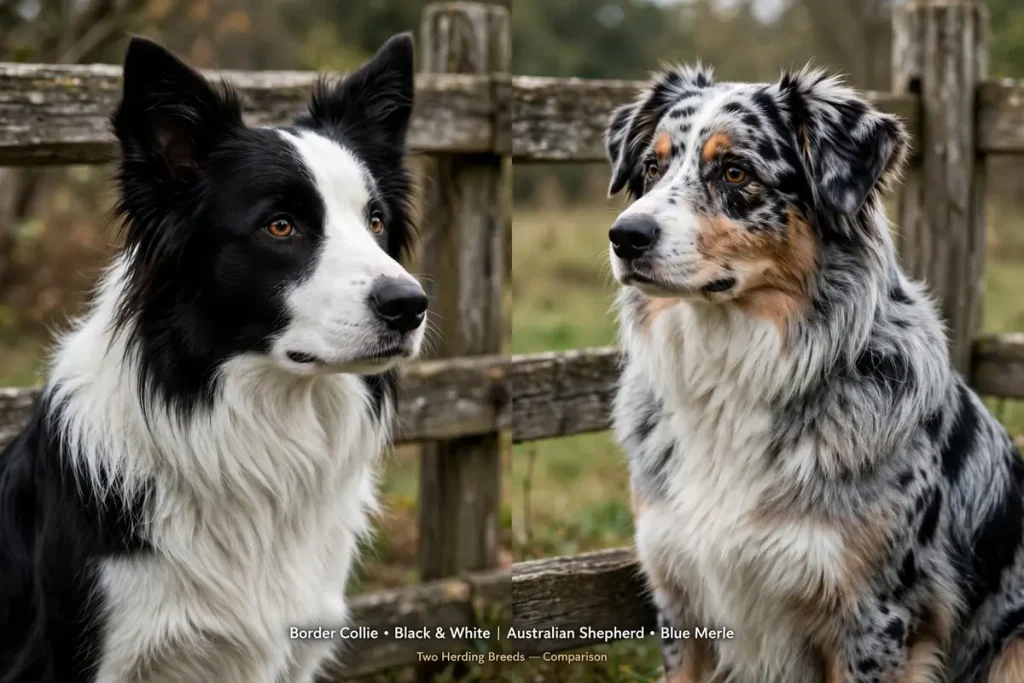
What Is a Border Aussie?
A Border Aussie — also called a Border Collie Aussie mix — is the cross between a purebred Border Collie and a purebred Australian Shepherd. It is not a recognized breed by any major kennel club because it has never been systematically bred to a consistent standard. You will find these crosses mostly as unplanned litters from owner-breeding, farm situations where herding dogs coexist freely, or occasionally through specialty breeders who market the mix informally.
Border Collies originated in the border country between Scotland and England, developed over centuries as sheepherding partners. They were bred for stamina, intelligence, and the ability to read human cues and livestock behavior simultaneously. Source: AKC Border Collie page. Australian Shepherds trace back to the western United States, where Basque shepherds brought their European herding dogs and crossed them with local dogs on American ranches. Despite the name, the breed actually took shape in California and the surrounding states. Source: AKC Australian Shepherd page.
Because both parents are herding dogs, the Border Aussie inherits two powerful genetic programs pointing in roughly the same direction: work, movement, control. That makes them fantastic farming companions but potentially overwhelming for someone expecting a calm family pet.
What Traits Can This Mix Inherit?
No one can predict which traits will surface. But here is how the two ends of the spectrum usually play out:
A more Border Collie-like dog may:
- Have a longer, smoother coat with classic black-and-white markings
- Display a pronounced “eye” — the fixed stare used to control livestock
- Be intensely focused and slightly sensitive to tone or body language
- Show a stronger herding urge that includes chasing bikes, cars, or running children
- Bark frequently, especially at unfamiliar sounds or movement
A more Australian Shepherd-like dog may:
- Carry blue or red merle patterning
- Have naturally bobbed tails (some Aussies are born with short tails) or docked ones
- Look a bit stockier and more muscular than the lean Border Collie frame
- Show a slightly more outgoing, extroverted personality with strangers
- Still herd, but with less precision and more playfulness
Most dogs fall somewhere between these extremes. You may get a dog whose coat matches one parent but whose temperament reads more like the other. Genetics do not follow a template.
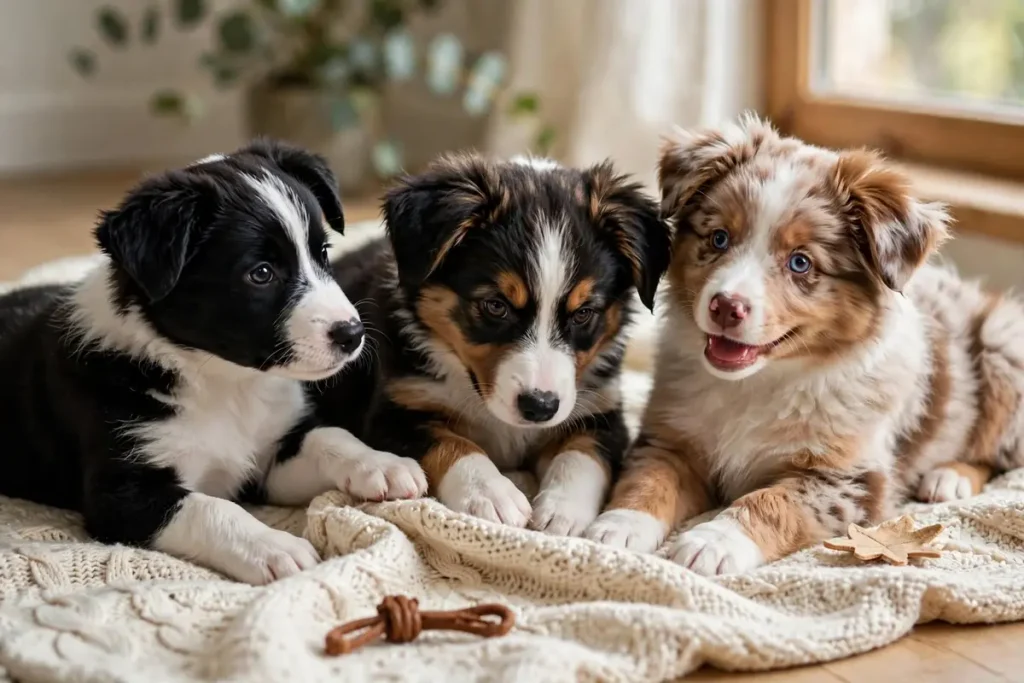
Temperament
Border Aussies tend to be sharp, active, and deeply attached to their families. Intelligence shows up early — many pick up basic commands faster than you would expect, especially with the Border Collie lineage involved. That sharp mind means they get bored easily when left alone without stimulation, which is when behaviors like chewing, digging, or relentless barking begin. See our breakdown of whether Border Collies are more hyper than Border Aussies for background on both parents’ activity levels.
They are often very loyal and form strong bonds with their primary caregivers. Some may shadow their owners from room to room. Others are more independent and only visit when convenient. Both patterns exist within this mix.
The herding instinct runs deep. Expect nudging, circling, and attempts to gather moving objects — including small children — under supervision. Redirecting this behavior into structured activities like agility or herding trials can help, but it requires time and commitment from the owner.
Their sensitivity is another important factor. Both parent breeds are reactive to human emotion and body language. Positive reinforcement works well. Harsh corrections can make a sensitive dog shut down or become anxious. Source: PetMD Border Collie breed guide. Reward-based training is generally a better approach than harsh or punitive methods, particularly with a dog that may combine sensitivity, independence, and substantial physical strength.
Are Border Aussies Good With Children?
Border Aussies can be good with children, but their suitability depends on the individual dog’s temperament, training, and experience around kids. Both parent breeds can be devoted to their families, but herding instincts mean that running children may trigger chasing behavior — not out of aggression, but out of instinct. Supervise all interactions between dogs and young children. Teaching children how to approach and handle dogs respectfully, and teaching the dog to settle around unpredictable child behavior, are both essential. Early socialization matters enormously for this mix.
Are Border Aussies Good With Other Dogs and Cats?
Socialization determines success here more than anything else. A Border Aussie raised with cats or other household pets from puppyhood usually adapts fairly well. A dog introduced to a cat as an adult, especially one with strong Border Collie herding drive, may view the cat as livestock to chase.
With other dogs, most Border Aussies are fine, though some may be selective or less tolerant of dogs that invade their space. The herding instinct can sometimes surface around other dogs, especially those of the same sex. Proper introductions and ongoing management help prevent conflicts. Proper introductions and ongoing management help prevent conflicts.
Do Border Aussies Bark a Lot?
Many Border Aussies tend to be vocal dogs, largely due to the Border Collie side of the equation. Border Collies are listed by the AKC as a breed that “likes to be vocal,” using barks to communicate with both livestock and handlers. Source: AKC Border Collie characteristics. Australian Shepherds are considered moderate barkers, more alert-driven than nuisance-driven. Source: AKC Australian Shepherd page.
Training can reduce excessive barking, but it may not eliminate it entirely. The herding drive to communicate vocally runs deep. Teach “quiet” commands, provide sufficient mental and physical outlets, and avoid accidentally rewarding the behavior with attention when they bark for no reason.
Exercise Needs
There is no published exercise requirement specifically for this mix. Exercise needs vary widely based on which parent’s traits the dog inherits, its age, health, and individual energy level. As examples, Border Collies are famously one of the most physically demanding breeds to keep satisfied — PetMD Breed Guide — and Australian Shepherds also require substantial daily physical and mental activity. PetMD Australian Shepherd Breed Guide. Most adults from this cross likely benefit from 1.5 to 2 or more hours of combined physical exercise and mental work per day.
Walks alone are rarely enough. Puzzle toys, scent work, obedience drills, agility courses, flyball, and interactive fetch all count toward filling their daily needs. A tired Border Aussie is usually a well-behaved one. An understimulated one invents problems.
Ask your vet if your dog struggles with ordinary activity — some dogs push themselves too hard and develop joint problems before their owners realize something is wrong.
Training
Border Aussies are often quick learners, but motivation and independence can vary between individuals. Reward-based training is a good starting point. Use treats, toys, praise, or any reward your dog finds reinforcing. Short, frequent sessions work better than long marathons — their attention span drops when boredom sets in.
Herding redirection is critical. If your dog chases cars, cyclists, or neighborhood pets, teach a firm recall and redirect to an acceptable behavior immediately. “Leave it” training is invaluable. Consider enrolling in structured obedience training early; many of these dogs respond well to the clear rules and social environment that classes provide.
Consistency matters more than anything. An inconsistent handler confuses a highly intelligent dog, and confusion leads to problem behaviors. Keep training fun and varied to maintain engagement.
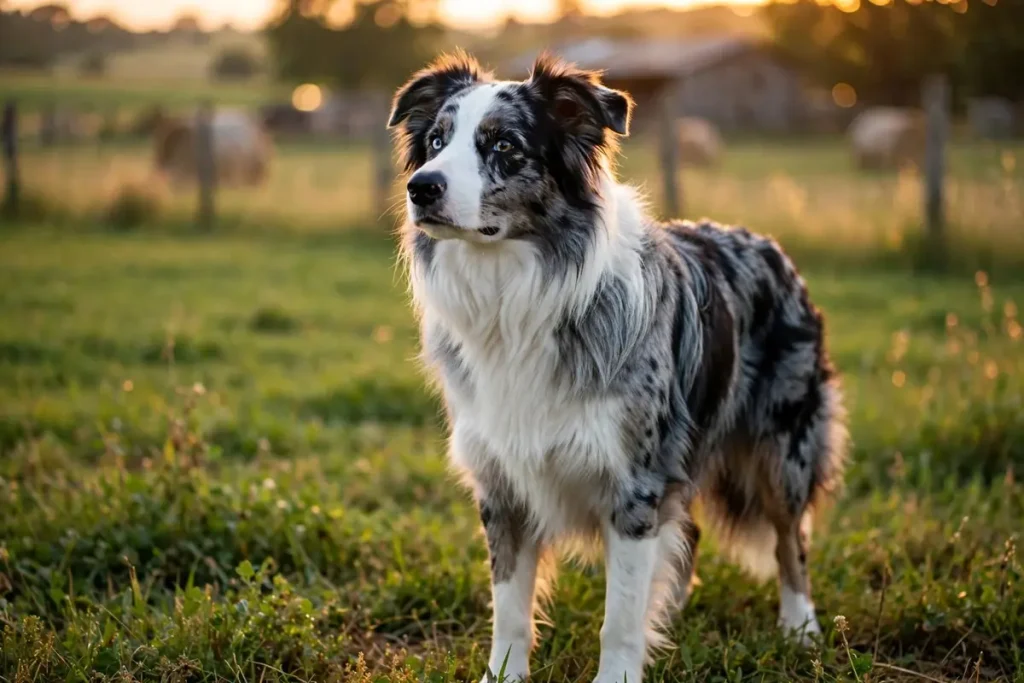
Size and Growth
Adult Size
Border Aussies are generally medium-sized dogs, but there is no standardized size for this cross. Based on typical parent-breed sizes (AKC: Border Collie / Australian Shepherd), some adults may reach roughly 17–22 inches tall at the shoulder and weigh around 30–55 pounds, depending on the parents. For reference, the AKC lists Border Collie size specifications ranging from 18 to 22 inches and 30 to 55 pounds for the purebred. Individual dogs can fall outside this range. A puppy from a larger Australian Shepherd sire might tip toward 60 pounds; one inheriting more Border Collie genes might stay closer to 30 pounds.
There is no established breed-wide range. Figures like these are rough estimates based on what AKC publishes for each purebred parent breed.
Puppy Growth: What to Ask About
Puppies should be allowed to grow steadily rather than pushed to grow as quickly as possible. PetMD on puppy nutrition. Ask your veterinarian about appropriate nutrition, body condition, and exercise during growth. Avoid excessive high-impact exercise while the skeleton is developing — think gentle walks and short play sessions rather than forced running or repetitive jumping. Rapid weight gain stresses joints. Monitor body condition regularly and adjust feeding accordingly.
Grooming and Shedding
Border Aussies typically have a double coat, meaning they carry both a soft undercoat and a harsher outer layer. Coat texture varies — some dogs inherit the Border Collie’s smoother, wavier coat, while others carry the Australian Shepherd’s fluffier fur. Either way, grooming needs are comparable.
Regular brushing helps remove loose hair and prevents matting, especially during seasonal blowouts. Most benefit from brushing 2–3 times per week, increasing during spring and fall shedding seasons when they “blow coat” and shed significantly more. Source: AKC Border Collie coat info Source: AKC Australian Shepherd coat info. Bathing when dirty or when your veterinarian or groomer recommends it is sufficient — bathing on an arbitrary schedule dries out skin.
Check ears weekly for debris buildup, trim nails every few weeks (or whenever you hear clicking on floors), and brush teeth regularly to prevent dental disease. Dental hygiene matters just as much for a herding mix as for any breed.
Health Problems
Like any dog, Border Aussies can develop health conditions inherited from their parent breeds. Because this is a mixed breed, no large-scale study tracks the exact frequency of conditions in the cross itself. Below is what is documented for each parent breed. See Border Collie health concerns for a broader overview of common issues in that parent line.
Hip Dysplasia: Both Border Collies and Australian Shepherds can develop hip dysplasia, an inherited condition where the hip joint does not form correctly, leading to pain and arthritis. Source: AKC PetMD. Ask breeders to show OFA clear ratings for hips. OFA Hip Dysplasia screening data.
Eye Conditions: Collie Eye Anomaly (CEA) affects Border Collies. Progressive Retinal Atrophy (PRA), hereditary cataracts, and iris coloboma affect Australian Shepherds — and CEA can appear in Aussies too. PetMD on CEA PetMD on PRA and eye conditions. Discuss DNA testing and veterinary eye exams with your breeder and veterinarian.
Epilepsy: A seizure disorder that can occur in both breeds. Anti-seizure medication helps control symptoms in most cases. PetMD on epilepsy PetMD on herding breed epilepsy. Anti-seizure medication helps control symptoms in most cases.
MDR1 Gene Mutation: Both breeds carry the ABCB1/MDR1 gene variant, which affects drug metabolism. Some dogs carrying two copies may experience sensitivity to certain medications used in veterinary medicine. Talk to your veterinarian about testing, and always follow dosing guidance. Simple DNA tests can identify whether a dog carries this gene. PetMD on MDR1 PetMD on herding breed genetics.
Deafness: Congenital deafness can occur, particularly in dogs inheriting heavy white pigmentation from the merle gene. A BAER (Brainstem Auditory Evoked Response) test can determine hearing status. PetMD on canine deafness and merle. Discuss hearing testing with a veterinarian where appropriate.
Other considerations: Cancer can occur in dogs of any breed, and some cancers are reported more frequently in Australian Shepherds. PetMD on Australian Shepherd cancer risks. Joint and mobility issues are important in any active, athletic breed as dogs age. Regular veterinary checkups help catch problems early.
Merle Genetics Warning
Breeding two merle-colored dogs together risks producing offspring with severe hearing or vision impairment. If one parent is a known merle carrier, the other should be solid-colored or black/red with no merle gene. Ask breeders about this.
Health Testing for Parents
A CHIC number confirms that recommended tests were completed and results made public; it is not a guarantee that every result was normal. OFA CHIC program. Ask to see health records for both parents. Useful screening can include hip, elbow, and eye evaluations and relevant DNA tests. For Border Collie parents, the Orthopedic Foundation for Animals provides hip and elbow certification, and board-certified veterinary ophthalmologists perform eye examinations through the ACVO or CAER programs. ACVO veterinary ophthalmologist certification. For Australian Shepherd parents, the Australian Shepherd Health and Genetics Institute provides guidance on genetic testing panels including MDR1, PRA, and CEA. PetMD and AKC also cover genetic testing details for Australian Shepherds. The OFA CHIC program is a good reference for responsible screening.
Heat and Cold Weather
Double-coated herding dogs generally handle cold well, thanks to their thick undercoats developed for outdoor work. However, they can struggle in hot weather, especially during humid summer months. Provide shade, fresh water, and exercise during cooler parts of the day. Never leave a dog in a parked car under any circumstances. Watch for heatstroke signs: excessive panting, drooling, lethargy, vomiting, collapse.
Do not shave a double coat — the outer layer protects against sunburn and insulation, while the undercoat regulates temperature. Shaving removes both protections. Clip selectively around paws, sanitary areas, and the tail if needed, but leave the body coat intact.
Is This Mix Right for You?
This cross suits active households willing to invest significant time in exercise, training, and mental enrichment. It is less suited for sedentary lifestyles or owners who prefer a laid-back companion.
Pros:
- Highly intelligent and responsive to training
- Loyal and bond strongly with family members
- Well suited to many dog sports and activities
- Adaptable coat patterns and colors appeal to many people
- Generally healthy when sourced from screened parents
Cons:
- Requires substantial daily exercise and mental stimulation
- Herding instincts may create challenges with children or small pets
- Can become destructive when under-stimulated
- Sensitivity means harsh training methods often backfire
- Significant seasonal shedding
- Individual variability means outcomes are unpredictable
Cost
There is no fixed price for a Border Aussie because this cross isn’t a standardized breed. Where you get your dog makes the biggest difference:
Typical U.S. ranges:
- Breeder-sourced puppies: pricing varies widely by breeder reputation, health screening, bloodlines, and region
- Rescue/adoption: typically lower cost, though amounts vary by organization and location
Breeding ethics matter just as much as cost. Avoid sellers with multiple litters available at once, those who refuse health records, or anyone emphasizing rare colors over health clearances. Pricing reflects local market conditions, not national breed standards.
Frequently Asked Questions
How big does a Border Aussie get?
Border Aussies are generally medium-sized, but there is no standardized size for this cross. A rough estimate is approximately 17–22 inches tall and 30–55 pounds, depending on the parents. Individual dogs can fall outside this range based on which parent’s genetics dominate.
How long do Border Aussies live?
A rough estimate is 12–15 years based on the parent breeds’ lifespans. Both Border Collies and Australian Shepherds share this range according to the AKC. Individual longevity depends on genetics, diet, exercise, and veterinary care quality. There is no established average for the mix itself.
Do Border Aussies shed a lot?
Most Border Aussies shed moderately to heavily, with significant seasonal “blowing coat” events in spring and fall. Brushing more frequently during these periods manages the extra shedding. Daily grooming during peak shed season is worth the effort.
Are Border Aussies good first-dog breeds?
Usually better suited to experienced owners. Their high intelligence, energy, and sensitivity require confident handling and consistent training. First-time owners can succeed but should be prepared for a steep learning curve.
Can a Border Aussie live in an apartment?
Activity-based criteria matter more than housing type. If you cannot provide enough daily activity, enrichment, training, and suitable outdoor access, regardless of whether you live in a house or apartment, a Border Aussie likely is not ideal. A yard can be helpful but is not required. Active apartment dwellers who commit to extensive outdoor exercise sometimes manage successfully.
Do Border Aussies bark a lot?
Many tend to be vocal, particularly if they inherit the Border Collie side’s tendency toward communication barking. Training and adequate stimulation can reduce excessive barking, but the vocal trait runs deep in herding breeds.
Are Border Aussies hypoallergenic?
No. Neither parent breed is considered hypoallergenic. Both have double coats that shed. Dander — not hair — is the primary allergen for most people, and double-coated breeds carry meaningful amounts.
Can I train a Border Aussie for dog sports?
Many may enjoy dog sports such as agility, obedience, flyball, or herding trials. Their intelligence and athleticism make them excellent candidates. Enroll in a reputable class that uses positive, reward-based methods.
How do I find a Border Aussie rescue?
Search “Border Collie rescue” or “Australian Shepherd rescue” organizations in your area, as specialized mixed-breed rescues are rare. Many rescues accept Border Collie-Aussie crosses or similar herding mixes. Petfinder.com is a useful starting point for regional searches.
Should I adopt or buy from a breeder?
Rescue organizations often carry adult Border Collie–Aussie mixes whose temperament and energy are already clear, which removes guesswork. If buying from a breeder, ask to see OFA hip and eye clearances for both parents, MDR1 DNA test results, and a written health guarantee. Avoid sellers who have multiple litters available at once, refuse to share health records, emphasize rare colors over health, or cannot put you in contact with previous buyers.
How do I handle a Border Aussie’s herding behavior around kids?
Teach children how to interact calmly with the dog. Avoid running or screaming near the dog. Use “leave it” and “settle” commands. Early socialization and structured redirect training help channel herding urges toward acceptable behaviors like targeted games or work tasks.
What kind of food should I feed my Border Aussie?
Feed a high-quality food appropriate for their life stage and activity level. Discuss protein content, omega fatty acids, and portion sizing with your veterinarian. Transition slowly when changing brands.
When should I start training my Border Aussie puppy?
Start early. Controlled puppy socialization should begin early while following veterinary guidance about disease risk. Brief exposure to healthy, fully-vaccinated adult dogs and controlled environments helps build confidence. Consult your veterinarian about the safest way to introduce your puppy to new people, places, and experiences. Consistent, positive reinforcement from day one builds the foundation for a well-adjusted adult dog.
How do I know if a breeder is responsible?
Responsible breeders health-test both parents (OFA hips/elbows, ACVO/CAER veterinary ophthalmologist examination, MDR1 DNA test), provide written health guarantees, ask *you* questions about your lifestyle, allow you to meet the dam, and stand behind their dogs if issues arise. Red flags include multiple litters available at once, unwillingness to share health records, emphasis on rare colors over health, and no questions asked about buyer suitability.
Glossary
BAER Test (Brainstem Auditory Evoked Response): A hearing test that measures electrical activity in the brain in response to sound stimuli. Used to detect congenital deafness in dogs.
CEA (Collie Eye Anomaly): A genetic eye disease present from birth that can cause malformations of the eye structures, resulting in vision defects or blindness. Genetic testing is available.
CHIC (Canine Health Information Center): A program run by the Orthopedic Foundation for Animals that collects and publicly shares health screening data for purebred dogs. A CHIC number means tests were done and results posted.
Double Coat: A coat consisting of a dense, soft undercoat topped by longer, coarser guard hairs. Provides insulation and weather protection. Common in herding and northern breeds.
Hip Dysplasia: An inherited condition where the hip joint does not form properly, causing the ball and socket to rub abnormally. Leads to pain, inflammation, and eventual arthritis. Screened via OFA or PennHIP evaluation.
MDR1 (ABCB1) Mutation: A genetic variant that affects how certain medications are metabolized. Dogs carrying two copies may experience toxic reactions to drugs like ivermectin. Simple DNA test identifies carriers.
PRA (Progressive Retinal Atrophy): A group of degenerative eye diseases affecting retinal photoreceptors. Causes progressive vision loss leading eventually to blindness. Genetic testing available. Multiple forms exist.
Sources
- American Kennel Club. (n.d.). Border Collie dog breed information. https://www.akc.org/dog-breeds/border-collie/
- American Kennel Club. (n.d.). Australian Shepherd dog breed information. https://www.akc.org/dog-breeds/australian-shepherd/
- PetMD. (n.d.). Border Collie dog breed guide. https://www.petmd.com/dog/breeds/border-collie
- PetMD. (n.d.). Australian Shepherd dog breed guide. from https://www.petmd.com/dog/breeds/australian-shepherd
- Orthopedic Foundation for Animals. (n.d.). Hip dysplasia statistics and CHIC program. https://ofa.org/diseases/orthopedic/hip-dysplasia/
- American College of Veterinary Ophthalmologists. (n.d.). Home. , https://www.acvo.org/
Medical Disclaimer
This article provides general educational information about the Border Aussie mixed breed. It is not a substitute for professional veterinary advice, diagnosis, or treatment. Always consult a licensed veterinarian regarding your individual dog’s health, diet, exercise, and training needs. Information presented here reflects published data from breed clubs and veterinary sources but cannot account for individual variability inherent in mixed-breed dogs.
Leave a Reply
You must be logged in to post a comment.