
Are Border Collies Cuddly?
Some Border Collies love to cuddle – others treat lap time like a personal insult. It really depends on which dog you’re talking about. What most people don’t realize is that even BCs who hate being picked up will show affection in ways that feel just as genuine: following you room-to-room, sitting shoulder-to-shoulder during TV time, leaning their weight against your leg without asking. Individual temperament, genetics, early experiences, and environment shape how each dog expresses closeness.
No – not in the way Golden Retrievers are. But calling a Border Collie “not cuddly” misses the point entirely. These dogs don’t do couch cuddles. They do something else.
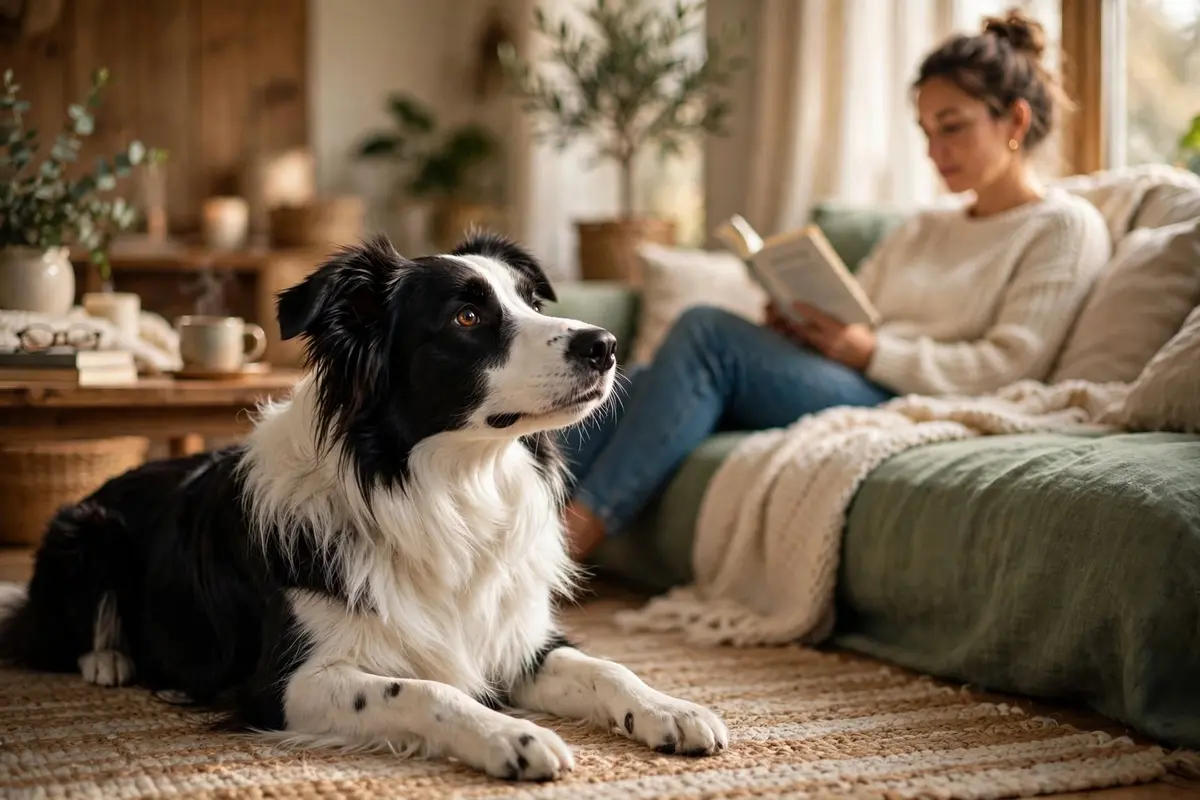
A Border Collie shows affection through proximity, play, eye contact, and quiet presence. Some sleep at your feet. Others shadow you around the house without ever asking for pets. A few lean against your calf while you work on the laptop. Almost none demand belly rubs on command. That doesn’t mean they don’t care about you. It means their version of love looks different from what we expect.
Key Takeaways
- Border Collies aren’t universally cuddly, but many express deep affection in ways other than lap-sitting.
- Some BCs resist touching because of working-dog instincts, body heat, past experiences, or medical discomfort.
- You can often help a BC become more comfortable with calm physical contact using positive reinforcement — but you can’t guarantee every dog will become cuddly.
- Sudden loss of cuddle behavior in a previously affectionate adult BC warrants a veterinary exam.
- Individual variation within the breed can be substantial.
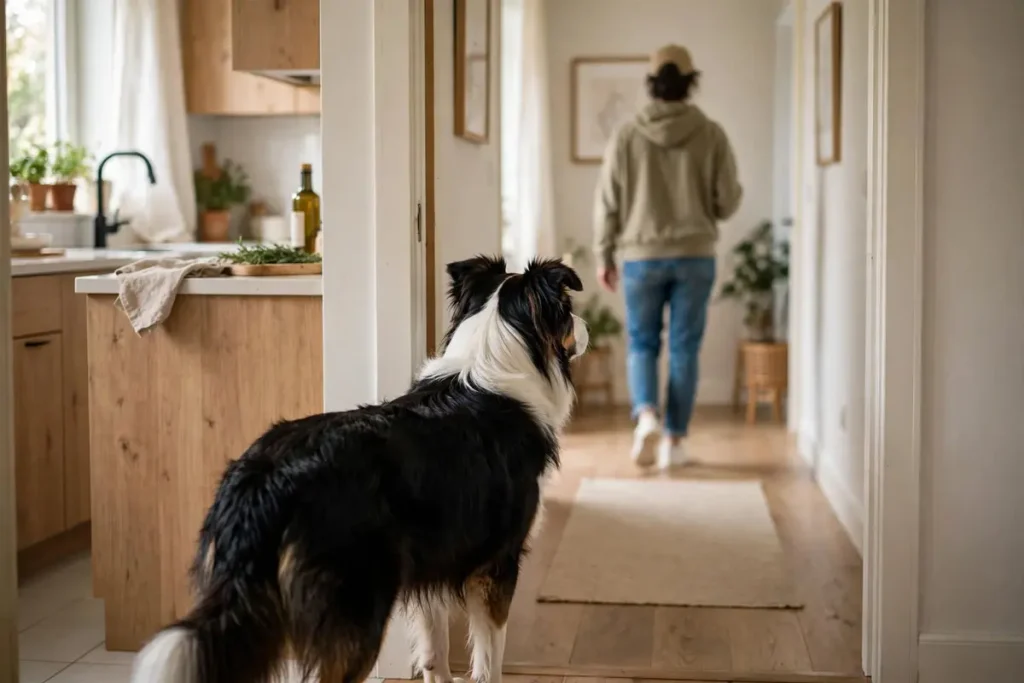
Table of Contents
What “Cuddly” Actually Means for This Breed
“Cuddly” isn’t a formal behavioral term in canine science. It’s a human label we slap onto specific physical behaviors: lying on laps, seeking belly rubs, staying close without prompting, tolerating prolonged handling. When people ask whether Border Collies are cuddly, they usually mean one of two things:
Do they seek physical contact? And do they tolerate it when initiated by humans?
The honest answer: some do, some don’t, and individual variation within the breed can be substantial. According to the AKC breed standard, Border Collies are described as intelligent, energetic, and responsive to human direction—a temperament shaped by centuries of selection for cooperation rather than passive affection [AKC Border Collie page]. Notice the word “cooperative,” not “cuddly.”
This distinction matters because it frames everything else about Border Collie affection. BCs were selected for responsiveness, work ability, attention, and close cooperation with handlers—not specifically for lap-dog behavior. Working herding breeds evolved to stand near their handler, watch for cues, and respond—often for hours without pausing for physical contact. They weren’t bred to curl up. They were bred to work beside you.
Modern companion Border Collies retain that hardwiring to varying degrees. You can absolutely cultivate closeness and trust through patient training. But expecting any Border Collie to behave like a Cavalier King Charles Spaniel? That sets both dog and owner up for frustration.
Are Border Collies Affectionate? How They Show Love
If you judge a Border Collie’s affection by lap-sitting alone, you’re overlooking the majority of what they actually do to show they care. Here are some common expressions of love among BCs that often go unrecognized—or worse, get misread as aloofness.
Following You Around
Many Border Collies become shadow animals. They don’t necessarily want your hands on them—they want you within visual range. Watch a BC in a room where multiple people move around, and you’ll likely see them orient toward one person consistently, tracking movement from kitchen to living room to backyard. Sustained attention like this is often interpreted as bonded behavior. AVSAB Training Position Statement -though not every owner or observer would agree.
Leaning Against You
Some Border Collies press their body weight against you intentionally. Some research suggests that positive dog-human interactions are associated with changes in oxytocin, a hormone involved in social bonding Kikusui et al., 2015, Frontiers in Psychology. However, this research was not specific to Border Collies, and a dog leaning against you should not be treated as a scientific measure of attachment. But if yours leans whenever you sit down, consider it a compliment.
Eye Contact
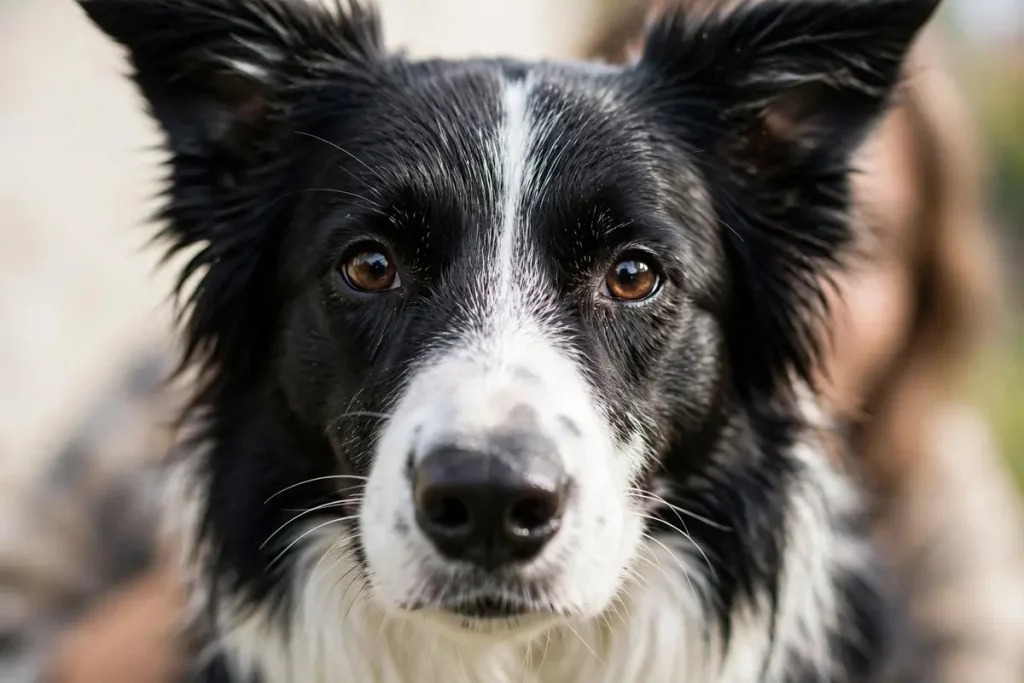
Sustained mutual gaze between dogs and trusted humans is associated with oxytocin release in both parties in some studies. Researchers call it the “gaze pathway” and describe it as unique among species Nagasawa et al., 2015, Science. Border Collies are known for their intense visual focus — one reason they’re so often described as exceptionally intelligent. See our overview on Border Collie intelligence. When that attention is directed toward a trusted person in a relaxed context, it may be part of the dog’s social connection with that person – though interpreting any single behavior as definitive proof of emotional attachment goes beyond what the research establishes.
Play Initiation
Bringing toys, doing play bows, interrupting TV time to drop a frisbee at your feet—these are genuine signs of connection for high-drive breeds. For a Border Collie, play functions as both exercise and communication. Each toy drop says something like, “I trust you enough to share something I love.” If your dog drops a ball at your shoe and stares at you expectantly, that’s not just boredom. That’s an invitation.
Quiet Sitting Nearby
Some Border Collies simply prefer sitting nearby while you read, work, or eat. No contact required. Just shared space. Experienced owners interpret this posture as peaceful attachment; inexperienced ones sometimes misread it as aloofness. Don’t make that mistake.
Greeting Enthusiasm
Rapid tail wagging, whole-body wiggles, spinning, vocalizations—the Border Collie greeting ritual after brief absences reveals attachment intensity even when the rest of their daily demeanor seems understated. A pronounced greeting reaction to returning home *may* indicate strong attachment, though individual temperament plays a large role here too.
Protective Alertness
Watching the yard, alerting to unfamiliar approaches, positioning themselves between you and approaching strangers or dogs—these behaviors can have different causes, including alertness, herding tendencies, fear, resource guarding, or arousal. Context and the dog’s overall body language matter enormously for understanding what’s happening.

Why Doesn’t My Border Collie Like Cuddling?
Not every Border Collie welcomes prolonged touching. The reasons vary considerably from dog to dog.</p>
Individual Personality
Some Border Collies naturally gravitate toward physical closeness; others prefer engagement expressed through activity. Neither pattern is defective. Both are valid forms of attachment. Behavioral researchers note strong personality differences within breeds comparable to those seen across breeds American Veterinary Society of Animal Behavior (AVSAB). Position Statement on Humane Dog Training (2021). Your dog’s preference falls somewhere on that spectrum.
Genetics and Working Traits
Border Collies were bred for responsiveness and work ability, not specifically for lap-dog behavior. Some lines maintain stronger working drive than others, and dogs with higher work motivation may find prolonged physical contact less appealing. This varies significantly between breeding lines and individual dogs.
Early Experiences
Puppies separated from their litter before about 8 weeks, or puppies that receive little positive handling during early development, may be less comfortable with certain types of physical contact later in life. However, we shouldn’t assume a direct causal relationship between early separation and adult cuddle preference – it’s one factor among many, and individual outcomes vary widely.
Heat
Some Border Collies may seek less close physical contact when they’re hot, particularly because they carry a dense double coat. Seasonal changes in cuddle willingness are plausible, though anecdotal reports vary. So does letting the dog initiate contact only when the temperature suits them.
Pain or Illness
Thyroid issues, joint pain, dental disease, ear infections, allergies – any condition causing chronic discomfort can manifest as reduced tolerance for touch. A gradual decline in cuddle willingness can have several causes, including aging, changes in temperament, stress, or developing discomfort. A sudden change in a previously affectionate dog warrants a veterinary check before assuming anything else.
How to Help Your Border Collie Become More Comfortable With Touch
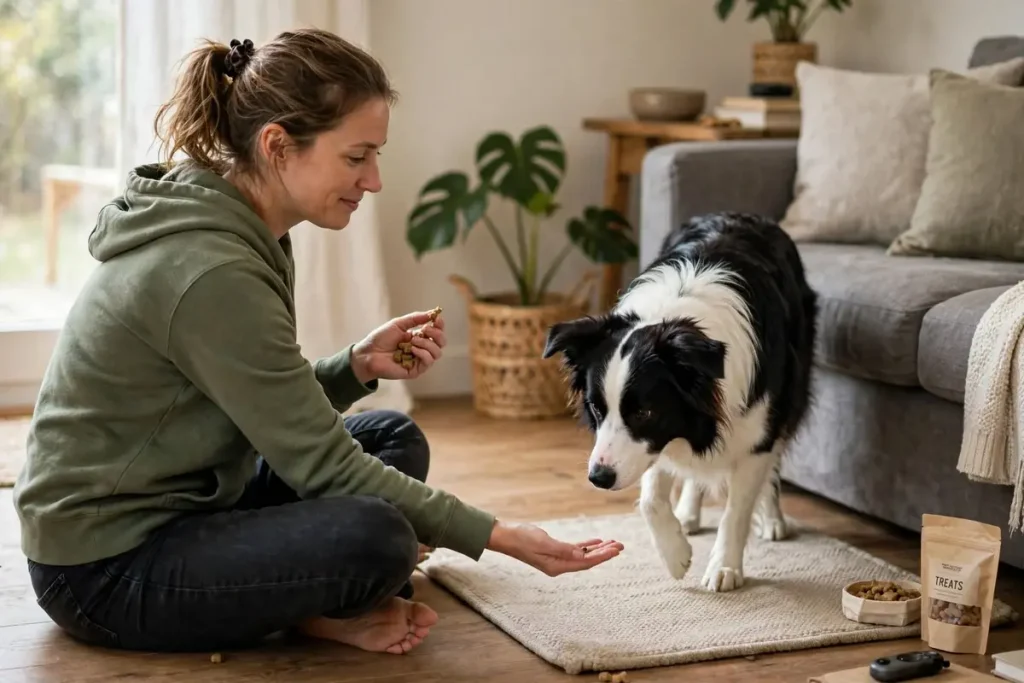
You can often help a Border Collie become more comfortable with calm physical contact, but you can’t guarantee that every dog will become cuddly. Approach this the same way you’d train any other skill: gradually, positively, and on the dog’s timeline.
Don’t Force Contact
Never force hand contact during initial stages. Reward only voluntary movement toward you. Over repeated sessions, the dog learns that proximity equals positive reinforcement.
Teach Calm Settling
A settled Border Collie can relax in your presence without escalating excitement. Use a consistent verbal cue (“settle” or “place”) paired with guiding the dog to a designated mat or bed near your seat. Mark calm breathing with treats. Increase duration incrementally: 5 seconds → 30 seconds → 5 minutes → 30 minutes. Once settled reliably, begin gentle stroking along the neck or shoulders—areas most dogs find comfortable. Stop immediately if the dog shifts away.
Read Body Language Carefully
Watch for tension indicators: lip licking, whale eye (showing whites of eyes), stiffening, turning head away, tail tucked low or rigid high. Any of these signals during handling means back off and reassess. Pushing past discomfort erodes trust faster than months of building it. Consistent, humane training methods using positive reinforcement strengthen the human-animal bond far more effectively than forced contact. AVSAB Humane Dog Training Statement
Keep Petting Sessions Short and Predictable
Start each session the same way. Approach from the side, never over the head. Offer your knuckles first. Stroke along the ribcage or shoulder blades—the areas most dogs tolerate best. Avoid grabbing around the chest, pinching scruff, or reaching under the belly. Keep strokes slow and rhythmic. End sessions before the dog shows signs of impatience. Leave them wanting more, not less.
Use Food Rewards Strategically
Hand-feed portions of meals instead of bowl feeding. Scatter kibble for sniffing games. Hide small treats in your lap while seated. These activities associate your physical presence with valuable resources, strengthening positive association without demanding passive acceptance of handling.
If your dog consistently moves away, freezes, growls, or shows other signs of discomfort, don’t use treats to pressure them into accepting touch. Positive association requires voluntary participation – bribing a dog through discomfort undermines trust just as surely as forcing contact does.
Accept What Can’t Be Changed
Some Border Collies will never be lap dogs. Period. That doesn’t indicate failure on either side. Recognize what your individual dog *does* offer freely and celebrate that version of affection rather than mourning the one they reject. A working-line Border Collie who stands shoulder-to-shoulder with you during hikes is demonstrating profound trust – not cold indifference. Understanding these boundaries is part of responsible ownership—knowing whether your dog’s needs align with your lifestyle matters enormously, which ties into our broader discussion of the practical considerations of owning a Border Collie
Are Rough Collies More Affectionate Than Border Collies?
Both breeds are loving. Both form deep bonds with their families. Their historical roles may help explain some differences in typical behavior, but individual temperament still matters enormously. Rough Collies were developed partly as farm guardians who spent long periods near cottages, while Border Collies were developed as active field workers alongside shepherds.
If cuddling matters to you, both breeds can deliver affection – they just express it differently. For a closer look at how each breed connects with families, see our Border Collie temperament guide.
What It’s Like With a Border Collie at Home
Over years of researching, writing about, and interacting with Border Collies, one consistent pattern emerges that generic articles miss: Border Collies can show their attachment in active, deliberate-looking ways that are easy to miss if you’re expecting traditional cuddling.
Here’s what that looks like in practice:
They follow you. Not clingily or anxiously—just constantly. Kitchen → bedroom → desk → couch. They position themselves within sight, usually facing you, occasionally lifting their chin. It’s not begging. It’s observation. There’s a difference.
They bring you things. Not random objects—specific ones. A ball they dropped. A toy they found. A piece of laundry. They place it near your foot and wait. Waiting. Not demanding. Waiting.
They lean. Sometimes hard enough to knock you slightly sideways. Without making a sound. Just body weight applied gently against your leg or calf. Always brief. Always leaving room for you to move away.
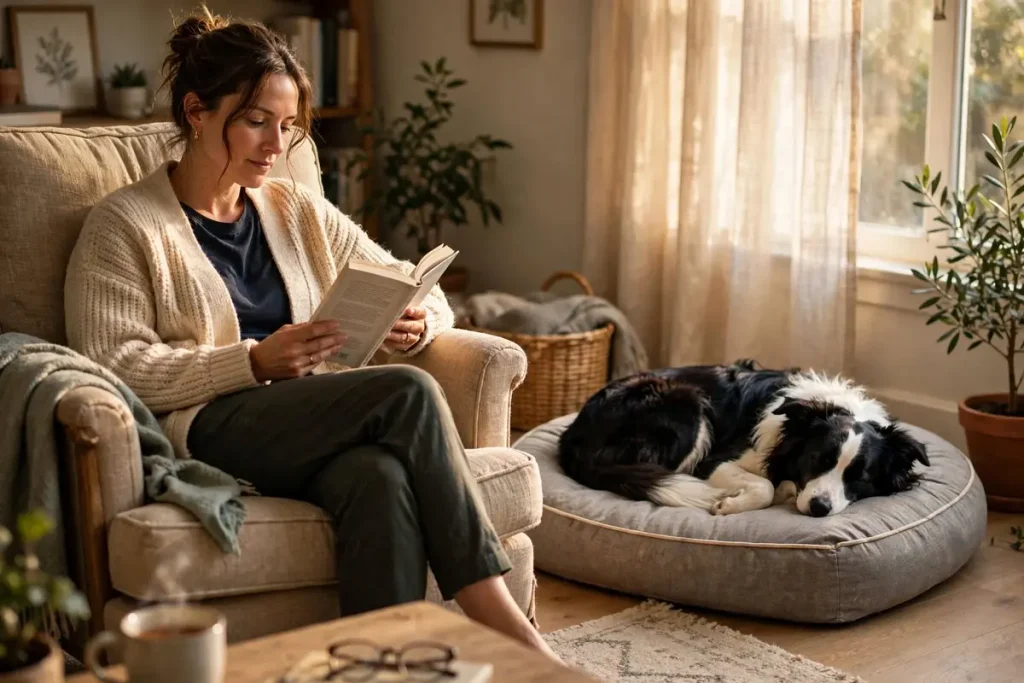
They sleep nearby, not on you. Usually curled up exactly three feet from your chair or bed. Close enough that you feel them breathing. Far enough that they retain independence. It’s their compromise—and honestly, it’s kind of beautiful.
They look at you. Really look. Eyes locked, ears forward, still as stone. Not because they expect food or a command. Just… attention. The kind of complete focus few creatures give anything at all.
They respond instantly when called. Many Border Collies freeze mid-movement the moment you speak their name. The speed and reliability of that response is one thing that makes life with a Border Collie feel uniquely rewarding. It isn’t magic—it’s the result of thousands of hours of partnership and training distilled into a single reflex.
None of this requires physical contact. None of it is lap-sitting. And yet—if you know how to read it—all of it is love, delivered in Border Collie dialect.
The hardest part is learning to speak that dialect back.
Final Thoughts
Border Collies aren’t “cuddly dogs”—they’re selectively affectionate. Their love shines through loyalty, sustained presence, and partnership rather than lap-sitting compliance. They’re not always couch companions, but they can steal your heart—and occasionally your socks.
If you respect their work-first instincts and meet them halfway on your terms, most Border Collies surprise you with unexpected moments of tenderness that feel earned precisely because they choose to give them freely. The trick is learning to recognize the dialect.
Frequently Asked Questions
Can you train a Border Collie to cuddle?
With patience and consistency, you can often help a Border Collie become more comfortable with calm physical contact — but you can’t guarantee that every dog will become cuddly. Dogs learn associations the same way they learn commands: pair physical contact with positive stimuli (treats, praise, calm voice) gradually. Start with brief touches while delivering rewards, then lengthen the contact duration slowly as the dog stays relaxed. Older rescue BCs with prior negative touch experiences may need significantly more time or professional assistance. See our guide on structured obedience training for foundational techniques.
Do Border Collies prefer one person to cuddle with?
Some Border Collies form especially strong attachments to one person, particularly when that person is closely involved in their daily care, training, and activities. However, many also form strong relationships with several members of the household. More details on BC attachment patterns are covered in our post on <a href=”https://lifeatherpaw.com/do-border-collies-get-attached-to-one-person/”>whether Border Collies attach to one person
My Border Collie used to cuddle but stopped. Should I worry?
Gradual decline in cuddle willingness probably reflects temperamental change or natural aging. A sudden onset of cuddle aversion in a previously affectionate adult BC warrants a veterinary exam first. Possible causes include medical conditions (pain, thyroid imbalance, dental disease), environmental stressors (new family member, schedule disruption, relocation), or natural aging slowing physical mobility. If all clear medically, reassess recent routines for stress triggers. Gradually reintroduce gentle contact if needed.
Are Border Collies good family dogs given their cuddle habits?
Border Collies can excel as family dogs provided expectations align with reality. Families with older children who know how to read canine body language typically do well. Because of herding tendencies, some Border Collies may try to chase, control, or nip at fast-moving children — so young children should always be supervised around dogs, regardless of breed. Child education and early socialization further reduce these risks. Our comprehensive overview on Border Collie temperament traits covers family compatibility factors in detail.
Do retired Border Collies become more cuddly?
Some older Border Collies become more relaxed and may seek more physical contact, but there is no guarantee that retirement will make a dog cuddly. Aging, personality, health, and lifelong preferences all play a role.
Why does my Border Collie hate belly rubs specifically?
Some dogs simply don’t enjoy having their belly touched. Others may find the position uncomfortable or may have learned that hands approaching the belly predict something unpleasant. Progressive desensitization works best: reward calm lying near you first, progress to brief abdominal scratches while standing, advance to seated rubbing only when the dog initiates the shift. Never punish refusal.
Do male Border Collies cuddle more than females—or vice versa?
There isn’t good evidence that sex alone determines whether an individual Border Collie likes cuddling. Personality, early experiences, environment and individual preferences can vary considerably and are far more predictive of a dog’s cuddle tendencies than biological sex alone.
What’s the difference between “clingy” Border Collies and “aloof” ones?
Border Collies can vary considerably in how much physical and social contact they seek. Some naturally stay close to their owners, while others are more independent. Previous experiences, environment, training, genetics, and individual temperament can all influence how a dog interacts with people. Neither extreme indicates poor breeding—though severe separation anxiety warrants professional behavior consultation.
Sources
- American Kennel Club (AKC). Border Collie Dog Breed Information. akc.org/dog-breeds/border-collie/.
- American Veterinary Society of Animal Behavior (AVSAB). Position Statement on Humane Dog Training (2021). avsab.org.
- American Veterinary Society of Animal Behavior (AVSAB). Position Statement On Puppy Socialization. avsab.org.
- Kikusui, T. et al. (2015). Dog-human co-evolutionary relationship via the oxytocinergic system. Frontiers in Psychology, 6:647. frontiersin.org.
- Nagasawa, M. et al. (2015). Oxytocin-gaze positive loop and the coevolution of human-dog bonds. Science, 348(6232):333-336. DOI: 10.1126/science.1261022.
This article provides general educational information about Border Collie behavior and should not replace professional veterinary advice. Consult your veterinarian regarding any behavioral changes or concerns about your individual dog’s health and welfare.
Leave a Reply
You must be logged in to post a comment.