
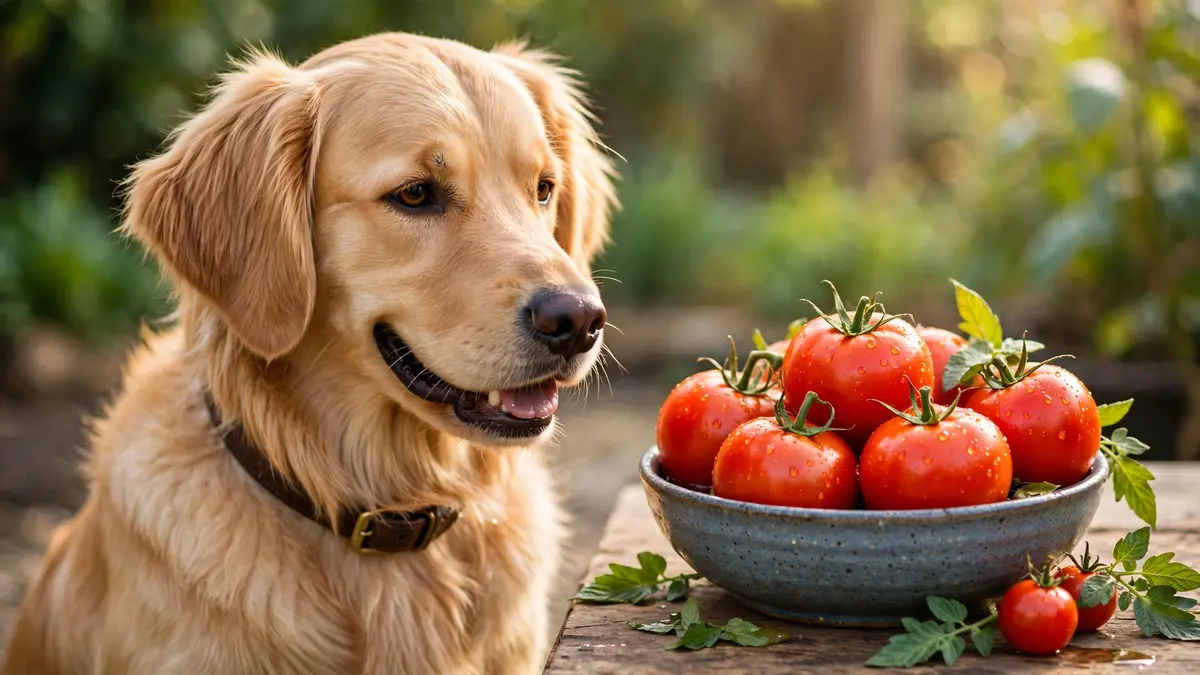
Can Dogs Eat Tomatoes? Yes, But Avoid These Toxic Parts
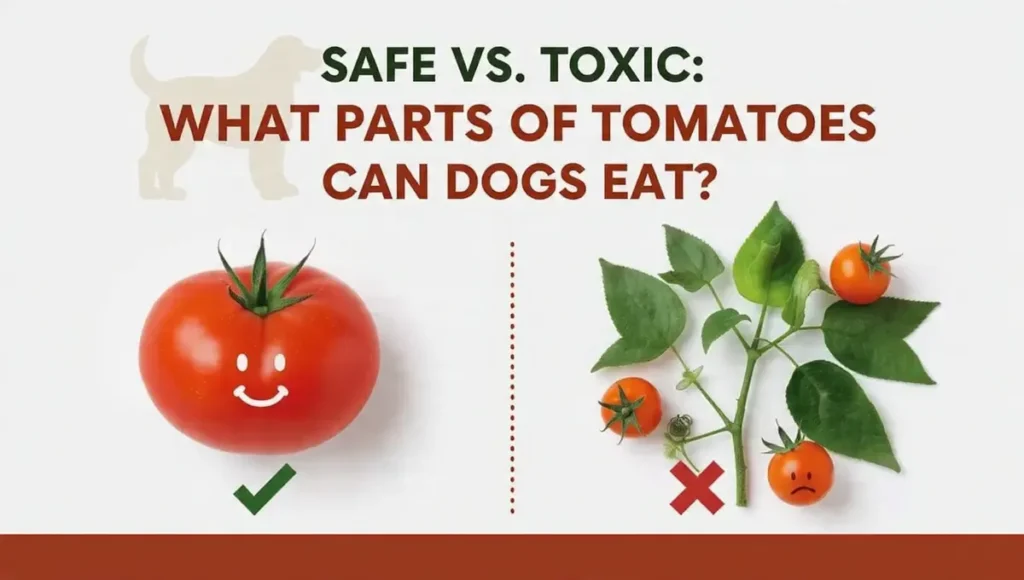
Yes, most dogs can eat ripe, red tomatoes in moderation. The important distinction is between the ripe tomato fruit and the green parts of the tomato plant. Green or unripe tomatoes, leaves, stems, and vines contain higher concentrations of naturally occurring glycoalkaloids and should be avoided.
Can Dogs Eat Tomatoes? (Quick Answer)
| Tomato | Safe for dogs? |
|---|---|
| Ripe red tomato | ✅ Yes, small amounts |
| Ripe cherry tomato | ✅ Yes, cut into pieces |
| Ripe yellow tomato | ✅ Yes |
| Green/unripe tomato | ⚠️ Avoid |
| Tomato leaves | ❌ No |
| Tomato stems | ❌ No |
| Tomato vines | ❌ No |
| Ketchup | ❌ Avoid |
| Tomato sauce | ❌ Avoid unless completely plain |
Plain ripe tomato can be offered as an occasional treat after the stems and leaves have been removed and the fruit has been washed and cut into small pieces. Avoid tomato sauces, ketchup, soups, and other processed products unless you have checked the ingredients carefully, as they may contain onion, garlic, excessive salt, or other ingredients that are unsafe for dogs.
If your dog has eaten a green tomato or part of a tomato plant, don’t panic. The level of risk depends on what was eaten, how much was consumed, and your dog’s size. Monitor for symptoms such as vomiting, diarrhea, excessive drooling, weakness, lethargy, or loss of coordination, and contact your veterinarian if you are concerned or symptoms develop.
The simple rule: ripe red tomato in small amounts is generally safe; green plant parts and heavily processed tomato products are best avoided.
Key Takeaways: Can Dogs Eat Tomatoes?
- Yes, most dogs can eat ripe, red tomatoes in small amounts as an occasional treat.
- Avoid green or unripe tomatoes, leaves, stems, and vines, which contain higher concentrations of naturally occurring glycoalkaloids.
- Remove all stems and leaves and wash and cut the ripe tomato before serving.
- Avoid ketchup, pasta sauce, soup, and other processed tomato products that contain onion, garlic, excessive salt, or other unsuitable ingredients.
- Start with a small amount and watch for vomiting, diarrhea, drooling, or other signs of digestive upset.
- If your dog eats a large amount of green tomato or tomato plant material, contact your veterinarian for advice, especially if symptoms appear.
If you’re curious about other safe fruits for dogs, check out our guides on “Can Dogs Eat Cucumber?” and “Can dogs eat strawberries?.”
Table of Contents
Are Tomatoes Toxic to Dogs? Understanding Tomato Plant Toxicity
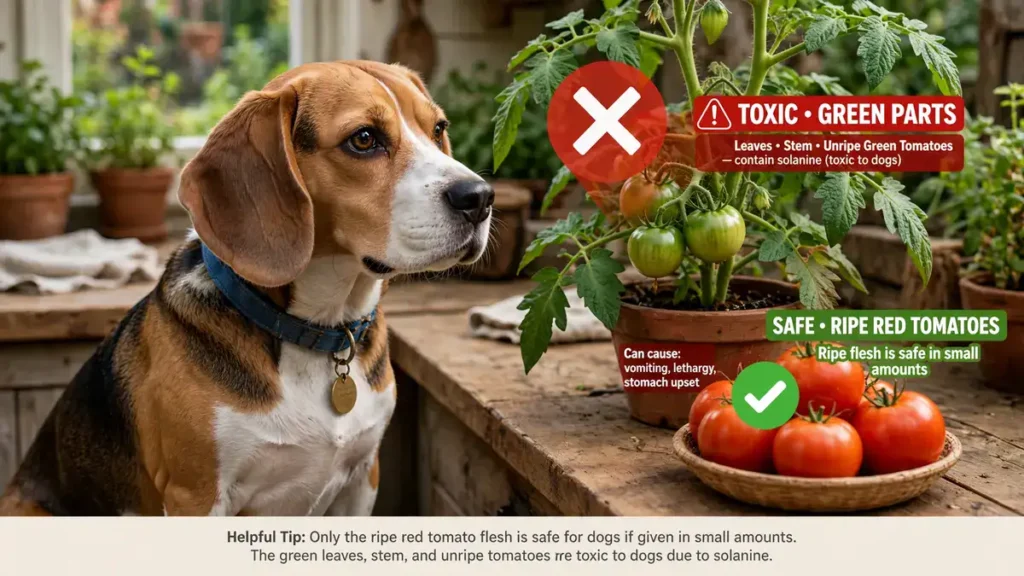
Tomato plants contain naturally occurring glycoalkaloids, including α-tomatine. These compounds are present at much higher levels in green plant parts and unripe fruit than in ripe tomatoes.
When a dog eats these green parts, the tomatine can enter their system. Tomato plant toxicity can occur when a dog consumes larger amounts of the plant’s green parts or unripe fruit.. According to experts at VCA Hospitals, Tomato plants contain glycoalkaloids, particularly α-tomatine, in their green parts (leaves, stems, unripe fruit), These compounds may cause gastrointestinal irritation when consumed. The ripe fruit is generally considered non-toxic.
The symptoms of poisoning can vary based on how much your dog ate. The most common sign is gastrointestinal upset. This includes vomiting, drooling, or diarrhea.
In more severe cases, the toxins can lead to cardiac effects. You might notice your dog’s heart rate changing or becoming irregular. The toxin can also affect the nervous system. This causes a loss of coordination. Your dog might look drunk or struggle to walk in a straight line.
Tomato plants in gardens can pose a greater exposure risk because dogs may chew the leaves, stems, vines, or unripe fruit. In your backyard, a curious dog has access to the entire plant. They might chew on the vines or eat a handful of unripe green tomatoes. Most store-bought tomatoes arrive without stems or leaves, making them much safer for your home. If you have a garden, make sure to fence off your tomato patch to keep your furry friend away from the greens.
Are Tomatoes Good for Dogs? Benefits, Nutrition & Risks
Once you have removed all the green bits, ripe tomatoes can be a healthy snack. If you’re wondering, “Are tomatoes safe for dogs?” in moderation, the answer is yes, as long as you follow proper preparation guidelines.
Ripe tomatoes provide nutrients such as lycopene, vitamin C, vitamin K, carotenoids, potassium, and fiber. However, dogs eating a complete and balanced diet do not need tomatoes to meet their nutritional requirements.
If your pet needs to watch their waistline, tomatoes are an excellent treat option. They are very low in calories but offer a juicy, satisfying crunch.
Tomato Nutrition for Dogs
| Nutrient | Potential nutritional role |
|---|---|
| Lycopene | Antioxidant carotenoid |
| Vitamin C | Antioxidant and normal immune function |
| Vitamin K | Normal blood clotting |
| Vitamin A/carotenoids | Vision and other normal biological functions |
| Fiber | Supports normal digestion |
Tomatoes can provide useful nutrients, but they are not a necessary part of a dog’s diet.
How to Safely Feed Tomatoes to Dogs
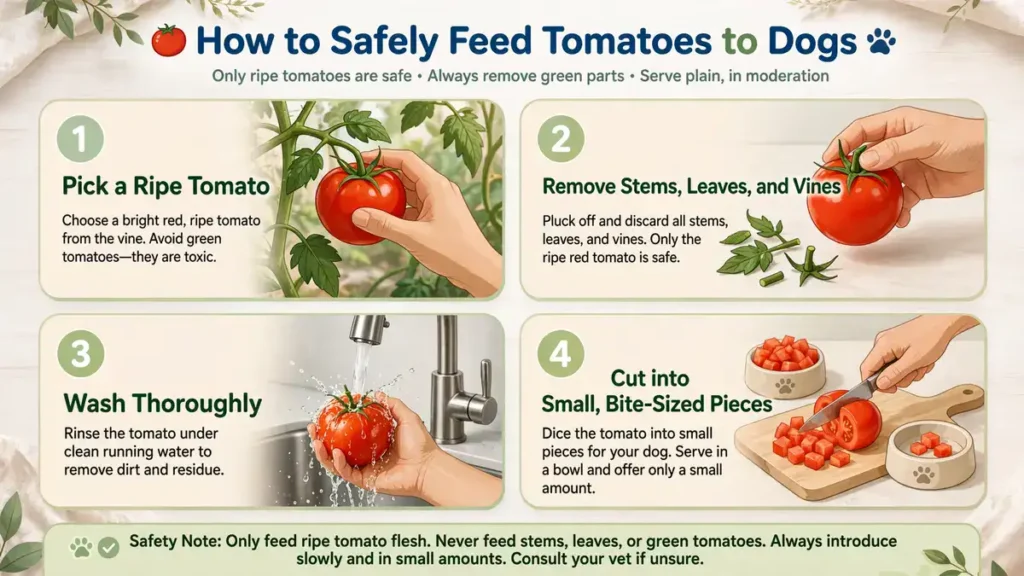
If you’re asking yourself, ‘Can dogs have tomatoes?’, the answer is yes – with some important precautions. Follow these steps to ensure your dog enjoys this treat safely.
Step 1: Choose Only Bright Red, Fully Ripe Tomatoes
Start by picking the right fruit. It must be completely red and soft to the touch. Avoid any tomatoes that have green spots or yellow patches. Fully ripe tomatoes contain much lower levels of the glycoalkaloids found in green tomato plant material.
Step 2: Thoroughly Remove All Stems, Vines, and Leaves
Before serving, pull away every bit of green from the tomato. The stems and leaves contain the highest concentration of harmful substances. The green parts contain higher concentrations of glycoalkaloids, so they should be kept away from dogs.
Step 3: Wash the Fruit to Remove Pesticides
Always rinse the tomato under cool, running water. Store-bought produce often has wax or chemical pesticides on the skin. Scrubbing the fruit gently ensures your dog is only eating the healthy vitamins. This simple step helps prevent accidental exposure to garden chemicals.
Step 4: Cut Into Bite-Sized Pieces to Prevent Choking
Never toss a whole tomato to your dog, especially if they are a smaller breed. Slice the fruit into small, manageable bits. This prevents choking and makes the snack easier to digest.
When you offer a new food, watch your dog’s reaction closely. Look at their physical cues to see if they enjoy the taste or feel any discomfort. Learning about dog body language can help you read their signals more clearly.
The 10% Treat Rule
Even though tomatoes are healthy, they should not be a main meal. Experts at the ASPCA remind owners that treats should be given in moderation.
The commonly used 10% guideline applies to all treats and extras combined, not tomatoes alone. Most of your dog’s calories should come from a complete and balanced diet. Remember that tomatoes count toward your dog’s overall daily treat allowance.
How Much Tomato Can Dogs Eat?
There isn’t a single amount of tomato that is appropriate for every dog. Start with one or two small pieces of ripe tomato and see how your dog responds. The amount should remain small enough to fit within your dog’s overall daily treat allowance.
Dogs with medical conditions, dietary restrictions, or a history of digestive problems may need different guidance from their veterinarian.
Can Dogs Eat Tomato Sauce or Ketchup?
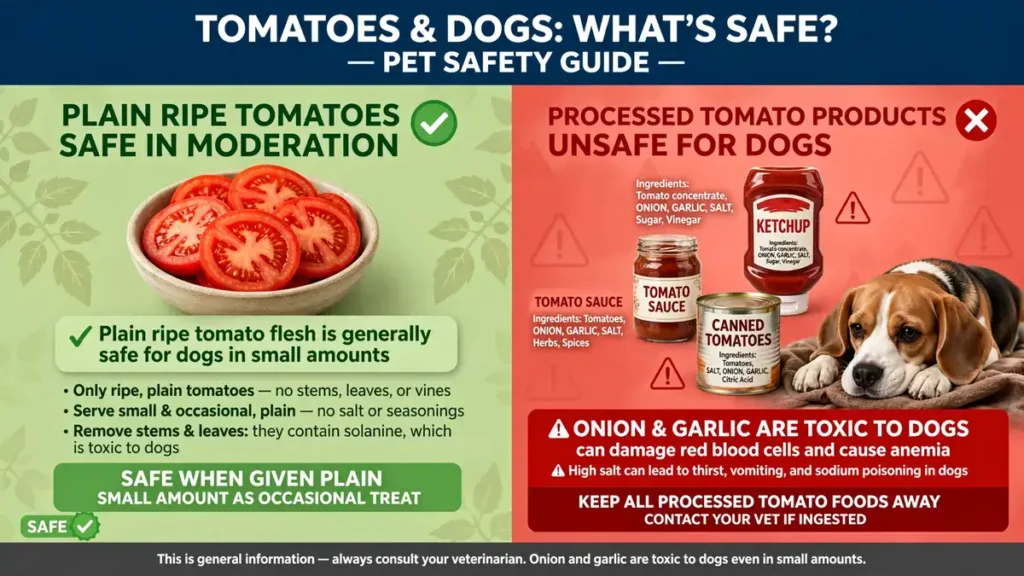
Plain tomato itself can be safe, but commercial tomato sauces and ketchup are usually poor choices for dogs because they often contain ingredients such as onion, garlic, excessive salt, sugar, or other seasonings.
Store-bought ketchup and tomato sauces are usually packed with added salt and sugar. Too much sugar can lead to weight gain and dental issues. Even worse, some sugar-free products may contain xylitol (also called birch sugar), which is highly toxic to dogs. Always check the ingredient label.
The biggest danger in processed tomatoes is the addition of seasonings. Most sauces, soups, and juices contain garlic and onion powders. These ingredients are part of the Allium family and are highly poisonous to pets.
Garlic and onions can cause oxidative damage to a dog’s red blood cells. This can lead to a serious condition called hemolytic anemia. To keep your furry friend safe, you must be careful about common household hazards for dogs that hide in your spice cabinet.
Canned tomatoes and tomato soups also pose a major risk due to high sodium levels. Manufacturers add large amounts of salt to preserve these foods and enhance the flavor. For a dog, eating too much salt can lead to dehydration, tremors, or even salt poisoning.
According to the ASPCA, you should never feed your dog human foods that contain heavy spices or salt. Always check the label before you let your dog lick a plate. If the product isn’t 100% plain tomato, it is best to keep it out of your dog’s reach.
Why Processed Tomatoes Are Dangerous
| Product | Dangerous Ingredients | Risk to Dogs |
|---|---|---|
| Ketchup | Salt, sugar, vinegar, onion/garlic powder, xylitol (in sugar-free) | Salt poisoning, obesity, hemolytic anemia, liver injury (from xylitol) |
| Tomato Sauce | Salt, sugar, garlic, onion, spices, preservatives | Hemolytic anemia, dehydration, salt poisoning |
| Canned Tomatoes | High sodium, preservatives, garlic/onion (in some brands) | Salt poisoning, hemolytic anemia |
| Tomato Soup | Salt, sugar, garlic, onion, cream, butter | Hemolytic anemia, pancreatitis, salt poisoning |
| Sun-Dried Tomatoes | High salt, sulfur dioxide (preservative) | Salt poisoning, digestive upset |
My Dog Ate a Green Tomato: What Should I Do?
If you suspect tomato toxicity in dogs, act quickly. The first step is to determine how much of the green parts your dog consumed, as this will help you assess the risk.
The potential risk depends on the part of the plant eaten, the amount consumed, and the size and health of the dog
Next, monitor your dog for signs of illness and contact your veterinarian if symptoms develop or you are concerned about the amount consumed. There are a few common signs of distress you should look for. One major symptom is hypersalivation, which is just a fancy word for excessive drooling. You might also notice lethargy, where your dog seems unusually weak, sleepy, or out of it. If your dog starts vomiting, it is a clear sign that the toxins are affecting their stomach.
If you see any of these symptoms, do not wait for them to get better on their own. You should contact your veterinarian or an emergency pet poison hotline immediately. According to the Pet Poison Helpline, early treatment is the best way to help your dog recover quickly. When you call, try to tell the expert exactly how much of the green tomato or plant your dog ate. This information helps them give you the best advice for your furry friend.
Don’t Induce Vomiting Unless Instructed
Do not try to make your dog vomit unless a veterinarian or veterinary poison service specifically tells you to do so. The appropriate response can depend on what was eaten, how much was consumed, and how long ago it happened.
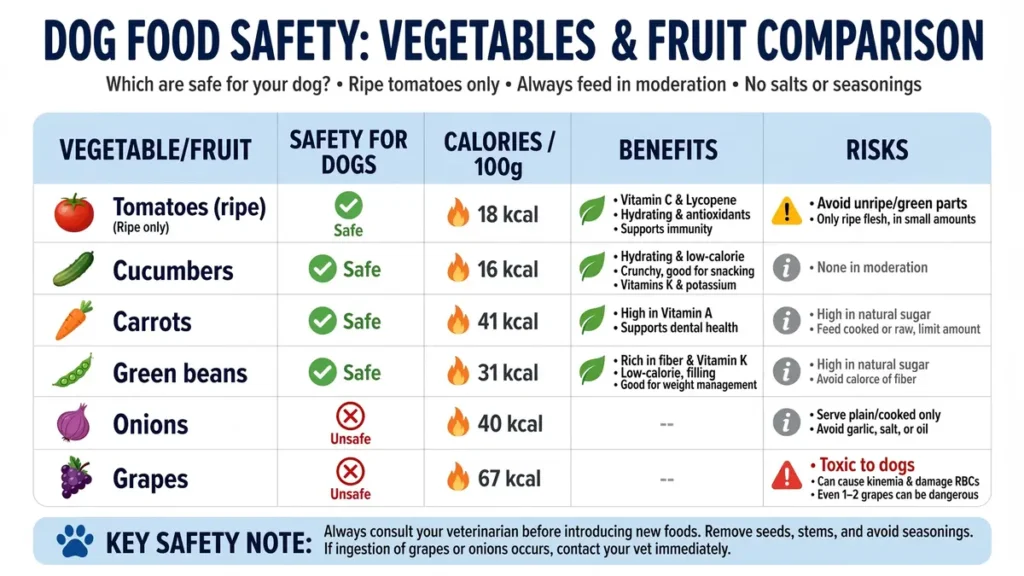
Tomatoes vs Other Vegetables: Which Are Safest for Dogs?
| Vegetable | Safe for Dogs? | Calories (per cup) | Key Benefit | Risk |
|---|---|---|---|---|
| Tomatoes (ripe) | ✅ Yes | 32 kcal | Lycopene, Vitamin C | Green parts toxic |
| Cucumber | ✅ Yes | 16 kcal | Hydration | None |
| Carrots | ✅ Yes | 50 kcal | Beta-carotene | Choking (whole) |
| Green Beans | ✅ Yes | 44 kcal | Fiber | None |
| Onions | ❌ TOXIC | – | – | Hemolytic anemia |
| Grapes | ❌ TOXIC | – | – | Kidney failure |
Common Mistakes When Feeding Tomatoes to Dogs
Even though ripe tomatoes can be a healthy treat, many pet owners accidentally make mistakes that could put their dogs at risk. Avoid these common errors to keep tomato time safe and stress-free.
1. Feeding unripe green tomatoes
One of the biggest mistakes is offering unripe, green tomatoes. Green or unripe tomatoes contain higher concentrations of glycoalkaloids, particularly α-tomatine, than fully ripe tomatoes.. Always wait until tomatoes are fully ripe before sharing them with your dog.
2. Leaving the Stems, Leaves, or Vines Attached
The fruit itself isn’t the only thing to consider. Tomato stems, leaves, and vines contain the highest concentrations of potentially harmful compounds. Even if the tomato is ripe, always remove every green part before serving it to your dog.
3. Feeding Tomato Sauce or Other Processed Tomato Products
Many people assume tomato sauce is just cooked tomatoes, but most commercial products contain ingredients that are unsafe for dogs. Garlic, onions, excess salt, added sugar, and artificial sweeteners like xylitol can all pose serious health risks. Stick to plain, fresh tomatoes instead of sauces, ketchup, soups, or canned tomato products.
4. Giving Too Much
Tomatoes should only be an occasional treat, not a regular part of your dog’s diet. Feeding large amounts may cause stomach upset because of their acidity and fibre content. As a general rule, treats—including tomatoes—should make up no more than 10% of your dog’s daily calorie intake, with the remaining 90% coming from a complete and balanced dog food.
5. Offering Whole Cherry Tomatoes
Cherry and grape tomatoes are safe when fully ripe, but serving them whole can create a choking hazard, particularly for puppies and small breeds. Always cut small tomatoes into bite-sized pieces before offering them to your dog.
6. Ignoring Signs of an Allergy or Sensitivity
Although uncommon, some dogs may not tolerate tomatoes well. If your dog develops vomiting, diarrhoea, excessive itching, facial swelling, or unusual lethargy after eating tomatoes, stop feeding them immediately and contact your veterinarian. Introducing new foods gradually makes it easier to spot any adverse reactions.
7. Assuming Tomato Products Are Safe
A product made from tomatoes isn’t necessarily suitable for dogs. Always check the ingredient list for onion, garlic, excessive salt, added sugar, and xylitol.
Quick Safety Checklist
Before feeding tomatoes to your dog, ask yourself:
- ✅ Is the tomato fully ripe and red?
- ✅ Have all stems, leaves, and vines been removed?
- ✅ Is it plain with no seasoning, sauce, or additives?
- ✅ Has it been cut into small, bite-sized pieces?
- ✅ Am I only offering a small amount as an occasional treat
Are Tomatoes Safe for Dogs? Final Thoughts and Recommendations
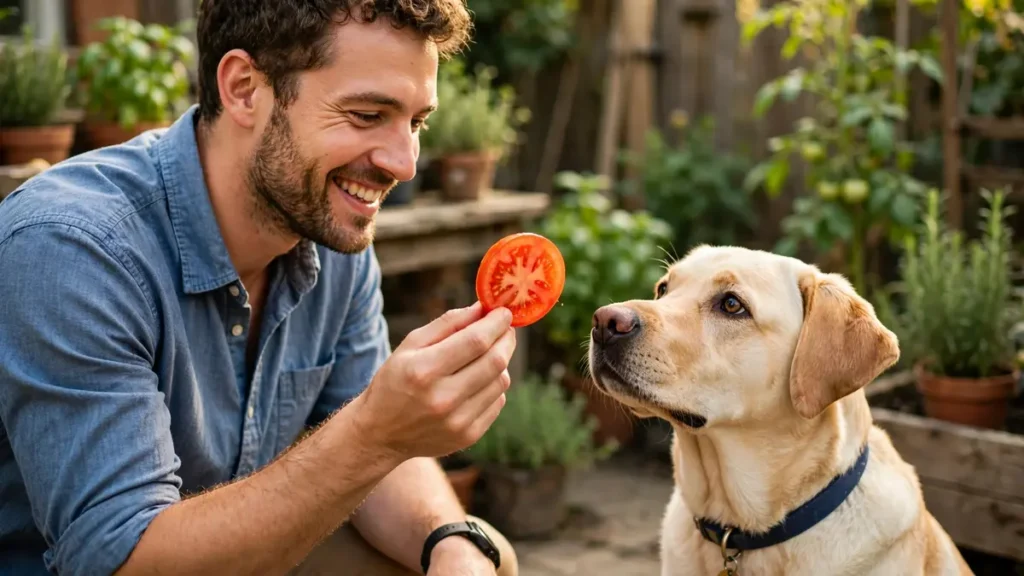
So, can dogs eat tomatoes? Yes. Most healthy dogs can enjoy small amounts of plain, ripe tomato as an occasional treat. Remove the stems and leaves, avoid unripe green tomatoes and questionable processed products, and introduce new foods gradually. If your dog eats a large amount of tomato plant material or develops symptoms, contact your veterinarian.
Veterinary Note: While ripe tomatoes are generally safe for healthy dogs, puppies, dogs with digestive conditions, and pets with food allergies may react differently. Always introduce new foods gradually and consult your veterinarian if you have concerns.
Glossary & Key Terms: Tomatoes and Dogs
Understanding these key terms will help you safely decide whether tomatoes are a healthy treat or a potential risk for your dog.
Tomatine
A naturally occurring glycoalkaloid found in tomato plants, particularly in green plant material and unripe fruit.
Solanine
A glycoalkaloid found in several nightshade plants. While solanine is associated with some nightshade toxicity, α-tomatine is the more relevant glycoalkaloid when discussing tomato plants.
Nightshade Family (Solanaceae)
A group of plants that includes tomatoes, potatoes, and eggplants. Some parts of these plants contain natural toxins that can be harmful to dogs.
Ripe Tomato
Generally safe for dogs in small amounts when served plain and without stems or leaves.
Unripe (Green) Tomato
Green or unripe tomatoes contain higher concentrations of glycoalkaloids, particularly α-tomatine, than fully ripe tomatoes. This makes it potentially toxic to dogs.
Tomato Plant Toxicity
A condition that occurs when a dog ingests toxic parts of the tomato plant, such as leaves, stems, or unripe fruit. Symptoms may range from mild digestive upset to more serious health issues.
Glycoalkaloids
Naturally occurring chemical compounds (including tomatine and solanine) found in nightshade plants. These compounds act as a defense mechanism for the plant but can be harmful to dogs.
Gastrointestinal Upset
A common reaction in dogs after eating something unsuitable. Symptoms include vomiting, diarrhea, drooling, and stomach discomfort.
Hypersalivation
Excessive drooling is often a sign that a dog has ingested something toxic or irritating.
Lethargy
A state of low energy or unusual tiredness in dogs, which may indicate illness or poisoning.
Loss of Coordination
A neurological symptom where a dog appears unsteady or has difficulty walking properly. Can occur in more severe cases of toxicity.
Hemolytic Anemia
A serious condition where red blood cells are destroyed faster than they can be produced. Can be caused by toxic foods like onions and garlic found in processed tomato products.
Xylitol
An artificial sweetener found in some processed foods (like sugar-free ketchup). Extremely toxic to dogs and can cause rapid insulin release and liver failure.
Moderation (10% Rule)
A feeding guideline stating that treats (including tomatoes) should make up no more than 10% of a dog’s daily calorie intake.
Choking Hazard
A risk that occurs when food pieces are too large. Small or whole tomatoes can pose a choking risk, especially for small dog breeds.
Tomato Safety for Dogs: FAQs
Common Questions About Tomatoes and Dogs
Can dogs eat tomatoes safely?
Yes, dogs can eat ripe, red tomatoes in small amounts. Fully ripe tomatoes are generally considered non-toxic to dogs when served plain and in small amounts. However, the green parts of the plant – such as stems, leaves, and unripe tomatoes—contain harmful compounds and should always be avoided.
Are green tomatoes toxic to dogs?
Green or unripe tomatoes should be avoided because they contain higher concentrations of glycoalkaloids than ripe tomatoes.
Can puppies eat tomatoes?
Puppies can eat small amounts of ripe tomatoes, but extra caution is needed. Their digestive systems are more sensitive, so even safe foods can cause stomach upset. Always introduce new foods slowly and monitor for reactions.
How much tomato can a dog eat?
Tomatoes should only make up a small portion of your dog’s diet. Follow the 10% treat rule, meaning Tomatoes, like other treats and extras, should fit within the overall treat allowance rather than making up 10% by themselves.
Can dogs eat cherry tomatoes or grape tomatoes?
Yes, dogs can eat cherry and grape tomatoes if they are fully ripe and served plain. Be sure to cut them into smaller pieces to prevent choking, especially for small dog breeds.
What happens if a dog eats tomato leaves or stems?
If a dog eats tomato leaves, stems, or unripe fruit, they may experience tomato plant poisoning. Symptoms include drooling, vomiting, lethargy, and coordination issues. Contact a veterinarian if you notice any of these signs.
Can dogs eat cooked tomatoes?
Yes, dogs can eat plain cooked tomatoes in moderation. However, cooked tomato products such as pasta sauce, ketchup, canned tomatoes, and soups often contain garlic, onion, salt, or sugar, making them unsafe for dogs.
Can dogs eat raw tomatoes?
Yes, dogs can eat raw, ripe tomatoes as long as they are plain and free of green parts. Cut them into small, bite-sized pieces to prevent choking, especially for smaller breeds.
Can dogs eat green tomatoes?
No, Green or unripe tomatoes should be avoided because they contain higher concentrations of naturally occurring glycoalkaloids, including α-tomatine, than ripe tomatoes.
Can dogs eat tomato plants?
No. Dogs should not eat tomato plants. The leaves, stems, vines, and unripe fruit contain higher concentrations of glycoalkaloids, particularly α-tomatine, than ripe tomatoes.
Can dogs eat canned tomatoes?
Plain, unsalted canned tomatoes with no onion/garlic can potentially be offered in a small amount; check the label first.
Can dogs eat tomato skins?
Yes, dogs can eat tomato skins as long as the tomato is ripe and free of green parts. However, some dogs may have trouble digesting the skins, so it’s best to peel the tomato if your dog has a sensitive stomach.
Can dogs eat yellow tomatoes?
Yes, yellow tomatoes are safe for dogs if they are fully ripe. Unlike green tomatoes, yellow tomatoes are a ripe variety—not unripe. The color doesn’t indicate toxicity; ripeness does. As long as the tomato is soft and fully yellow (not green), it’s safe to serve in small amounts. Always remove stems and leaves before feeding.
Can dogs eat tomato puree?
Plain tomato puree may be safe in a small amount if it contains only ripe tomatoes and no added salt, onion, garlic, or other unsuitable ingredients. Because recipes vary, fresh ripe tomato is the simpler choice.
Can dogs eat tomato paste?
Tomato paste isn’t an ideal treat for dogs because it is highly concentrated and commercial products may contain added salt or seasonings. Check the ingredients carefully and avoid products containing onion, garlic, or other unsafe ingredients.
Are tomatoes acidic for dogs?
Yes. Tomatoes are acidic and may cause stomach upset in some dogs, particularly those with sensitive digestive systems.
Can dogs eat tomatoes every day?
Dogs don’t need tomatoes every day. Ripe tomatoes can be an occasional treat, but feeding them frequently may contribute unnecessary calories or cause digestive upset in dogs that don’t tolerate them well. Treats and extras should remain a limited part of the overall diet.
Can Dogs Eat Tomato Seeds?
Yes. The seeds inside a ripe tomato aren’t generally considered a toxic concern for dogs. The main concern is the green parts of the tomato plant and unripe fruit. As always, serve ripe tomato plain and in small amounts.
Leave a Reply
You must be logged in to post a comment.