

Can Dogs Eat Watermelon Safely?
Can Dogs Eat Watermelon?
Yes, dogs can eat watermelon safely in moderation. The fruit is non-toxic and contains hydration, vitamins, and antioxidants. However, pet owners must remove the seeds and rind before feeding it to their dog because these parts can cause digestive issues or intestinal blockages.
Can Dogs Eat Watermelon? Key Takeaways
• Dogs can safely eat watermelon in moderation.
• Watermelon is 92% water and helps keep dogs hydrated.
• Always remove seeds and rind before feeding.
• Too much watermelon can cause digestive upset.
If you enjoy sharing healthy fruits with your dog, you might also wonder about other options like pineapple, mandarins, or strawberries. Learn more in our guides on whether dogs can eat pineapple, can dogs eat mandarins, and can dogs eat strawberries safely.

Table of Contents
Is Watermelon Good for Dogs? Benefits and Nutrition
Why Watermelon is Good for Dogs
Watermelon isn’t just a tasty snack—it’s contains water, vitamins, and antioxidants that can make it a refreshing occasional treat. The American Kennel Club (AKC) says watermelon is 92% water and has only about 46 calories per cup. That makes it a great, low-calorie way to keep your dog hydrated on hot days.
Watermelon also has big health benefits:
- Fights Cell Damage
Watermelon contains lycopene, an antioxidant that has been studied for its potential role in protecting cells from oxidative stress. However, there isn’t enough evidence to say that feeding watermelon prevents or treats cancer in dogs. - Supports Hydration
Watermelon is about 92% water, so its high moisture content can contribute to a dog’s overall fluid intake. - Helps Manage Weight
Because watermelon is relatively low in calories, small portions can be used as an occasional alternative to higher-calorie treats.
How to Serve Watermelon Safely
Watermelon can be a healthy occasional treat for dogs., but you must prepare it the right way:
- Remove all seeds—they can cause blockages in your dog’s stomach.
- Cut off the rind—it’s too tough for dogs to digest and can make them sick.
- Serve in small pieces—about 1 inch by 1 inch is perfect.
- Don’t overdo it—watermelon should be less than 10% of your dog’s daily food.
Final Tip: Always check with your vet if you’re unsure about giving your dog new foods!

Can Dogs Eat Watermelon Seeds or Rind? ❌ NO – Here’s Why
While watermelon is a healthy occasional treat for your pup, you can’t simply toss them a slice from your picnic table. To keep this hydrating snack safe, you need to understand the danger zones of the fruit: the seeds and the rind.
Are Watermelon Seeds Bad for Dogs?
Many owners ask what happens if a dog eats a watermelon seed?
Watermelon seeds are not toxic to dogs, but large seeds can cause choking or intestinal blockage. Veterinary sources emphasize blockage risk rather than toxicity.
Large, black seeds can cause serious intestinal blockages, particularly in smaller breeds. While the Petco research notes that the soft, white seeds found in seedless varieties are generally less risky, it is best practice to remove all seeds entirely. If your dog has a history of digestive issues, even a few seeds can trigger an upset stomach. .

Can Dogs Eat Watermelon Rind?
One of the most common questions is can dogs eat watermelon rind?
It might be tempting to let your dog gnaw on the leftover green skin, but the watermelon rind is strictly off-limits. The rind is exceptionally fibrous and hard, making it nearly impossible for a dog’s digestive tract to break down. Ingesting the rind can lead to severe gastrointestinal distress or a life-threatening intestinal obstruction that may require surgical intervention. To keep your home safe, always dispose of the rind in a secure bin, treating it with the same caution as other common household hazards for dogs.
Yellow vs. Red Watermelon: Is There a Difference?
If you find a yellow-fleshed watermelon at the farmer’s market, you’ll be happy to know it is just as safe for your dog as the traditional red variety. Both are roughly 92% water and exceptionally low in calories.
Red watermelon is higher in lycopene, an antioxidant that has been studied for its potential role in protecting cells from oxidative stress. However, this research does not mean that watermelon can prevent or treat cancer in dogs.
How to Serve Watermelon Like a Pro
To ensure your dog reaps the benefits without the risks, follow these preparation guidelines:
- The 10% Rule: According to Hill’s Pet Nutrition, treats like watermelon should make up no more than 10% of your dog’s daily caloric intake.
- Perfect Portions: Purina recommends slicing the fruit into manageable pieces, approximately 1 inch long by 1 inch tall and 1/4 inch thick.
By taking a few extra minutes to deseed and peel this summertime favorite, you can provide your dog with a delicious, treat that can be a refreshing occasional treat when prepared correctly

How Much Watermelon Can Dogs Eat? Portion Guide by Weight
Portion Guide by Dog Size
Understanding how much watermelon dogs can eat is important to prevent stomach upset.
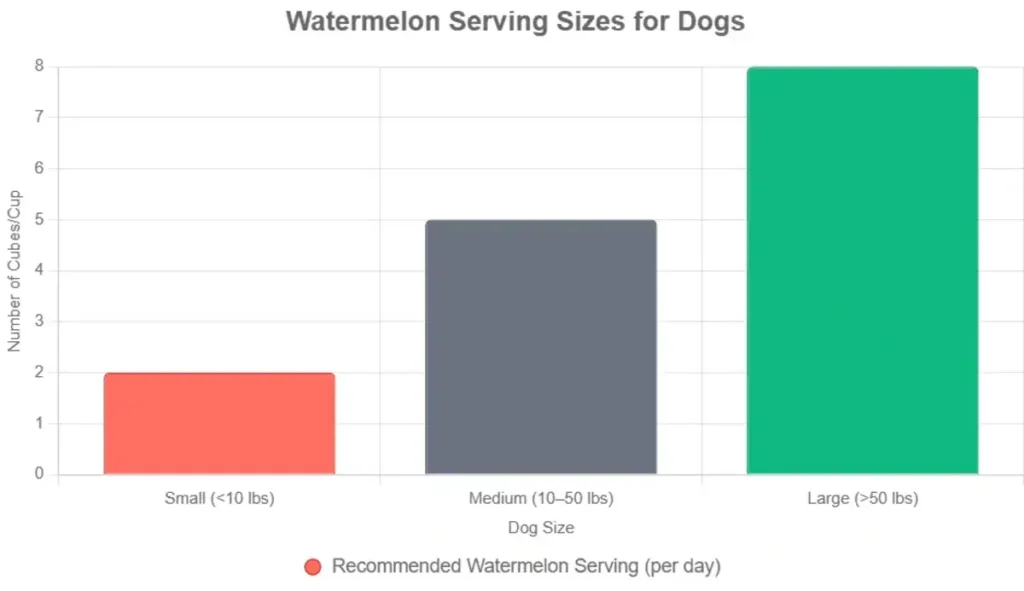
The amount of watermelon your dog can safely enjoy depends largely on their size and weight. To prevent choking or digestive upset, Purina suggests cutting the fruit into bite-sized pieces, approximately 1 inch long by 1 inch tall by 1/4 inch thick.
There isn’t one exact watermelon portion that is appropriate for every dog. Treat intake should depend on body size, daily calorie needs, activity level, and the rest of the diet.
- Small/Toy Breeds (e.g., Chihuahuas, Yorkies): 1–2 small pieces.
- Medium Breeds (e.g., Beagles, Spaniels): 3–5 pieces.
- Large/Giant Breeds (e.g., Labradors, Great Danes): A small handful (approx. 1/2 cup).
Like watermelon, other fruits should also be served in moderation. Fruits such as bananas, cucumbers, and strawberries can be healthy snacks when prepared properly.
Calorie Counting and Hydration
Watermelon is often called nature’s candy, but it is surprisingly low in calories.
Beyond hydration, this fruit offers significant metabolic benefits. Research published in the Journal of Animal and Veterinary Sciences found that watermelon extract can significantly decrease serum leptin concentrations in dogs.
Watermelon Nutrition for Dogs
| Nutrient | Amount per Cup |
|---|---|
| Water | 92% |
| Calories | 46 |
| Vitamin C | 12 mg |
| Vitamin A | 865 IU |
| Potassium | 170 mg |
Watermelon is mostly water and low in calories, which makes it a hydrating snack for dogs.
Can Puppies Eat Watermelon?
Yes, puppies can eat watermelon in small amounts, provided the seeds and rind are removed.Because puppies are prone to upset tummies during dietary transitions, introduce watermelon very slowly – one tiny piece at a time.
If your puppy has a particularly reactive gut, you might want to review our guide on the best dog food for sensitive stomachs to ensure their primary nutrition is stable before adding fresh fruits. Always monitor your puppy for signs of diarrhea or lethargy after introducing a new treat.

Can Diabetic Dogs Eat Watermelon?
For dogs with diabetes or those prone to obesity, sugar intake is a major concern. Because watermelon contains natural sugars and carbohydrates, portions may need to be limited in dogs with diabetes.
- Diabetes Management: If your dog is diabetic, consult your veterinarian before adding watermelon to their diet. They may recommend smaller, less frequent portions to maintain glycemic stability.
- The Seed and Rind Hazard: Regardless of your dog’s health status, never feed them the seeds or the rind. While the white seeds in seedless varieties are generally harmless, PetMD warns that black seeds and the tough green rind can cause serious intestinal blockages, which may require surgical intervention.
By sticking to these moderation guidelines, you can ensure that watermelon remains a safe, refreshing, and antioxidant-rich treat that supports your dog’s long-term wellness.

How to Safely Feed Watermelon to Dogs: Step-by-Step Guide
Now that you know watermelon is a healthy treat for your pup, it’s time to move beyond the basic slice. While fresh chunks are always a hit, getting creative with how you serve this fruit can provide mental stimulation, better hydration, and even specific health benefits.
Many pet owners also enjoy making fruit-based snacks at home. For example, you can explore recipes like blueberry yogurt for dogs or learn whether blueberry muffins are safe for dogs before sharing baked treats.
DIY Frozen “Pupsicles” for Cooling Down
When the summer heat hits, there is no better way to help your dog lower their core temperature than with a frozen watermelon treat
- Watermelon Cubes: Dice the fruit into bite-sized pieces – Purina recommends pieces roughly 1 inch long by 1/4 inch thick—and freeze them on a baking sheet.
- The Pup-O-Smoothie: Blend seedless watermelon with a tablespoon of plain, unsweetened Greek yogurt. Pour the mixture into silicone molds and freeze. This adds a boost of probiotics to the hydration.

Fresh Watermelon Juice vs. Commercial Treats
While watermelon-flavored treats are widely available, not all are safe for dogs. Always check ingredient labels—some products, especially sugar-free options, may contain xylitol, a sweetener that is highly toxic to dogs.
Whole, seedless watermelon is preferable to watermelon juice because it is easier to portion and avoids concentrated servings of sugar. When preparing juice at home, ensure you have removed all black seeds, as they can cause intestinal blockages, according to PetMD.
Watermelon isn’t the only fruit with health benefits for dogs. Other antioxidant-rich fruits like blueberries and strawberries can also provide vitamins and fiber when served in moderation.
Hydration Hacks: Encouraging Water Intake
How to use it as a hack:
- Water Bowl Topper: Add a splash of fresh watermelon juice to their water bowl to entice them to drink more.
- The “Crunchy” Bowl: Place a few frozen watermelon chunks at the bottom of a water bowl. Your dog will “bob” for the treats, ingesting plenty of water in the process.
- Weight Management: If your dog is on a diet, replacing heavy biscuits with watermelon can help. Recent data indicate that watermelon extract can significantly reduce serum leptin levels.
Can Watermelon Make Dogs Sick? Risks and Side Effects
As responsible pet parents, it is crucial to look beyond the refreshing pink flesh and understand the potential hazards hidden in the seeds and rind.
The Danger of Seeds and Rinds
The most significant risks associated with watermelon are not the fruit itself, but its packaging. While the American Kennel Club (AKC) notes that watermelon is an ideal treat for hydration, the seeds and rind present a different story:
- Intestinal Blockage: According to PetMD, while watermelon seeds contain trace amounts of cyanide, the primary concern is a physical intestinal blockage. This is especially true for smaller breeds. Petco further specifies that hard black seeds are more likely to cause an obstruction than the softer, immature white seeds found in “seedless” varieties.
- Gastrointestinal Distress: The watermelon rind is exceptionally tough and fibrous. A dog’s digestive system is not designed to break down such dense material, which can lead to severe GI upset or even a life-threatening “foreign body” blockage.
Identifying Signs of GI Upset
Even if you remove every seed, some dogs may still experience a reaction. If your dog has a history of digestive issues, you are likely already careful about their diet, perhaps even researching the best dog food for sensitive stomachs to keep their system stable. Adding a high-fiber, high-sugar fruit like watermelon can sometimes disrupt that balance.
Keep a close eye on your dog for several hours after they eat watermelon. Signs of GI upset include:
- Diarrhea or loose, watery stools.
- Persistent vomiting.
- Lethargy or unusual fatigue.
- Abdominal pain (often indicated by a prayer stretch or whining when touched).
When to contact a vet: If your dog accidentally ingests a large number of seeds or a piece of the rind, monitor them for 24 to 48 hours. You should contact your veterinarian immediately if you notice a total loss of appetite, repeated vomiting, or an inability to pass stool, as these are hallmark symptoms of a blockage.
If your dog ate watermelon:
A few pieces of seedless flesh:
Usually monitor normally.
A few seeds:
Monitor, particularly in small dogs.
Large quantity of seeds:
Contact your veterinarian for advice.
A large piece of rind:
Contact your veterinarian because of obstruction risk.
Symptoms such as repeated vomiting, abdominal pain, lethargy, loss of appetite or inability to pass stool:
Seek veterinary attention promptly.
The Golden Rule: Introduce Gradually
Start by offering a single, bite-sized piece (roughly 1 inch by 1 inch, as suggested by Purina). This gradual approach allows you to gauge your dog’s tolerance without overwhelming their digestive tract.

Watermelon vs. Other Dog-Safe Fruits
Not all fruits and vegetables are completely safe for dogs. For example, some parts of the tomato plant can be harmful, so it’s important to understand whether dogs can eat tomatoes safely before sharing them.
| Fruit | Safe for Dogs? | Calories (per cup) | Key Benefit | Risk |
|---|---|---|---|---|
| Watermelon | ✅ Yes | 46 kcal | Hydration | Seeds/rind |
| Strawberries | ✅ Yes | 49 kcal | Vitamin C/fiber | Moderation |
| Blueberries | ✅ Yes | 84 kcal | Antioxidants | Moderation |
| Pineapple | ✅ Yes | 82 kcal | Vitamin C/bromelain | Core/acid |
| Grapes | ❌ TOXIC | – | – | Kidney toxicity |
FAQ: Can Dogs Eat Watermelon?
Can dogs eat watermelon safely?
Yes, dogs can eat watermelon safely when it is served without seeds or rind. The flesh of the fruit is non-toxic and contains beneficial nutrients like vitamins A and C. However, moderation is essential because watermelon still contains natural sugars.
Is watermelon good for dogs?
Yes. Watermelon can be good for dogs because it is about 92% water and low in calories. It also contains antioxidants such as lycopene that support cellular health.
Can dogs have watermelon seeds?
Dogs should not eat watermelon seeds. Large black seeds may cause intestinal blockages, especially in small dogs. Always remove seeds before feeding watermelon to your pet.
Can dogs eat watermelon rind?
No. The rind is tough and difficult for dogs to digest. Eating watermelon rind can cause stomach upset or even intestinal obstruction.
How much watermelon can a dog eat?
Watermelon should be part of your dog’s overall treat allowance, with treats and other extras generally kept to no more than about 10% of daily calories.
Can puppies eat watermelon?
Yes, puppies can eat watermelon in small amounts. Introduce it slowly and monitor for digestive upset.
Is watermelon poisonous to dogs?
No, watermelon is not poisonous to dogs. However, seeds and rind can create choking hazards or digestive blockages.
Can dogs eat frozen watermelon?
Yes, dogs can eat frozen watermelon in moderation. Frozen watermelon cubes can be a refreshing treat on hot days and may help cool your dog down. Just make sure the watermelon is seedless and rind-free, and cut it into small pieces to prevent choking, especially for small dogs.
Is seedless watermelon safe for dogs?
Yes, seedless watermelon is generally safe for dogs when served in moderation. It still contains small white seeds, which are softer and usually harmless, but it’s best to remove them if possible. Always remove the rind as well, since it can be difficult for dogs to digest and may cause stomach upset.
Can dogs eat yellow watermelon?
Yes, dogs can eat yellow watermelon safely. Yellow watermelon is also mostly water.
Can Dogs Eat Watermelon Every Day?
Yes, dogs can eat small amounts of watermelon regularly, but they don’t need it every day. Keep watermelon within your dog’s overall treat allowance and introduce it gradually. Too much can cause diarrhea or stomach upset, and dogs with conditions such as diabetes may need individualized feeding advice from a veterinarian.
Glossary of Dog Nutrition and Watermelon Safety Terms
Antioxidants
Natural compounds that protect cells from damage caused by oxidative stress. Watermelon contains antioxidants such as lycopene and vitamin C, which may support cellular health in dogs.
Calcium Oxalate Crystals
Mineral deposits that can form in a dog’s urinary tract and potentially develop into bladder stones. Some studies suggest that hydration and certain nutrients may help reduce the risk of crystal formation.
Digestive Upset
A general term used to describe stomach-related symptoms such as vomiting, diarrhea, gas, or abdominal discomfort that can occur when a dog eats something their digestive system cannot tolerate.
Foreign Body Obstruction
A serious condition where an indigestible object becomes stuck in a dog’s digestive tract. Watermelon rind or large seeds may potentially cause this type of blockage if swallowed.
Gastrointestinal (GI) Tract
The digestive system that processes food in dogs including the stomach and intestines. Foods that are difficult to digest – like watermelon rind – can irritate the gastrointestinal tract.
Intestinal Blockage
A medical emergency where something obstructs the intestines and prevents food or waste from passing normally. Symptoms may include vomiting, lethargy, abdominal pain, and inability to defecate.
Leptin
A hormone that helps regulate appetite and body weight. Some studies suggest watermelon extract may influence leptin levels, which could support weight management in dogs.
Lycopene
A powerful antioxidant responsible for watermelon’s red color. Lycopene has been studied for its potential role in reducing oxidative stress and supporting cellular health.
Oxidative Stress
A biological process where harmful molecules called free radicals damage cells. Antioxidants found in foods like watermelon may help counteract this damage.
Struvite Crystals
Another type of mineral crystal that can develop in a dog’s urinary system and sometimes lead to bladder stones. Proper hydration and diet can help reduce the risk of formation.
Leave a Reply
You must be logged in to post a comment.