
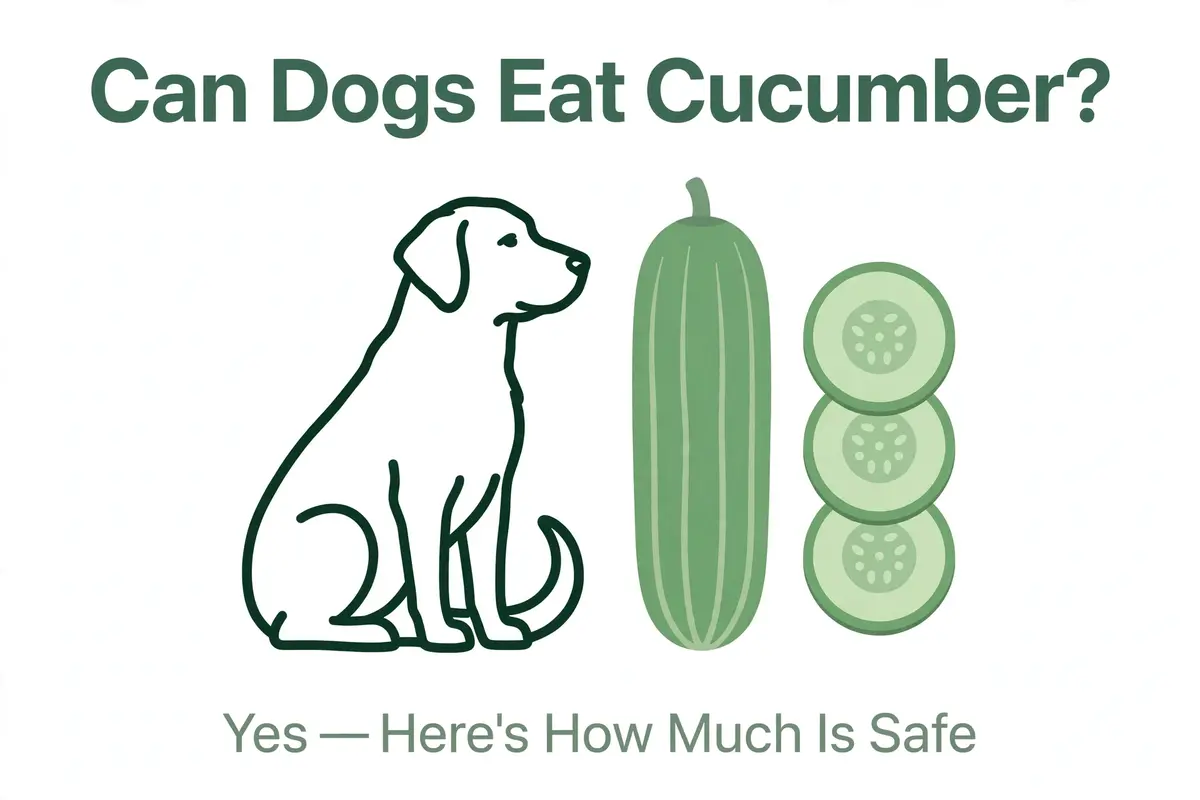
Can Dogs Eat Cucumber?
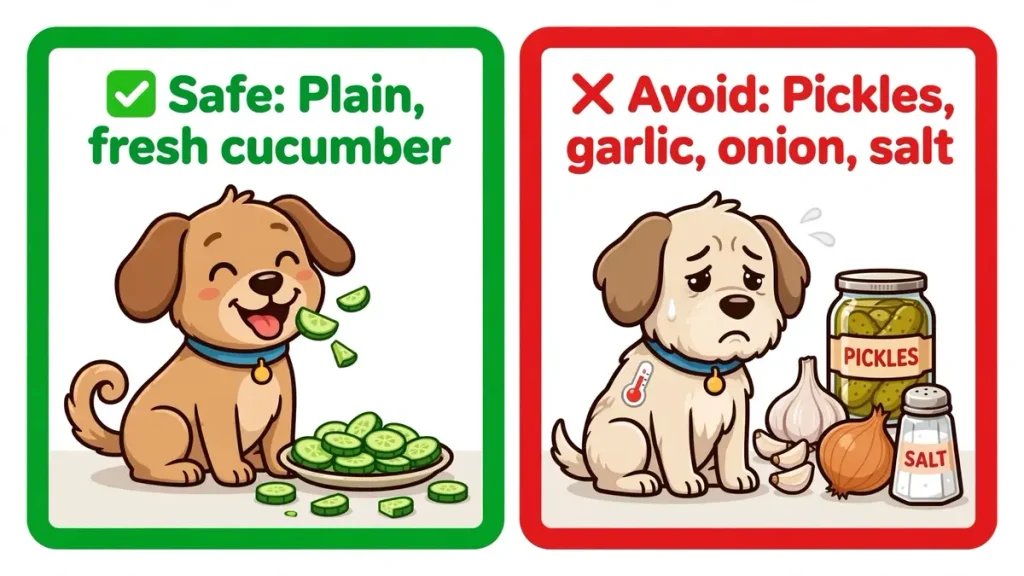
Yes, dogs can eat cucumber in moderation. Plain, fresh cucumber is a low-calorie, water-rich treat for most dogs. Wash it thoroughly, cut it into small pieces, and serve it without salt or seasonings. Avoid pickles because they can contain excessive salt and ingredients such as garlic or onion.
Cucumbers are a crunchy, refreshing snack that many pet parents reach for on hot days. If you’ve ever been slicing one for your salad and caught your dog eyeing you from the kitchen floor, you’ve probably wondered: is it safe to share?
This guide covers safety, nutrition, portion sizes, preparation, pickles, choking risks, what to do if your dog ate too much cucumber, and the answers to common questions — all based on veterinary guidance.
Key Takeaways
- ✅ Cucumber is safe for most dogs in moderation
- ✅ Low-calorie and hydrating — useful for weight management
- ✅ Skin and seeds are generally safe, although some dogs may digest them less easily.
- ❌ Avoid pickles — high sodium and possible garlic or onion
- ❌ Large chunks can be a choking hazard — cut into small, manageable pieces
- ❌ Treats and other extras should generally make up no more than 10% of a dog’s daily calories
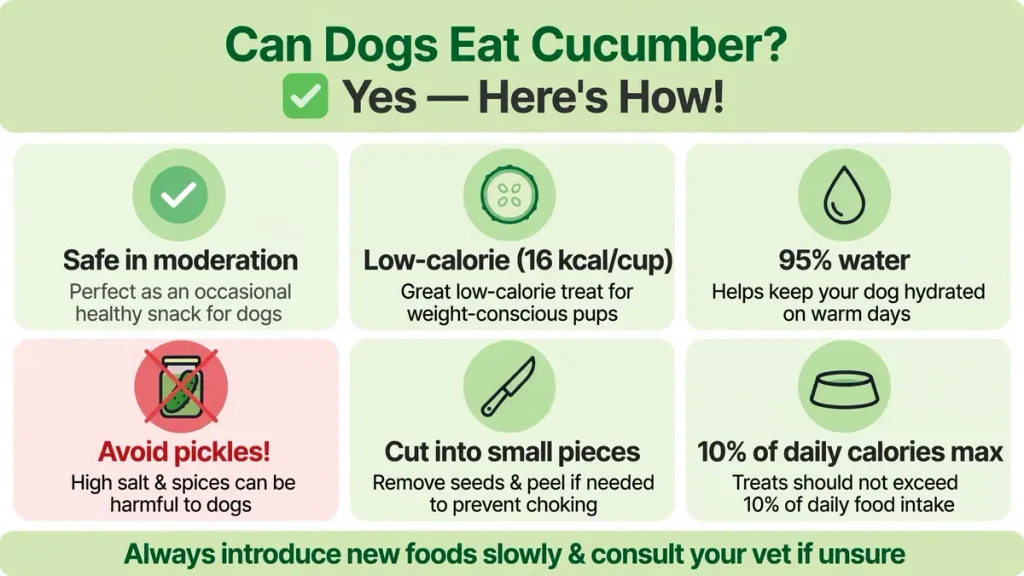
Table of Contents
Are Cucumbers Safe for Dogs?
Yes, cucumbers are non-toxic and safe for dogs when served properly. They contain none of the toxic compounds found in some other human foods (such as grapes, onions, or garlic).
The two rules are simple:
- Keep it plain — no salt, seasoning, or dips.
- Keep portions small — treats and other extras should generally make up no more than 10% of a dog’s daily calories.
There is no universally established veterinary serving size for cucumber. These practical starting portions are deliberately conservative and should be adjusted based on your dog’s size, calorie needs, and tolerance.
Are Cucumbers Good for Dogs?
Cucumbers offer some nutritional value as an occasional treat, especially for dogs whose calorie intake needs to be controlled.
Low-Calorie Snack
Cucumbers contain only about 15–16 calories per cup (USDA FoodData Central), making them one of the lowest-calorie human foods you can share with your dog. This makes them a useful alternative to high-fat commercial treats for dogs on a weight management plan. Cucumber isn’t the only low-calorie option — see our guide to watermelon for dogs for another hydrating treat.
High Water Content
Cucumbers are approximately 95% water (USDA FoodData Central), so small amounts can contribute to your dog’s overall fluid intake. This can be a helpful addition on warm days, after exercise, or as a refreshing training reward, though plain drinking water should always be your dog’s main source of hydration.
Nutrients in Cucumber
Because dogs typically eat only small portions of cucumber, it should be viewed primarily as a low-calorie, water-rich treat rather than a significant source of vitamins and minerals. Cucumbers do contain several nutrients in modest amounts:
| Nutrient | Potential Role |
|---|---|
| Vitamin K | Involved in normal blood clotting and bone health |
| Vitamin C | Antioxidant vitamin; dogs generally produce their own |
| Vitamin A / Carotenoids | Supports normal vision and other body functions |
| Potassium | Important for normal nerve and muscle function |
| Water | Helps contribute to overall fluid intake |
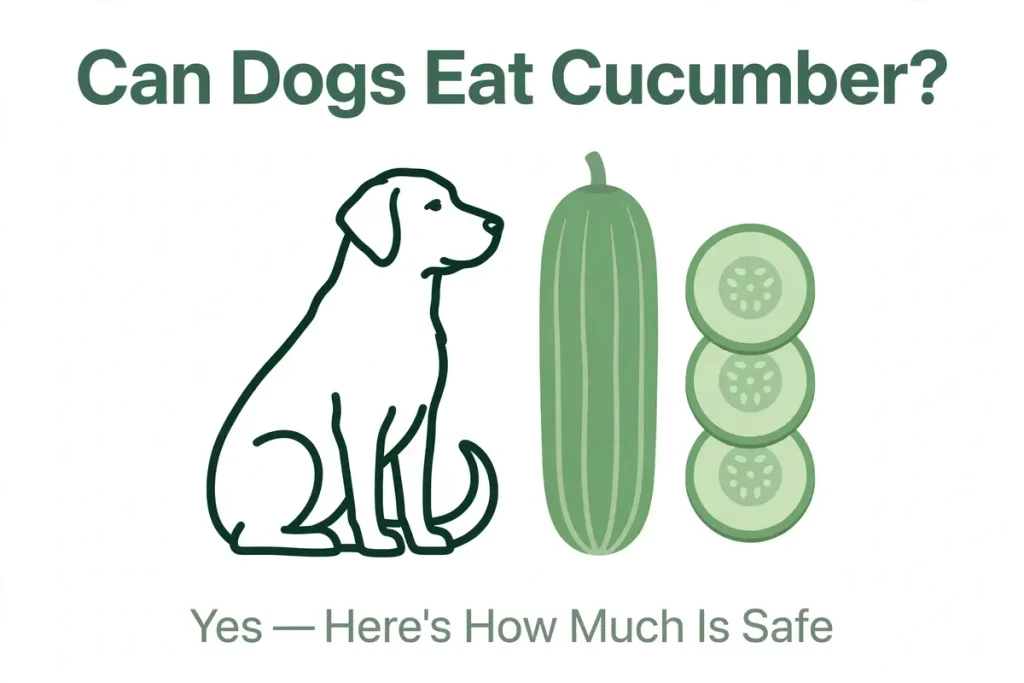
How Much Cucumber Can Dogs Eat?
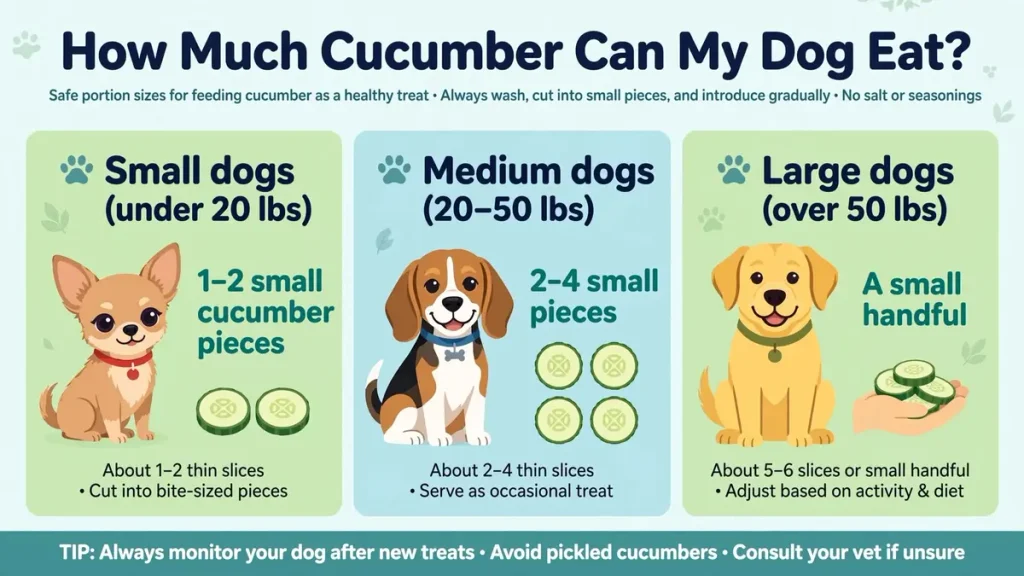
Cucumber itself doesn’t have a fixed daily serving limit. Instead, it should fit within the calories your dog gets from treats and other extras, which VCA recommends keeping to no more than about 10% of daily calories.
The table below shows starting portions — these are approximate guidelines, not strict limits. Your dog’s overall calorie intake, diet, activity level, size, and individual tolerance should determine how many treats they receive.
| Dog Size | Weight Range | Starting Amount |
|---|---|---|
| Small | Under 20 lbs | 1–2 small pieces |
| Medium | 20–50 lbs | 2–4 small pieces |
| Large | Over 50 lbs | A small handful |
These are starting portions, not strict limits. Your dog’s overall calorie needs, diet, activity level, size, and individual tolerance should determine how many treats they receive.
Can Dogs Eat Cucumber Skin?
Yes, most dogs can eat cucumber skin — but there are caveats.
- Wash thoroughly to remove pesticides and bacteria.
- The skin is tougher to digest than the flesh. Dogs with sensitive stomachs may benefit from having the skin removed.
- Peeling can make cucumber easier to chew or digest for some dogs, but cucumber skin is generally safe for healthy dogs.
Can Dogs Eat Cucumber Seeds?
The seeds are generally considered safe, but removing the seed-heavy center may make cucumber easier for some dogs to eat.
However, some dogs — especially those with sensitive digestion — may have trouble processing the seeds. Removing the seed core can make cucumber easier for dogs with sensitive stomachs to tolerate.
Can Puppies Eat Cucumber?
Yes, puppies can eat small amounts of cucumber once they are eating solid food, but their primary nutrition should come from a complete and balanced puppy diet.
- Cut cucumber into very small, bite-sized pieces appropriate for your puppy’s mouth.
- Peel the skin to make it easier to digest.
- Introduce one tiny piece at a time.
- Supervise your puppy while eating.
- Watch for loose stools or vomiting after the first serving.
- Stop and consult your vet if digestive upset occurs.
Potential Risks and Considerations
While cucumbers are generally safe, there are several things to keep in mind.
Choking Hazard
Large pieces or a whole cucumber can be difficult for some dogs to chew and may cause choking — when food blocks the airway—or large pieces can also be difficult to digest or, in some circumstances, contribute to gastrointestinal obstruction. Cut cucumber into small, manageable pieces based on your dog’s size and chewing habits, especially for smaller breeds. If you’re unsure about other vegetables, see our guides to tomatoes and apples for safe preparation tips.
Digestive Upset from Too Much Fiber
Cucumber skin contains soluble fiber, which is good for digestion in small amounts. However, a sudden large serving of cucumber can cause gas, bloating, or diarrhea. Introduce cucumber gradually — start with one small piece and observe your dog’s reaction.
Bitter Cucumber (Cucurbitacin)
It’s best not to feed your dog cucumber that tastes unusually bitter. Cucurbitacins are responsible for cucumber’s bitter taste and are naturally found in parts of the cucumber plant. When in doubt, discard a very bitter cucumber rather than feeding it to your dog.
Allergic Reactions
Allergic reactions to cucumber appear to be uncommon, but any new food can cause an adverse reaction in an individual dog. Signs to watch for include:
- Itching or scratching
- Swelling of the face or paws
- Vomiting or diarrhea
If you notice any of these, stop feeding cucumber and consult your vet.
Too Many Treats
Even low-calorie treats add up. Treats and other extras should generally make up no more than 10% of a dog’s daily caloric intake, with the majority coming from a complete and balanced diet. Overfeeding any treat can lead to weight gain over time.
How to Safely Prepare Cucumber for Your Dog
- Wash thoroughly under cool running water.
- Consider peeling — especially for dogs with sensitive stomachs, though cucumber skin is generally safe.
- Cut into small, manageable pieces rather than large chunks or whole cucumber to reduce choking risk.
- Serve plain — no salt, pepper, vinegar, oil, or seasonings.
- Start small — offer one piece and wait before serving more to check for any adverse reaction.
Fun Serving Ideas
- Frozen cucumber slices — freeze thin slices for a cooling summer treat.
- Cucumber pupsicles — blend cucumber with plain yogurt (no xylitol!), pour into ice cube trays, and freeze.
- Homemade cucumber water — add slices to your dog’s water bowl for a subtle flavor boost. Plain water should always be your dog’s main source of hydration, but adding a few cucumber slices is optional and may make it more appealing to some dogs. Avoid store-bought cucumber water, which may contain xylitol or added sugars.
Can Dogs Eat Pickles?
Pickles are best avoided because they can be high in sodium and may contain garlic, onion, or other seasonings that aren’t appropriate for dogs. Always check the ingredient list.. A small piece of a plain pickle is unlikely to cause poisoning in most healthy dogs, but pickles should not be a regular treat.
Can Dogs Drink Cucumber Water?
Yes, dogs can drink homemade cucumber water — plain water with cucumber slices added. Plain water should always be your dog’s main source of hydration, but adding a few cucumber slices is optional and may make it more appealing to some dogs on warm days.
However, avoid store-bought or commercial cucumber water, which may contain xylitol, added sugars, or preservatives that are unsafe for dogs. Always check the ingredient list carefully.
Can Dogs Eat Cooked Cucumber?
Yes, dogs can eat plain cooked cucumber as long as it is prepared without salt, onion, garlic, butter, sauces, or other seasonings. However, cooking isn’t necessary — raw cucumber is generally the simplest option.
My Dog Ate Cucumber — What Should I Do?
My dog ate a small amount of plain cucumber
There is usually no reason to panic. Monitor them for vomiting, diarrhea, abdominal discomfort, or unusual behavior. Most dogs tolerate small amounts of plain cucumber without issues.
My dog ate a large piece or whole cucumber
If your dog swallowed a large piece or whole cucumber, particularly if they are small, contact your veterinarian for advice because of the risk of choking or gastrointestinal obstruction.
My dog ate pickles or cucumber with toxic ingredients
If the cucumber was pickled or contained garlic, onion, xylitol, or another potentially harmful ingredient, contact your veterinarian or an animal poison service for guidance.
Plain cucumber isn’t considered poisonous to dogs. After a large or whole cucumber is swallowed, the concern is the size of what was swallowed rather than cucumber toxicity.
When to Call Your Vet
Contact your veterinarian if your dog:
- Has swallowed a large piece or whole cucumber, especially if your dog is small
- Is showing signs of choking, gagging, or difficulty breathing after eating cucumber
- Has vomiting, diarrhea, or abdominal discomfort that persists
- Has eaten pickles or cucumber containing garlic, onion, or xylitol
- Has a known health condition (diabetes, pancreatitis, kidney disease) and you are introducing new foods
Healthy Alternatives to Cucumber for Dogs
If your dog enjoys crunchy vegetables and fruits, you can also learn whether these other dog-safe options are right for your pet:
- Apples (no seeds) — fiber and vitamin C
- Watermelon (no seeds or rind) — hydrating summer treat
- Pineapple — vitamins and enzymes in small amounts
- Blueberries — antioxidant-rich
- Bananas — potassium-rich in moderation
- Strawberries — vitamin C, serve plain
- Mandarins — vitamin C, remove peel
- Tomatoes — only ripe, red ones, plain
For a broader overview of safe human foods for dogs, see our Can Dogs Eat Apples? guide.
FAQ
Can dogs eat cucumber every day?
Small amounts of cucumber can be given regularly to many healthy dogs, provided they tolerate it, and their overall treats and extras remain within their calorie allowance.
Can dogs eat cucumber skin?
Yes, but wash it first. Peel it if your dog has a sensitive stomach.
Can dogs eat cucumber seeds?
Yes, cucumber seeds are generally safe, but they may be harder for sensitive dogs to digest. Remove the seed core if needed.
Can puppies eat cucumber?
Yes, once they are eating solid food. Cut into very small, bite-sized pieces and supervise.
Can dogs eat a whole cucumber?
It’s not recommended. If your dog swallowed a whole cucumber, contact your veterinarian for advice, particularly if your dog is small or is showing signs of choking or digestive distress.
Can dogs eat cooked cucumber?
Yes, plain cooked cucumber without seasoning is safe, but raw cucumber is generally the simplest option.
Can dogs eat frozen cucumber?
Yes. Frozen cucumber slices are a safe, refreshing summer treat.
Can dogs eat pickles?
It’s best to avoid pickles. They are high in sodium and may contain garlic or onion.
What happens if a dog eats too much cucumber?
Too much cucumber can cause digestive upset, including gas, bloating, or diarrhea. Monitor and adjust portions.
Can diabetic dogs eat cucumber?
In small amounts, yes — cucumber is very low in sugar. However, a dog with diabetes needs an individualized diet and veterinary guidance, so always check with your vet first.
Can dogs eat cucumber with hummus?
It’s best to avoid hummus. Many recipes contain garlic, onion, salt, and other ingredients that aren’t appropriate for dogs. Plain cucumber is a safer choice.
Can dogs eat bitter cucumber?
It’s best not to feed your dog cucumber that tastes unusually bitter. Discard it and offer a fresher cucumber instead.
What should I do if my dog ate a whole cucumber?
Contact your veterinarian, particularly if your dog is small or is showing signs of choking or digestive distress.
Glossary
Cucurbitacin — A naturally occurring group of compounds responsible for the bitter taste in some cucumbers.
Hydration — The process of maintaining adequate body fluid levels. Cucumbers are approximately 95% water and can contribute to overall fluid intake.
Treat calories — Calories consumed from snacks, treats, and foods outside a dog’s main diet. Should generally remain under 10% of daily calories.
Complete and balanced diet — A diet formulated to provide the nutrients a dog needs in appropriate amounts for its life stage.
Intestinal blockage (gastrointestinal obstruction) — A potentially serious condition in which something prevents normal movement through the digestive tract. Large, poorly chewed pieces of food can contribute to this risk in susceptible dogs.
Sodium — An essential mineral that becomes harmful when consumed in excessive amounts, such as in pickles.
Sources
- American Kennel Club — Can Dogs Eat Cucumbers?
- PetMD — Can Dogs Eat Cucumbers?
- VCA Animal Hospitals — Dog Treats
- USDA FoodData Central — Cucumber, with peel, raw
Medical & Safety Disclaimer: This article provides general educational information based on veterinary sources including the AKC, PetMD, VCA, and USDA (see Sources above). It is not a substitute for professional veterinary advice. If your dog has eaten a large amount of cucumber, pickles, or a potentially toxic ingredient, or if you have any concerns about your dog’s health, contact your veterinarian.
Leave a Reply
You must be logged in to post a comment.