
Last reviewed: September 2026
Border Collie Great Pyrenees Mix: Size, Temperament, Care & Lifespan
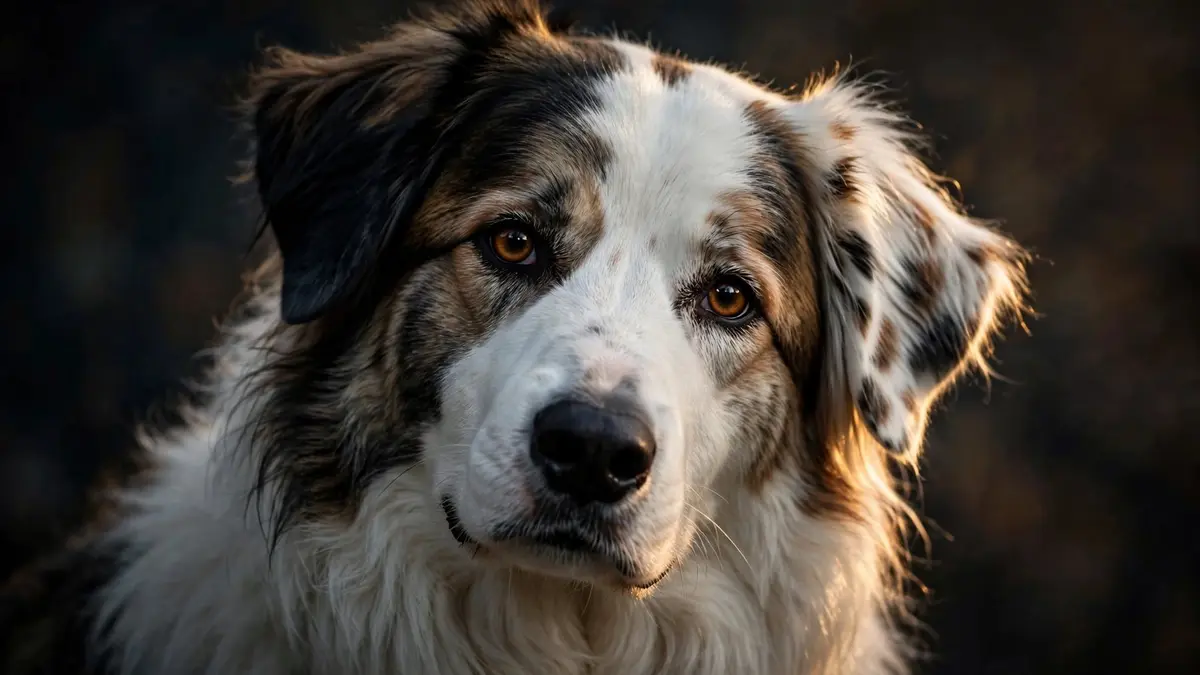
The Border Collie Great Pyrenees mix blends the Border Collie’s intelligence and working drive with the Great Pyrenees’ calm, independent guardian temperament — but individual dogs can fall anywhere between the two. This is not a standardized breed, so no two puppies are guaranteed to turn out the same. One might inherit more Border Collie intensity, while another leans toward the Pyr’s steady, watchful nature. What you can reasonably expect is a large dog with a thick coat and the potential for strong guardian instincts, shaped by a mix of herding and livestock-guarding heritage that makes every day interesting.
Quick Facts
- ✅ Intelligent and trainable — Both parent breeds are smart, though the mix may not be as eager to please as a pure Border Collie.
- ✅ Natural guardian — Livestock protection instincts run deep. This mix is watchful and protective of its family.
- ✅ Can be good with children — Both parent breeds can be devoted to their families, but socialization, training, and supervision are essential given the potential size and strength.
- ⚠️ Size varies considerably — Adults can range from large to giant, depending heavily on which parent they take after. There is no standardized weight range for this mix.
- ❌ Heavy shedding — Both parents are heavy shedders with thick double coats. You will find fur everywhere.
- ❌ Can be independent — The Pyr side brings independent decision-making. Training requires patience and consistency.
Because this is a mixed breed rather than a standardized breed, individual dogs can vary significantly in size, coat, temperament, energy level, and health. Much of what we know about this mix is based on what is known about the parent breeds rather than large studies of the mix itself.
Quick Facts Table
| Trait | Details |
|---|---|
| Parent breeds | Border Collie + Great Pyrenees |
| Also known as | Border Pyrenees, Border Collie Great Pyrenees mix |
| Size | Large to giant; height varies with parent size |
| Weight | Large to giant; adult weight varies considerably with the parents |
| Lifespan | No established average; roughly 10–12 years is a reasonable estimate based on the parent breeds |
| Coat | Thick double coat — medium to long, weather-resistant |
| Energy level | Variable; may range from moderate to high depending on inherited traits |
| Best for | Experienced owners with secure space who understand guardian and working-dog traits |
Table of Contents
Border Collie vs Great Pyrenees vs Mix: Comparison Table
| Trait | Border Collie | Great Pyrenees | Border Pyrenees Mix |
|---|---|---|---|
| Original role | Herding | Livestock guardian | Varies |
| Size | Medium (18–22 in, 30–55 lb) | Giant (25–32 in, 85–100+ lb) | Large to giant |
| Energy | High | Moderate | Variable |
| Trainability | Very high | More independent | Variable |
| Stranger response | Often reserved | Wary | Variable |
| Barking | Moderate | Often high | Variable |
| Coat | Double | Thick double | Usually thick double |
| Exercise needs | High | Moderate | Variable |
What Is a Border Collie Great Pyrenees Mix?
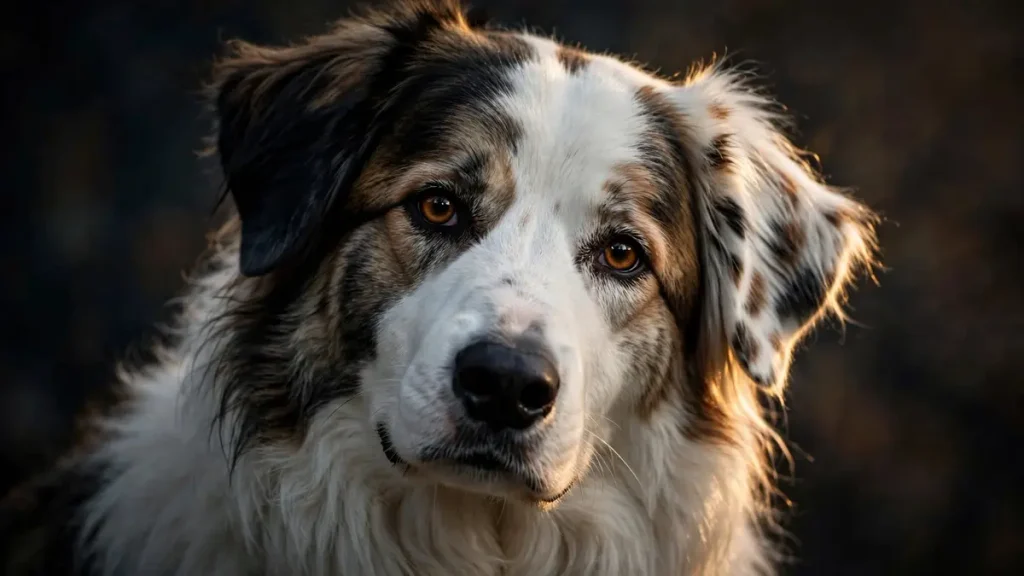
The Border Collie Great Pyrenees mix brings together two breeds with completely opposite jobs. On one side, the Border Collie — a herding dog built for speed, precision, and relentless work. On the other, the Great Pyrenees — a livestock guardian bred to sit on a mountainside for hours, watching for predators, acting with calm authority only when needed.
The tension between those two drives is what makes this mix so fascinating. You could get a dog with the intelligence and drive of a herder, the patience and independence of a guardian, or something unpredictable in between. Because there is no breed standard, individual puppies can vary more than you might expect from a typical cross.
What matters most is understanding both parent breeds and accepting that your dog will be its own individual — not a neat 50/50 blend.
What Traits Can This Mix Inherit?
There is no guaranteed Border Collie Great Pyrenees temperament. Puppies can inherit different combinations of traits from each parent. Here is how those differences tend to show up.
A more Border Collie-like dog may be:
- More energetic and driven
- More responsive to training
- More focused on people and prone to herding behavior
- More likely to chase moving things (kids, bikes, other animals)
A more Great Pyrenees-like dog may be:
- More independent and less eager to please
- Calmer indoors and better at settling
- More territorial and protective
- More vocal, especially at night
- More reserved with strangers
Most dogs fall somewhere between these extremes. The most important thing to understand is that there is no predictable “50% Border Collie + 50% Great Pyrenees” personality.
Temperament: Between Herding Drive and Guardian Calm
This is where the mix gets interesting. The Great Pyrenees influence may make some individuals calmer and better able to settle for long periods than a typical high-drive Border Collie, while others may retain much more of the Border Collie’s high-drive working temperament.
Guardian instincts are strong. This mix may be wary of unfamiliar people, particularly if it inherits more of the Great Pyrenees’ guardian temperament. Barking is common — the Pyr was bred to vocalize as a deterrent to predators. Early socialization helps the dog learn to respond appropriately to unfamiliar people, animals, and situations, and can reduce the risk of fearful or excessive defensive behavior.
With family, they can be gentle and loyal. The herding side may still show up — expect some circling or gentle nudging of running kids. For guidance on managing this with other household pets, check out our Border Collies and other pets guide.
Are Border Pyrenees Mixes Good With Children?
Both parent breeds can be devoted to their families. The Great Pyrenees is described by AKC as affectionate and patient, and Border Collies are known for their loyalty. That said, some individuals can exceed 100 pounds, and their size alone means interactions with young children should always be supervised. A dog this large can accidentally knock over a toddler just by turning around.
Socialization, training, and supervision are essential. If you have young children, teach them how to behave around dogs — no ear pulling, no startling, no bothering the dog while eating or sleeping.
Are They Good With Other Dogs and Cats?
Many can live successfully with other dogs, especially when properly socialized from a young age, but individual temperament varies. Their size and guardian instincts mean introductions should be managed carefully. Some individuals may be selective about which dogs they accept, so introductions should always be managed carefully.
With cats, the outcome depends heavily on the individual. The BC herding instinct can trigger chasing, while the Pyr’s guardian instinct can be more accepting. Raised together from puppyhood, many do fine, but introductions should be slow and supervised. Given the potential size, never leave this mix unsupervised with small animals.
Do Border Collie Great Pyrenees Mixes Bark a Lot?
Potentially, yes. Great Pyrenees were developed as livestock guardians, and barking was part of their job — it deters predators and alerts the flock (or the owner) to anything unusual. Great Pyrenees may also bark at night because their historical guardian role involved monitoring flocks after dark. Border Collies can be vocal too, especially when excited or working.
How much a particular mix barks depends on which parent’s traits dominate. Training and mental stimulation can help manage nuisance barking, but the guardian vocalization instinct runs deep and may not fully go away.
Exercise Needs
There is no published exercise requirement specifically for this mix. Exercise needs vary widely based on which parent’s traits the dog inherits, its age, health, and individual energy level. There is no reliable mix-specific recommendation such as a fixed number of minutes per day.
A more Great Pyrenees-like individual may be content with daily walks and some free time in a secure yard. A more Border Collie-like individual could need substantially more daily activity and mental stimulation. Watch the individual dog rather than the clock — persistent restlessness, destructive behavior, excessive herding, or difficulty settling can indicate that more appropriate physical or mental activity is needed.
A more Border Collie-like dog may benefit from having a job or structured activity. Without purpose, this mix can get bored — and a bored 100-pound dog is a problem. Provide puzzle toys, training sessions, scent games, and structured walks. If the dog enjoys watching the property, give it a safe, controlled area where it can observe without encouraging excessive territorial behavior.
Apartment living can be challenging for this mix because of its potential size, barking, guardian instincts, and need for regular exercise and mental stimulation. A home with secure outdoor space is generally a better fit.
Training: An Independent Thinker
If you are used to a pure Border Collie that hangs on your every word, prepare for a reality check. A Border Collie × Great Pyrenees mix may be less consistently biddable than a pure Border Collie. The Great Pyrenees was bred to make independent decisions — to assess threats and act without human input. That independence can carry over into the mix.
Training requires patience, consistency, and positive reinforcement. Reward-based training is generally a better approach than harsh or punitive methods, particularly with a dog that may combine sensitivity, independence, and substantial physical strength. You may see a combination of Border Collie responsiveness and Great Pyrenees independence — some dogs will be eager to work with you, while others may be more selective about when they respond.
Keep sessions short and rewarding. Focus on recall especially — a 100-pound guardian with poor recall is a liability. Start socialization and training early, and expose your puppy to different people, animals, and environments while they are still small enough to manage.
Size & Growth
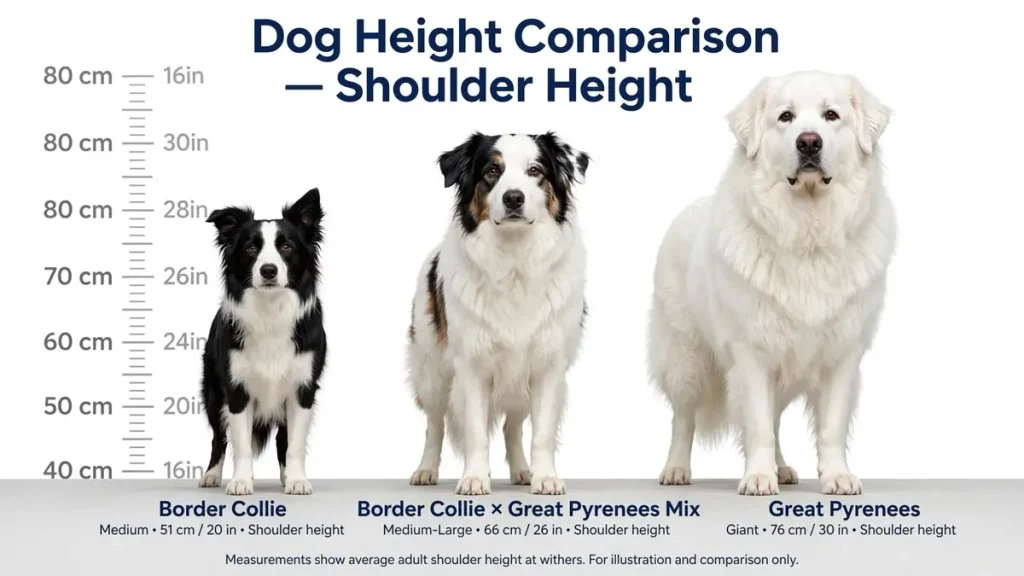
Because this is a mixed breed rather than a standardized breed, adult size and appearance can vary considerably. The AKC lists Great Pyrenees at 25–32 inches and 85–100+ lb, while Border Collies are 18–22 inches and 30–55 lb. A cross can vary considerably in size and may resemble either parent more closely, or fall somewhere between them.
Height: Large to giant; often somewhere between the parent breeds. Some individuals may be closer to the Pyr’s height, others much smaller.
Weight: Because there is no standardized size range for this mix, adult weight can vary considerably. Dogs may fall anywhere from the size of a large Border Collie to well over 100 pounds, depending on their parents and genetics. Some adults may weigh around 60–120+ lb, but there is no established breed-wide range.
Puppy growth: Because this mix can become a large or giant dog, puppies should be allowed to grow steadily rather than pushed to grow as quickly as possible. Ask your veterinarian about appropriate nutrition, body condition, and exercise during growth. Rapid weight gain and excess body weight can place unnecessary stress on developing joints, so regular body-condition checks with your veterinarian are worthwhile. Avoid excessive high-impact exercise while the skeleton is still developing.
Grooming: Prepare for Fluff
Both parent breeds have thick double coats, and this mix sheds heavily. There is no way around it. You will find fur on your clothes, furniture, and in your food.
- Brush several times a week — increase frequency during periods of heavier seasonal shedding.
- Use an undercoat rake to remove dead fur from the dense double coat.
- Bathe when dirty or when your veterinarian or groomer recommends it. The Great Pyrenees coat naturally repels dirt, so regular bathing is not necessary.
- Nail trims monthly — active dogs may wear them down naturally.
- Check ears weekly and clean them when needed, following your veterinarian’s advice.
This is not a low-maintenance coat. If you are not prepared for heavy grooming work, this may not be the right mix for you.
Health: What to Expect
There is limited published lifespan data specifically for this mix. The 10–12 year range often cited should be treated as an estimate rather than a confirmed breed average. A large study cited by AKC found Great Pyrenees had a median lifespan of 11.55 years, which gives some context, but mixed-breed outcomes vary with genetics, size, health, and overall care.
As a large-to-giant dog, this mix faces several health concerns worth knowing about.
- Hip and elbow dysplasia — Both are recognized orthopedic concerns in dogs, and screening is available for breeding dogs. Ask breeders for documented health testing of both parents.
- Bloat (GDV) — A life-threatening emergency in which the stomach becomes distended and may twist. Large and giant deep-chested dogs are at increased risk. Ask your veterinarian about GDV prevention and whether gastropexy (stomach tacking) is appropriate for your dog. Gastropexy reduces the risk of stomach twisting but does not prevent every cause of bloat or GDV.
- Cancer — Cancer can occur in dogs of any breed, and some cancers are important health concerns in large and giant dogs. Discuss age-appropriate screening and any breed-specific risks with your veterinarian.
- Eye conditions — Border Collies can carry inherited eye disorders such as Collie Eye Anomaly (CEA) and progressive retinal atrophy (PRA). Which risks apply to an individual mix depends on the parents’ genetics.
- Joint issues — Cruciate ligament tears and arthritis are common concerns in large and giant breeds.
For a deeper look at Border Collie-specific health risks, read our Border Collies health guide. For more on how lifespan varies across breeds, see our dog lifespan article. Work with a vet who understands giant breed health management.
Health Testing: What Breeders Should Do
Because there is no breed-specific health-testing standard for this mix, ask to see health records for both parents. Depending on the parent breeds and lines, useful screening can include hip, elbow, and eye evaluations and relevant DNA tests. Depending on the Border Collie parent’s line, breeders may also use DNA tests for relevant inherited conditions. Ask to see the actual test results rather than relying on a claim that the parents were “health tested.”
For Great Pyrenees parents specifically, the Great Pyrenees Club of America recommends hip and patella evaluations, plus additional screening such as elbow, thyroid, eye, and selected genetic tests for breeding dogs. The OFA/CHIC database is a useful place to check recommended health screening and publicly recorded results for the parent breeds. A CHIC number confirms that recommended tests were completed and results made public; it is not a guarantee that every result was normal.
Heat & Cold Weather
This mix can handle cold well. The Pyr’s thick double coat was developed for mountain winters, and many individuals love snow. Hot weather is a different story.
Can a Border Collie Great Pyrenees mix live in a warm climate? Possibly, but you need to manage it carefully:
- Avoid strenuous exercise during the heat of the day
- Walk early in the morning or late in the evening
- Always provide shade and plenty of fresh water
- Never leave the dog in a parked car
- Monitor for signs of heatstroke — excessive panting, drooling, weakness, collapse
- Do not shave the double coat to “cool” the dog — the coat provides insulation and protection from the environment, while shaving can expose the skin to sunburn and other problems.
Is This Mix Right for You?
This mix works well for specific households and is a poor fit for others. Here is how to tell.
Pros and Cons
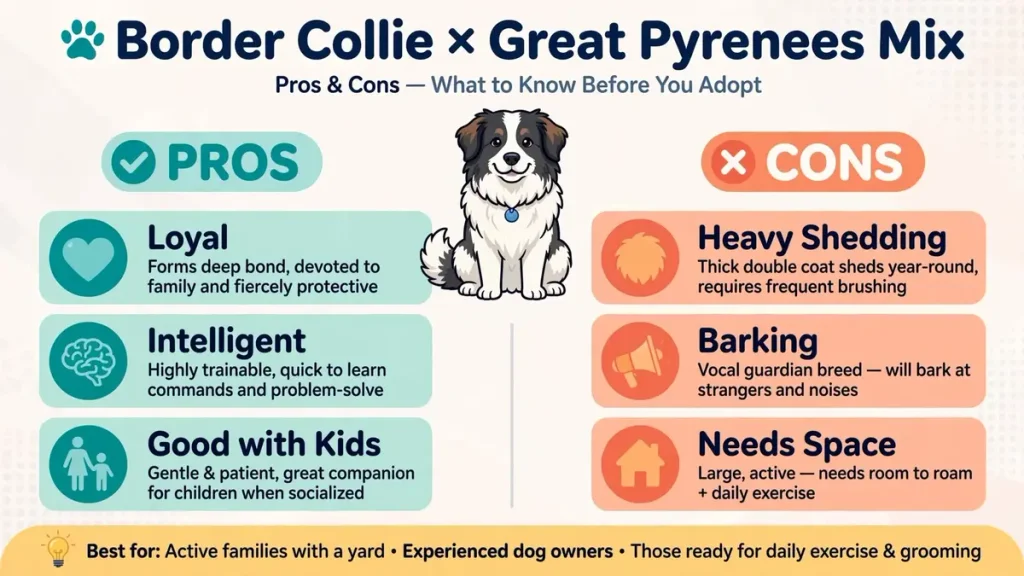
| Pros | Cons |
|---|---|
| Loyal and devoted | Can be very large — not a casual pet |
| Potentially calmer than a pure Border Collie | Heavy shedding |
| Intelligent and capable | Can be independent and challenging to train |
| Strong guardian instincts | Barking can be substantial |
| Can enjoy family life with proper socialization | Requires early and ongoing socialization |
This mix may be a good fit if:
- You have a home with secure outdoor space
- You want a guardian dog with working-dog intelligence
- You have experience with large, independent breeds
- You can commit to regular grooming and shedding management
This mix may NOT be a good fit if:
- You live in an apartment or small home
- You live in a hot climate and cannot manage exercise around heat
- You are a first-time dog owner
- You want a dog that is easy to train and eager to please every time
- You are not prepared for heavy shedding and regular grooming
If you are looking for a large guardian with a combination of working-dog intelligence and potentially moderate-to-high activity needs, this mix may be worth considering. But no dog is a “perfect match” — the most important thing is understanding what you are getting into.
Cost
There is no standard price for this mix. Rescue fees and breeder prices vary considerably by location, breeder reputation, health testing, and parentage. Adoption from a rescue or shelter is always worth considering, as many large mixed-breed dogs end up in need of homes.
Frequently Asked Questions
What is a Border Pyrenees?
A Border Pyrenees is a mixed-breed dog produced by crossing a Border Collie with a Great Pyrenees. The mix does not have a standardized breed standard, so size, appearance, temperament, and exercise needs can vary considerably between individual dogs.
Are Border Pyrenees easy to train?
Border Pyrenees can be intelligent and capable learners, but they may not be as consistently eager to please as a pure Border Collie. The Border Collie side can bring strong responsiveness and working drive, while the Great Pyrenees side can bring independence and selective obedience. Short, reward-based training sessions started early tend to work best.
Are Border Collie Great Pyrenees mixes good with other dogs?
Many can live successfully with other dogs, especially when properly socialized from a young age, but individual temperament varies. Their size and guardian instincts mean introductions should be managed carefully. For tips on multi-pet households, see our Border Collies and other pets guide.
How big does a Border Collie Great Pyrenees mix get?
Size varies considerably because this is not a standardized breed. Adults are likely to be large to giant, but size can vary substantially depending on their parents and genetics. Some may be around the size of a large Border Collie, while others can exceed 100 pounds. There is no reliable breed-wide weight range for the mix.
Does Border Pyrenees mix bark a lot?
Potentially, yes. The Great Pyrenees was bred to bark as a deterrent to predators. Some individuals inherit that vocal guardian instinct strongly. Training and mental stimulation can help, but may not eliminate guardian vocalization entirely.
Is Border Pyrenees good for first-time dog owners?
Generally, no. The potential size, independence, training challenges, and guardian instincts make this a dog for experienced owners who understand large-breed behavior and positive reinforcement training.
How much does a Border Collie Great Pyrenees mix cost?
Prices vary by location, breeder, health testing, and parentage. Always research breeders carefully — they should provide health clearances for both parent breeds. Adoption from a rescue is also worth considering.
Are Border Pyrenees good with cats?
It depends on the individual. BC herding instincts can trigger chasing, while the Pyr guardian instinct can be more accepting. Raised together from puppyhood, many do fine, but introductions must be slow and supervised. Never leave a giant-breed mix unsupervised with small animals.
Do Border Pyrenees need a lot of space?
A securely fenced yard is strongly preferable, particularly because guardian breeds can be territorial and may roam or investigate perceived threats. Acreage can be a good fit, but owning a large property does not replace daily training, exercise, and supervision.
What is the lifespan of a Border Pyrenees?
There is no established average lifespan for the Border Collie × Great Pyrenees mix. Roughly 10–12 years is a reasonable estimate based on the parent breeds, but individual dogs can live shorter or longer lives. A large study cited by AKC found a median lifespan of 11.55 years for Great Pyrenees. Lifespan also varies with genetics, size, health, and overall care.
Glossary
Biddable — Willing to obey commands and follow direction. A biddable dog is eager to please and easy to train. Border Collies are generally highly biddable; Great Pyrenees are more independent, so the mix may be less consistently responsive to commands.
Guardian instinct — The natural drive to protect livestock or family from threats. Great Pyrenees were bred for this. It shows up as watchfulness, barking, and territorial behavior.
Bloat / GDV (Gastric Dilatation-Volvulus) — A life-threatening condition where the stomach fills with gas and twists on itself. Large, giant, and deep-chested dogs have increased risk. It requires emergency veterinary surgery.
Double coat — A two-layer coat with a dense, soft undercoat for insulation and a coarser outer coat for weather protection. This mix usually has one, which means heavy seasonal shedding.
Livestock Guardian Dog (LGD) — A breed developed to protect livestock from predators by patrolling, barking, and confronting threats. Unlike herding dogs that move stock, LGDs stay with the flock and watch. The Great Pyrenees is one of the most famous LGD breeds.
Collie Eye Anomaly (CEA) — An inherited eye condition common in herding breeds, including Border Collies. It ranges from mild vision impairment to blindness. Responsible breeders screen for it.
Sources
- American Kennel Club — Border Collie Breed Information
- American Kennel Club — Great Pyrenees Breed Information
- Orthopedic Foundation for Animals (OFA)
- Great Pyrenees Club of America — CHIC Health Testing Requirements
- PetMD — Great Pyrenees Breed Guide
- PetMD — Border Collie Breed Guide
Medical Disclaimer
The information on this page is for educational purposes only and does not replace professional veterinary advice. Always consult your veterinarian for health decisions about your dog. Every dog is different — this guide covers general traits and may not apply to every individual Border Collie × Great Pyrenees mix
Leave a Reply
You must be logged in to post a comment.