
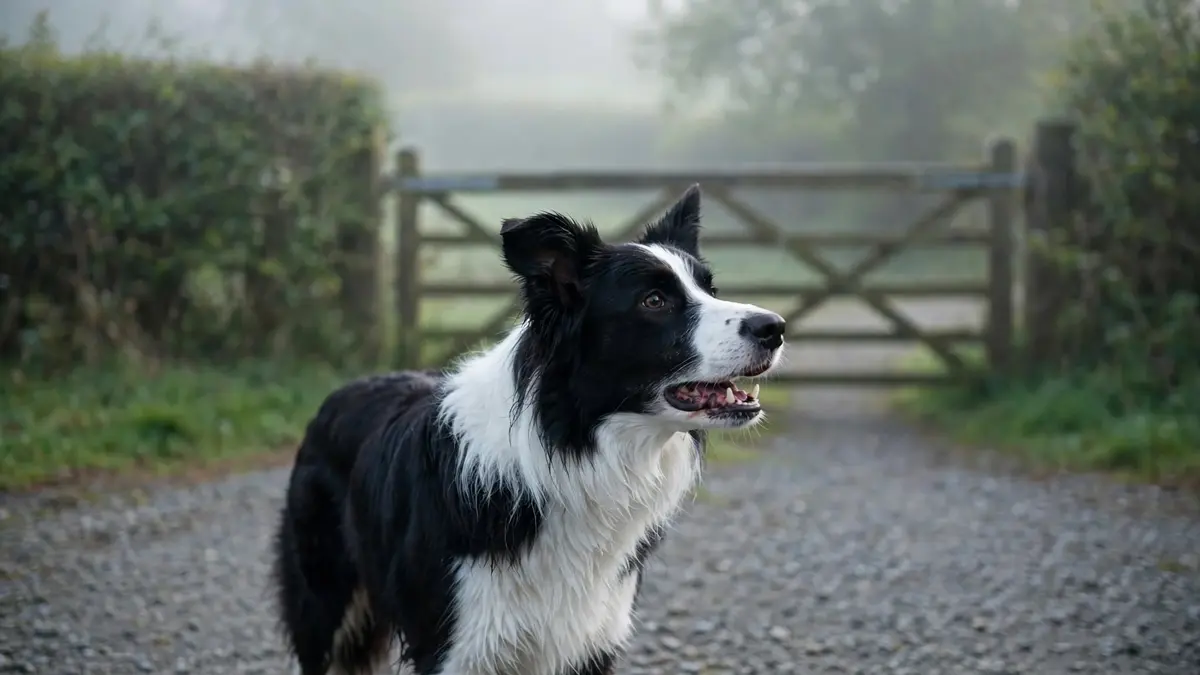
Do Border Collies Bark a Lot?
Short answer: Border Collies can be vocal, especially when they notice movement, hear something unusual, or want your attention. They are not necessarily noisy dogs. Their alertness and herding instinct just make barking more noticeable than it is in a placid breed.
The job explains the rest. A Border Collie was bred to control moving animals, and a dog that noticed movement earned its dinner. In a house, that wiring points at the postman, the cat on the fence, and the bin lorry at 6 am.
The breed also learns fast. If barking gets the back door opened, your dog may learn to repeat it. That cuts both ways, which is why most of this page is about what happens after the bark rather than the noise itself.
Key Takeaways
- ✅ Most Border Collie barking has a trigger: movement, noise, or a request for something.
- ✅ Teaching what to do instead works better than trying to remove the bark.
- ⚠️ Exercise lowers arousal. It does not fix separation distress.
- ⚠️ Bark collars only work while the dog is wearing one.
- ❌ Shouting at a barking dog usually adds to the noise.
- ❌ Never punish a dog that is barking out of fear.
Table of Contents
How Much Do Border Collies Bark?
There is no reliable figure for how many times a Border Collie barks in a day. The AKC’s breed profile scores the breed 4 out of 5 for barking, one step below its “Very Vocal” mark. That is a breed-level trait score, not a bark count, and plenty of Border Collies sit below it. The pattern matters more than the volume. The ASPCA’s guide to barking is blunt about the aim: “decrease, rather than eliminate.” A silent herding dog is not the goal.
Normal looks like a few sharp barks at the doorbell, short bursts during fetch, and a warning when someone walks up the drive. Then the dog settles. A problem looks like barking that outlasts the trigger, a dog that cannot settle afterwards, or a dog that paces and pants while it barks.
Why Do Border Collies Bark? 9 Common Reasons
Barking is not one behaviour. It is several, with different causes and different fixes. The ASPCA describes the main types, from territorial to compulsive. The table below uses those categories, folds frustration in with boredom, and adds movement-triggered barking, which is the one this breed is known for.
| Cause | What it sounds like | What sets it off |
|---|---|---|
| Territorial | Deep, repetitive, aimed at one spot | Someone at the door, gate or fence |
| Alarm | Sharp and sudden, often one bark | An unexpected noise |
| Attention-seeking | Short barks at you, with a stare | A ball, a closed door, your laptop |
| Boredom and frustration | Long, monotonous, at nothing | Too few hours of real work or sniffing |
| Movement-triggered | High-pitched, with chasing or stalking | Children, bikes, cars, the hoover |
| Separation-related | Steady barking and whining, only when alone | You leaving, or your car starting |
| Greeting | Short, happy, tail wagging | You coming home, a visitor arriving |
| Socially facilitated | Answers another dog’s barking | The dog next door, or a dog on TV |
| Illness or pain | New, out of character, often at night | Pain, dental disease, hearing loss |
Territorial barking
This type is often easier to manage, because you can identify the area or the approach that sets it off. The ASPCA notes that it “is often motivated by both fear and anticipation of a perceived threat.” A frightened dog that gets shouted at may stop barking. It may then move people off its patch another way, which the ASPCA says can include “biting without warning.”
Block the sightline first. A window film on the front window beats a month of shouting. Then teach the dog a place to go, away from the door, and pay it there.

Alarm barking
The doorbell bark, the firework bark, the wheelie bin bark. It is a startle response, so it is fast and often a single bark. That is the dog checking in, not a behaviour problem. Reward the check-in, and the barking has somewhere to go. If new sounds set your dog off every time, start with helping your Border Collie cope with new sounds.
Attention-seeking (demand) barking
This is the bark owners complain about most, and most articles skip. Your dog drops the ball at your feet. You ignore it. It stares. It barks, and you throw the ball. That is a trained behaviour, trained by accident. The ASPCA puts it plainly: “A demanding, noisy dog has been taught to be this way, usually not on purpose.”
What counts as a reward is a longer list than owners expect. VCA’s veterinary behaviourists include feeding, patting, praising, playing, giving a toy, and “even just going to a barking dog to try and quiet it down.” Their rule for this type of barking is never to reward it with attention, even occasionally.
For demand barking, don’t hand over what the dog is asking for while it is barking. Teach a different signal and reward that instead: a sit, a toy brought to your hand, or a calm wait. That rule applies to demand barking, not to every bark. A dog that is frightened, in pain, or asking to go outside is communicating something real. Ignoring it teaches the dog that asking for help fails.

Boredom and frustration
A Border Collie with nothing to do invents something, and barking is cheap. The AKC says the dog “requires daily exercise beyond just a walk around the block.” A Border Collie that does not work “must be provided with vigorous exercise every day.” No hour figure is published. Sniffing, training, and problem-solving games add to that exercise rather than replace it, and they meet the mental side of a working breed’s needs. If you have a puppy, VCA advises waiting until the dog is fully grown before long runs or competitive agility, because growing joints injure easily. Our guide to how much exercise a Border Collie actually needs shows how to fit the rest into a working day.
Herding instinct and movement
Not misbehaviour. It is the breed doing what it was selected to do, and it does not switch off in a semi. Some Border Collies stare or stalk the thing that moves. Others bark because they cannot reach it. Children running, cyclists on the lane, and cars on the road all qualify.
Manage it rather than remove it. Fence the boundary, keep the dog on a lead near traffic, and give it a controlled outlet such as treibball or a herding ball. The working history behind the breed explains why this drive holds.

Separation-related barking
If your Border Collie barks mainly when you are out, separation-related distress is one possibility rather than the only one. Frustration, outside noise, and having nothing to do all sound similar from the doorstep. What tells them apart is the rest of the picture: pacing, panting, drooling, destructive chewing, or a dog that cannot settle after you leave.
If that is what you have, get a behaviourist to lead. Until then, stop the rehearsals: no absences longer than the dog can cope with, and no dramatic goodbyes. VCA suggests a predictable routine and a settle routine, and notes a synthetic pheromone may help some dogs.
Greeting, excitement and joining in
Happy barking is short, and the body is loose rather than stiff. Read the whole dog, not just the tail, because a wag can also mean arousal. Keep arrivals low-key and ask for a sit before the door opens. Dogs also join in, so if the one next door barks all afternoon, yours will answer. Close the window and give yours something to chew. See managing a Border Collie alongside other animals.
Illness or pain
VCA notes that “medical problems can also contribute to vocalization, especially in the older dog.” A sudden change in barking, particularly in a dog that had been settled for years, deserves a veterinary check. It may be pain or hearing loss. That is a vet appointment, not a training plan.
What Makes Border Collie Barking Worse?
- Shouting. VCA notes that “yelling may just add to the noise, anxiety and conflict, thereby encouraging your dog to bark even more.”
- Letting the bark work once. One ball thrown after one bark keeps the behaviour alive for weeks.
- Punishing a frightened dog. The ASPCA warns this increases fear, and fear barking gets worse.
- Rules that change by person. A dog allowed to bark at the door for one family member learns to bark at the door.
- An open curtain all day. If the dog can watch the street, it will guard the street.
What Not to Do When Your Border Collie Barks
Don’t start with a bark collar. The ASPCA calls them “punishment devices” that are “not recommended as a first choice,” especially for barking driven by fear or anxiety. It also documents the failure mode. “Virtually all dogs become ‘collar-wise,’ meaning that they learn not to bark while wearing their anti-bark collars but revert to barking when they’re not wearing them.”
Don’t use an anti-bark muzzle. The ASPCA warns against using a muzzle to keep a dog quiet for long periods, or leaving one on unsupervised. A properly fitted basket muzzle lets a dog pant and drink. A restrictive fabric muzzle can interfere with panting and is not for prolonged wear. Neither type addresses why the dog is barking, and a muzzle is a safety tool, not a treatment.
Don’t assume punishment is neutral. AVSAB states that “aversive training methods have a damaging effect on both animal welfare and the human-animal bond.” The RSPCA opposes shock, citronella and ultrasonic devices for the same reason. In the UK, the BVA and BSAVA have gone further and called for a complete ban on shock collars.
How to Stop Excessive Border Collie Barking in 5 Steps
Work these in order. The later steps fail if the earlier ones are skipped.
- Rule out pain and illness. Vet first, especially in an older dog or when the barking started suddenly.
- Name the trigger in writing. A week of notes: time, what happened, how long it lasted. Many dogs have a small set of recurring triggers, and the notes make them obvious.
- Block what you can. Window film, a solid fence panel, a gate across the hall. Every trigger you remove is one you never train.
- Teach a quiet cue. Say it just before you help the dog pause, then reward the silence. Practise on manageable triggers, not when the dog is already over the top.
- Pay for quiet, daily. Short sessions, good treats, every day.
How to teach the quiet cue properly
The cue has to predict the thing you want, which is the barking stopping. Say “Quiet” once, then reward the moment the dog goes quiet. The ASPCA’s version lets the dog bark three or four times first, then gives the cue calmly and helps the dog stop. The timing is what matters. A word that is only ever said during silence teaches the dog that the word means a treat is coming. It never teaches the behaviour.
VCA has a hands-free version. Put a very tasty treat under the dog’s nose while it barks and say your word. “Dogs cannot sniff and bark at the same time,” so the barking stops and the treat pays for the stop. Repeat over several days, then stretch the gap between word and treat from two seconds to five, then ten.
Practise at a level the dog can handle. Letting it bark itself into a frenzy before you give the cue makes the lesson harder, not easier. And if the cue has not worked after ten to twenty tries, change the plan or call a qualified trainer. Don’t reach for a device.

Border Collie Barking When Alone, at Night and in Apartments
Barking when left alone
Film twenty minutes of your absence before you decide what this is. A dog that settles after a few minutes may be coping well, though the full pattern matters more than how long the barking lasted. A short clip can also miss what happens later, so watch the whole absence if you can. A dog that paces and barks for the whole twenty needs a behaviour plan, not a firmer word.
Barking at night
Night barking can come from a sound you cannot hear, movement outside, anxiety or discomfort. Close the curtains, add background noise, and give a last toilet break before bed. A new pattern in an older dog deserves a vet visit. Our guide to Border Collie sleep and restlessness covers the evening routine.
Barking in an apartment
Sound carries through floors and corridors, so block the trigger and keep the routine tight. Feed a puzzle toy before you leave and close the blinds on the corridor side. Tell the neighbours what you are working on before they complain. There is more in our guide to Border Collies in apartments.
Do Border Collies Bark More Than Other Breeds?
There is no reliable ranking of breeds by how much they bark, and a page that hands you one is inventing it. What does differ is what sets a dog off, and that you can plan around.
Herding breeds react to movement: bikes, runners, cars. Guardian breeds react to people approaching the property. Scent hounds give voice on a trail. Companion breeds react to you leaving the room. A Border Collie sits in the first group, which is why this page leans on sightlines and herding outlets rather than on the noise itself.
When Is Border Collie Barking a Problem?
Book a vet rather than a trainer if you see any of these.
- A hoarse, strained or lost voice.
- Barking that started suddenly in an adult or older dog.
- Night barking in a dog that used to sleep through.
- Barking at nothing, or at shadows and light, in a fixed repetitive way, which can point to compulsive barking.
- Chewing or licking itself raw while barking.
- Any sign of pain: flinching when touched, or a change in appetite.
Pain, dental disease, hearing loss, and cognitive change all show up as noise before they show up as anything else. A vet who examines your dog is worth more than any page.
Final Verdict: Do Border Collies Bark a Lot?
Vocal, yes, and for reasons that make sense once you know the breed. Your dog barks because it notices things, because it was built to move things, and because barking has worked before. You will not get a silent Border Collie. You can get one that barks twice at the door and then goes to its mat.
Frequently Asked Questions
Do Border Collies bark a lot?
They can be vocal, mostly at movement and noise. They were bred to control moving animals, so bikes, runners, and cars get a reaction. Barking at everything for hours usually means boredom, anxiety, or pain rather than breed character.
Are Border Collies a noisy breed?
Some Border Collies are quiet indoors once their physical and mental needs are met. Others stay vocal because of alertness, excitement, fear, or learned behaviour. Exercise and enrichment help, but they do not guarantee a quiet dog.
Are Border Collies more vocal than other herding dogs?
There is no reliable ranking, and vocal behaviour varies between individual dogs. Border Collies bark to control movement, to alert you, and to ask for things, as other herding breeds do. What changes is the individual dog and the outlet it gets.
What is the fastest way to stop a Border Collie barking?
There is no single fastest fix, because the first step depends on the cause. Identify the trigger first, then block or manage it. Window film or a solid fence panel often removes more barking than any training exercise.
Do bark collars work on Border Collies?
Only while they are on the dog. The ASPCA notes that most dogs learn to bark with the collar off, and that anti-bark collars are punishment devices not recommended as a first choice. For a fearful dog, they can make the fear worse.
Why does my Border Collie bark at me?
Usually because it wants something and barking has worked before: the ball, the door, the bowl, your attention. Stop paying for the bark and teach a different signal, like a sit or a toy in your hand.
Does exercise stop Border Collie barking?
It can reduce barking linked to boredom and frustration, and it helps much less with separation distress, fear, or movement triggers. Combine activity with sniffing, training and chances to rest. The aim is a dog that can settle, not one that is exhausted.
How much exercise does a Border Collie need?
No published figure exists. The AKC says the breed needs daily exercise beyond a walk around the block. A dog that does not work needs vigorous exercise every day. Build in sniffing, training, and a job rather than counting minutes.
Should I ignore my Border Collie when it barks?
Only for attention barking, and only once you know the dog is not frightened or in pain. Ignoring a scared dog teaches it that asking for help fails. For demand barking, ignore the bark and reward the moment the dog offers something else.
Why does my Border Collie bark at night?
Night barking can come from sounds, movement outside, anxiety, discomfort, or age-related change. Check the environment first: curtains, background noise, a last toilet break. If the pattern is new or unusual for your dog, book a vet visit.
Do Border Collies grow out of barking?
Not necessarily. Some Border Collies become less reactive as they mature and learn how the household works. Barking that is repeatedly reinforced can become a habit, though. Training and management are more reliable than waiting.
Can I train a Border Collie to stop barking at the doorbell?
Yes. Let the dog bark three or four times, say “Quiet” once, reward the stop. Then teach a spot away from the door and send it there before you open. Practise with a friend ringing the bell, not real visitors.
When should I see a behaviourist rather than a trainer?
When the barking comes with panic, self-injury, aggression, or a sudden personality change. Look for a certified applied animal behaviourist or a board-certified veterinary behaviourist. A trainer teaches cues. A behaviourist treats distress.
Related Border Collie Guides



Glossary
- Alert barking. A short burst at a new sound or sight, usually followed by the dog checking in with you.
- Demand barking. Barking at a person to get something: a ball, food, a door opened, attention.
- Counter-conditioning. Changing how the dog feels about a trigger by pairing it with something good, such as chicken, before the barking starts.
- Extinction burst. The short, worse-than-usual flare of a behaviour when it stops working. Demand barking often gets louder for a few days first.
- Trigger stacking. Small stresses adding up until the dog reacts to something minor. Common on bin day, with visitors, and in the evening.
Sources
- ASPCA — Barking: the barking categories, the quiet-cue steps, the anti-bark collar warnings.
- VCA — Barking in Dogs (Horwitz and Landsberg, DACVB): reinforcement, punishment, quiet-cue methods.
- AKC — Border Collie breed page: energy, daily exercise needs, and the 4-out-of-5 barking level.
- VCA — How Exercise Can Damage Puppy Growth Plates: why agility waits until the dog is mature.
- AVSAB — Position Statement on Humane Dog Training: the case against aversive methods.
- RSPCA — Electric shock collars on dogs: welfare position on shock and citronella devices.
- BVA and BSAVA — Policy position on aversive training devices: UK veterinary bodies recommending reward-based training and a ban on shock collars.
Medical & Safety Disclaimer
This guide is for information only and is not a substitute for veterinary advice. Sudden barking, night barking, a hoarse voice, or a change in behaviour in an older dog can point to pain or illness. Start with your vet. If your dog has a bite history or shows aggression, work with a qualified behaviourist.
Leave a Reply
You must be logged in to post a comment.