
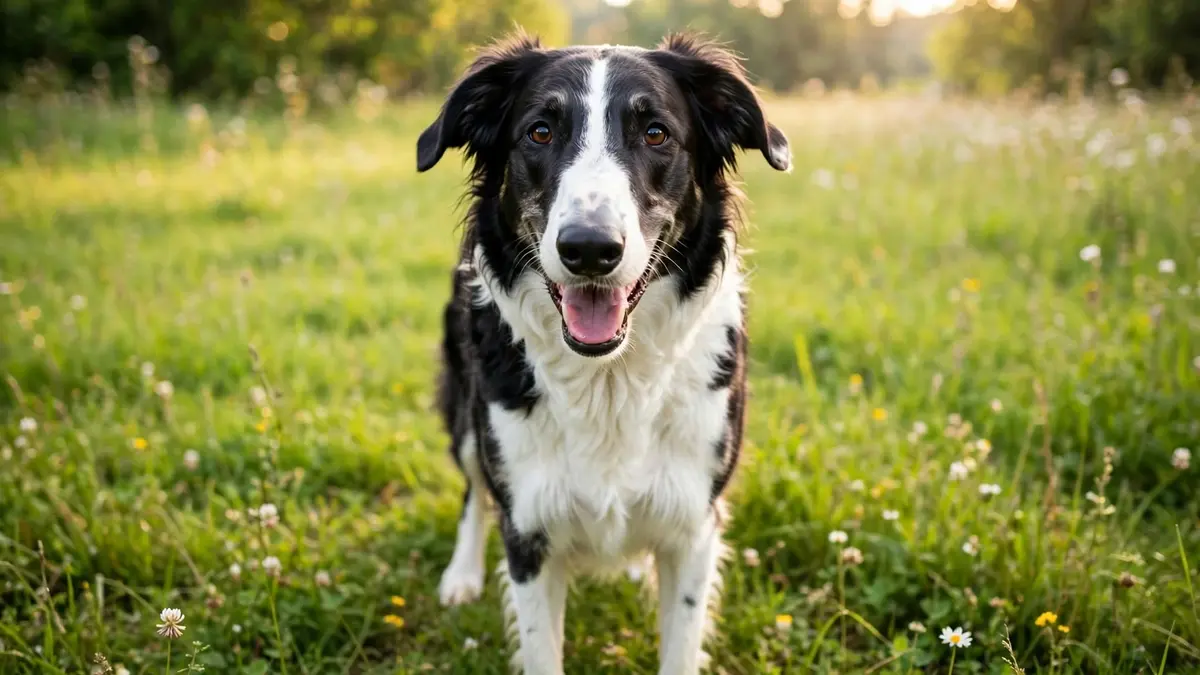
How Long Do Boradors Live?
A Borador has an estimated lifespan of about 10 to 15 years. No study has measured how long the cross actually lives, so that range is a broad estimate rather than a breed average. It uses the parent ranges as reference points: Labradors 11 to 13 years, Border Collies 12 to 15. It also allows for dogs that fall outside both. Genetics, body size, and long-term care decide where an individual lands.
Key Takeaways
- ✅ The estimated Borador lifespan is about 10 to 15 years.
- ✅ The AKC gives Labradors 11 to 13 years and Border Collies 12 to 15.
- ⚠️ No breed-specific study exists. Every figure online is an estimate.
- ⚠️ Body size is a strong predictor: larger dogs generally live shorter lives. Weight, dental care, and vet visits are the parts you control.
- ❌ A guaranteed “hybrid vigor” bonus. Mixed breeds may get a small edge, but large studies disagree.
Table of Contents
Quick Facts
| Question | Answer |
|---|---|
| Estimated lifespan | 10-15 years (not studied) |
| Labrador Retriever | 11-13 years (AKC) |
| Border Collie | 12-15 years (AKC) |
| Estimated adult weight | About 40-70 lb |
| Senior stage begins | About 7-8 years |
| Biggest health risks | Hips, elbows, eyes, weight |
What Determines a Borador’s Life Expectancy?
The Borador is not a recognized breed. The AKC does not register it, and no breed club sets a standard. That means there is no official lifespan figure to look up.
What exists instead is a method: take the parents’ ranges and place the mix inside them.
So treat 10 to 15 years as a guide, not a promise. Two Boradors from the same litter can age on very different schedules.
If you want the full picture of what this cross is like day to day, our complete Borador breed guide covers size, coat, and personality.
Borador vs Labrador vs Border Collie Lifespan
| Breed | Typical lifespan | Typical weight |
|---|---|---|
| Borador | 10-15 years (not studied) | About 40-70 lb |
| Labrador Retriever | 11 to 13 years | 55-80 lb |
| Border Collie | 12 to 15 years | 30-55 lb |
Source: AKC Labrador Retriever and AKC Border Collie breed pages. These are breed-level estimates, not predictions for any one dog.
The Border Collie is the smaller dog and lives longer, while the Labrador is bigger and lives a little less long. That fits a well-known rule in dogs: small bodies tend to last longer than large ones.
Border Collies weigh less than Labradors and have a longer published lifespan range. That does not prove size alone explains the difference. A smaller Borador may benefit from the pattern seen across dog populations, but genetics and individual health matter too. For the parent-by-parent detail, see our Border Collie vs Labrador comparison and the Border Collie lifespan guide.

Do Mixed Breeds Really Live Longer?
You will read that mutts outlive purebreds by one to two years. The research is more interesting than that.
One large study did find an edge. A 2020 analysis of 38,609 dogs found mixed breeds lived about 1.2 years longer than purebreds of the same size. That work is real, and it is where the claim comes from.
Bigger and newer studies found something else. A 2024 analysis of 584,734 UK dogs put the median at 12.7 years for purebreds and 12.0 years for crossbreds. That points the other way. A separate study of 20,970 dogs in US clinics found no meaningful difference at all.
Any hybrid vigor effect is small, and these studies do not agree on its direction. Do not pick a Borador expecting a two-year bonus. Pick one because you want the dog.
One finding holds across all three: body size is a strong predictor, and larger dogs generally die younger. A 2026 Dog Aging Project analysis of 41,047 dogs puts numbers on it. The median runs from about 14 years in small dogs to under 10 in giant breeds. The purebred-versus-mixed gap in that same study was modest.
Life Stages: Puppy, Adult and Senior
Boradors generally follow the same broad life stages as other medium-to-large dogs, and bigger dogs move through them faster.
| Stage | Rough age band | What changes |
|---|---|---|
| Puppy | Birth to 12 months | Fast growth, joint care, early training |
| Adult | 1 to 7 years | Peak energy, yearly vet checks |
| Senior | 7 to 8 years and up | Slower walks, weight creep, more screening |
These markers are rough. A lean 45-pound Borador may still act young at nine, while a heavy 70-pound one slows down at six.
What Shortens a Borador’s Life
Most serious risks come from the parent breeds. A mixed breed can inherit a condition from either side, or from neither, which is why screening the parents matters.
| Condition | Linked to | What to know |
|---|---|---|
| Hip dysplasia | Both parents | Abnormal hip development. Leads to arthritis. |
| Elbow dysplasia | Labrador side | Same problem in the elbow. |
| Collie Eye Anomaly | Border Collie family | Autosomal recessive. Needs the variant from both parents. |
| Progressive retinal atrophy | Border Collie side | Slow vision loss. DNA tests cover some forms. |
| Exercise-induced collapse | Labrador side | Inherited. Collapse after hard play. |
| Obesity | Any dog | Most controllable risk. |
Two of these deserve a plain note. Collie Eye Anomaly is recessive, so a puppy only develops it when both parents pass the gene on. A first cross out of two tested, clear parents is at low risk for CEA specifically. That is one condition, not a clean bill of health. Hip and elbow dysplasia are not that simple either. They are complex, partly inherited conditions, and a parent with good hip scores lowers the odds without removing them.
Screening both parents is the one thing you can control before a puppy comes home. On the Labrador side, ask for hip and elbow scores, an eye exam, and the EIC DNA test. On the Border Collie side, ask for hip scores, an eye exam, and DNA tests for the conditions in that family line. Walk away from a seller who cannot show the paperwork. Our guide to Borador adoption versus buying has the questions to ask.
For the conditions themselves, our Borador health guide goes deeper. Wondering whether the mix suits your home at all? Our guide to whether Boradors make good dogs covers lifestyle fit.
How to Help a Borador Live Longer
Nothing here is dramatic. Long-lived dogs are usually just well cared for, for a long time.
Keep your dog lean. Extra weight strains joints, the heart, and the airway. You should be able to feel the ribs under a thin layer of fat. Ask your vet to score your dog’s body condition and show you what the right weight looks like.
Feed a complete and balanced diet. Match the food to your dog’s age and activity level, and measure portions instead of free-feeding. The VCA feeding guidelines cover how to work out a starting amount. The FDA has investigated reports of a heart condition called DCM in dogs eating certain diets, many of them grain-free. No direct cause has been established, so talk to your vet before a big diet change rather than assuming grain-free is safer.
Brush the teeth. Plaque builds early and hardens into tartar that brushing no longer shifts. Daily brushing does the most. Dental chews and professional cleanings help too. Ask your vet before you add a chew, especially for a dog that gulps.
Keep up the checkups. One visit a year is normal for a healthy adult, and seniors often need two. Your vet can catch a weight shift, a heart murmur, or a bad tooth before it becomes a crisis.
Move the dog. A Borador needs roughly an hour or more of activity a day, spread across the day. Individual needs vary with age, health, and how much working drive the dog inherited, so treat that as a starting point rather than a rule. Adjust for heat and joint health. Our Borador training guide has ideas for mixing physical work with brain work.
Use the brain. Puzzle feeders, scent games, and short training sessions keep an adult dog sharp. They also tire a busy dog out faster than a walk does.
Skip the miracle supplements. No pill is proven to extend a dog’s life. Joint supplements may help a dog that already has arthritis. Ask your vet whether your dog needs one.
Caring for a Senior Borador
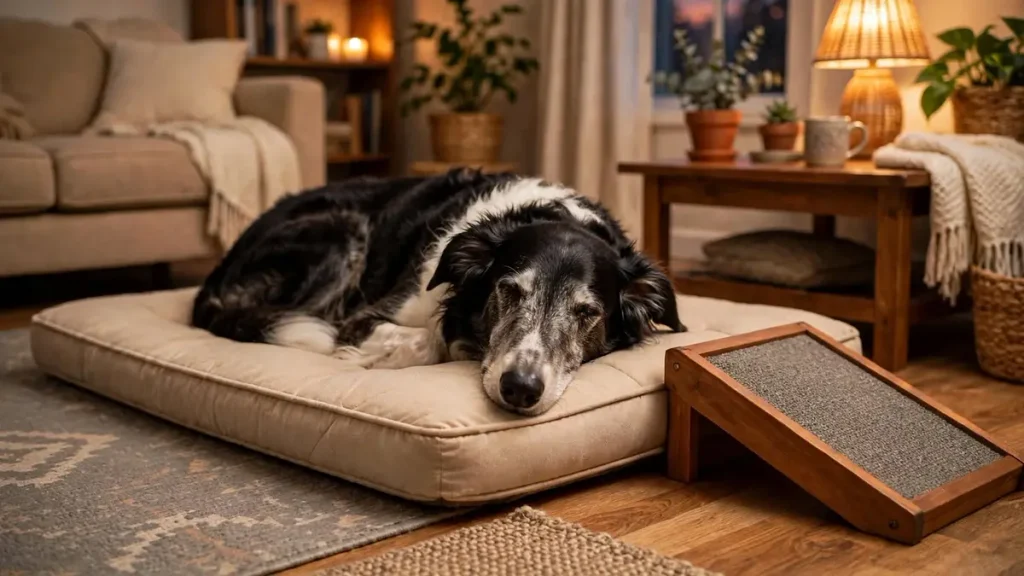
Vets often treat a medium or large dog as senior from around seven to eight. That is when you start looking for changes rather than waiting for problems.
A senior checkup usually adds bloodwork, a heart check, and a closer look at the joints and eyes.
Small changes at home help a lot. Put down non-slip rugs, add a ramp over the stairs, and give the dog a softer bed. Swap one long push for shorter, gentler walks.
Watch the weight in both directions. A senior dog that gains weight fast may be slowing down. One that loses weight without trying needs a vet visit.
Keep the games going. A senior Borador still wants a job, so trade hard fetch for scent work. Mental work keeps the brain engaged without hammering the joints.
Score these from one to five every few months to spot drift before it becomes a problem:
- Does the dog still eat with interest?
- Does it still want to go out and sniff?
- Can it get up and lie down without help?
- Is it sleeping through the night?
- Does it still seek you out for contact?
One low score is not a crisis. A steady slide across several of them is a conversation to have with your vet.
Warning Signs and When to Call Your Vet
Most of these point to a routine appointment. A few need a call the same day, and those are set out below the list.
- Reluctance to climb stairs or jump into the car
- Pacing or restlessness at night
- Weight loss without a diet change
- Cloudy eyes or bumping into things
- Drinking and urinating far more than usual
- A new cough, especially at rest
- Any lump that grows or changes
- A sudden change in mood or tolerance
Call the same day if your Borador cannot stand, collapses, breathes hard at rest, or has a seizure. Call promptly if it stops eating, vomits repeatedly, or shows sudden lameness. For a puppy, or a dog that is also lethargic, call sooner.
Heat is its own risk, especially during hard exercise on a warm day. Move the dog out of the heat, start cooling with cool (not ice-cold) water, and contact your vet at once. Do not wait to see whether the panting settles.
Frequently Asked Questions
How long do Boradors live?
A Borador has an estimated lifespan of about 10 to 15 years. That is an estimate, not a measured breed average. The parents give the band: Labradors 11 to 13 years, Border Collies 12 to 15. A few dogs fall short of both, which is where the 10 comes from.
Do Boradors live longer than Labradors?
No Borador-specific research shows that they do. The Borador estimate is 10 to 15 years, against 11 to 13 for Labradors, so the two ranges overlap heavily. Do not assume the Border Collie parent adds years.
What is the oldest Borador on record?
No verified record is available. The Borador is not a registered breed, so there is no central register of ages. A dog that reaches 15 is already at the top of the expected range.
Does a Borador’s size affect how long it lives?
Yes, and it may matter more than anything else. Larger dogs generally age faster than smaller ones. There is no weight cutoff that predicts a particular dog, though, so healthy body condition matters more than hitting a number. A lean 40-pound Borador may well outlive a 70-pound one from the same litter.
When is a Borador a senior dog?
Around seven to eight years for most medium and large dogs, and earlier for the biggest ones. Slowing down on stairs is a better signal than a birthday.
Can I get insurance for an older Borador?
Often yes, but it costs more and covers less. Policies commonly exclude conditions that started before they began, so read the exclusions for hip and joint problems, and sign up while your dog is young.
Can you predict how long a Borador will live?
No. A breed estimate describes a population, not one dog, and two littermates can have very different lifespans. Genetics, body size, body condition, and access to vet care all pull on the number. Focus on the parts you control.
What should I feed a senior Borador?
Feed a complete and balanced diet suited to the dog’s age, in a portion that keeps the weight steady. Senior food is not automatically better: calories and body condition matter more than the label. Ask your vet to check the weight at each visit.
How can I tell how old my rescue Borador is?
Your vet can estimate age from the teeth, eyes, and joints. Gray muzzles and cloudy eyes help, but they are rough guides.
Is 12 old for a Borador?
Twelve is senior, but not unusual. It falls within the estimated 10- to 15-year lifespan. Many dogs are still active at 12, though they may need more frequent checks.
Do male or female Boradors live longer?
Females tend to live slightly longer in large population studies, though the difference is small and has not been measured in Boradors. Body size and individual health matter more than sex.
Do Boradors get dementia?
Some older dogs develop cognitive dysfunction, which looks like dementia. Signs include pacing at night, staring at walls, and losing house training. Tell your vet, because some causes are treatable.
Related Mixed Breeds Guides

Glossary
- Hybrid vigor: The idea that a crossbred dog is healthier than a purebred because it carries more genetic variety. The evidence in dogs is mixed.
- Hip dysplasia: Abnormal development of the hip joint, which can lead to arthritis.
- Collie Eye Anomaly (CEA): An inherited eye condition in the Collie family, passed on recessively.
- Progressive retinal atrophy (PRA): A slow breakdown of the retina that leads to vision loss.
- Exercise-induced collapse (EIC): A condition in some Labradors where hard exercise causes weakness or collapse.
- Median lifespan: The age at which half of a group has died. It is not the same as an average, and neither one predicts your dog.
Sources
- McMillan et al. (2024), Longevity of companion dog breeds, Scientific Reports — nature.com
- Yordy et al. (2020), Body size, inbreeding, and lifespan in domestic dogs, Conservation Genetics — doi.org
- Urfer et al. (2020), Lifespan of companion dogs seen in three primary care clinics in the United States, Canine Medicine and Genetics — doi.org
- Chiu et al. (2026), Factors associated with longevity in companion dogs, GeroScience — doi.org
- AKC, Labrador Retriever breed page
- AKC, Border Collie breed page
- OFA, Hip Dysplasia
- OFA, Collie Eye Anomaly
- VCA Animal Hospitals, Nutrition and feeding guidelines
- FDA, Investigation into diet and canine DCM
Medical Disclaimer
This guide is for information only. It is not a substitute for advice from your own vet. Lifespan figures are population estimates and cannot predict how long any single dog will live. Ask your vet about your dog’s weight, diet, dental care, and screening, because those decisions depend on the individual animal in front of them.

Leave a Reply
You must be logged in to post a comment.