
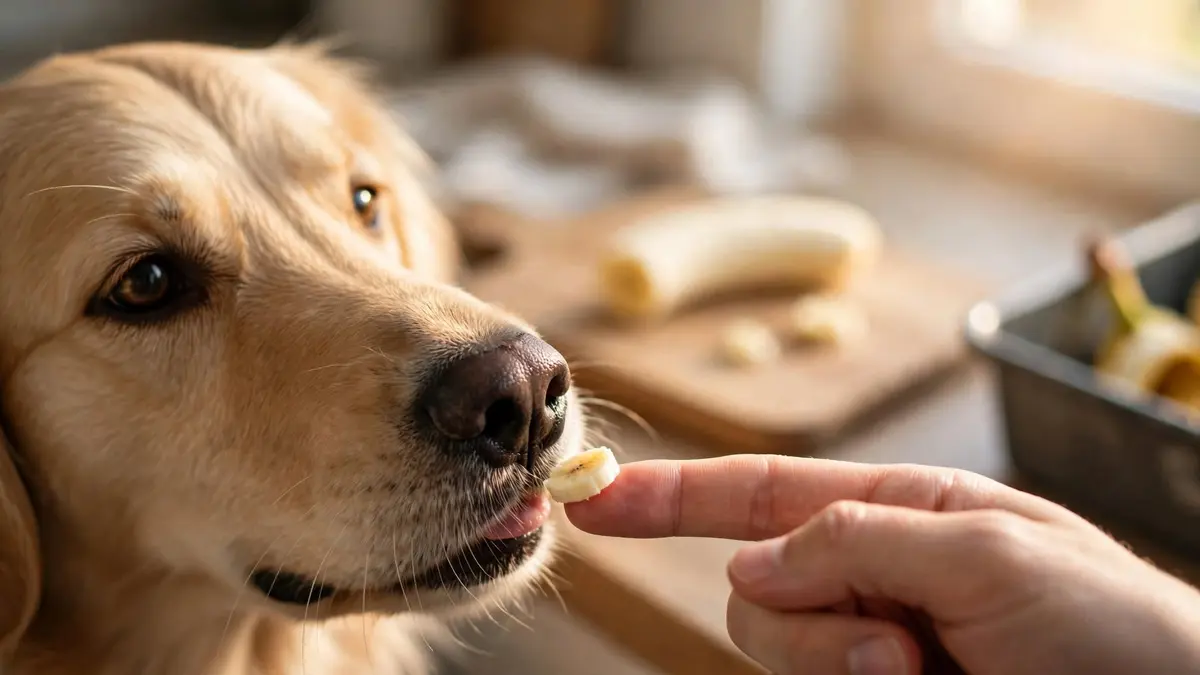
Yes. A plain, ripe, peeled banana is safe for most healthy dogs. A few small pieces a day are fine. Banana is an occasional treat rather than a daily staple, so keep all treats, banana included, under 10% of your dog’s daily calories. Always remove the peel, cut the fruit into ¼-inch slices, and keep the portion small.
Key Takeaways
- ✅ Plain, ripe banana is safe for most healthy dogs.
- ✅ Treats of any kind, banana included, should stay under 10% of your dog’s daily calories.
- ✅ One ¼-inch slice (about 5 grams) carries around 4 to 5 calories.
- ❌ Never feed the peel. It is hard to digest and can block the gut.
- ❌ Skip banana chips, dried banana, and banana bread.
- ⚠️ Ask your vet first if your dog has diabetes, carries extra weight, or is on a prescription diet.
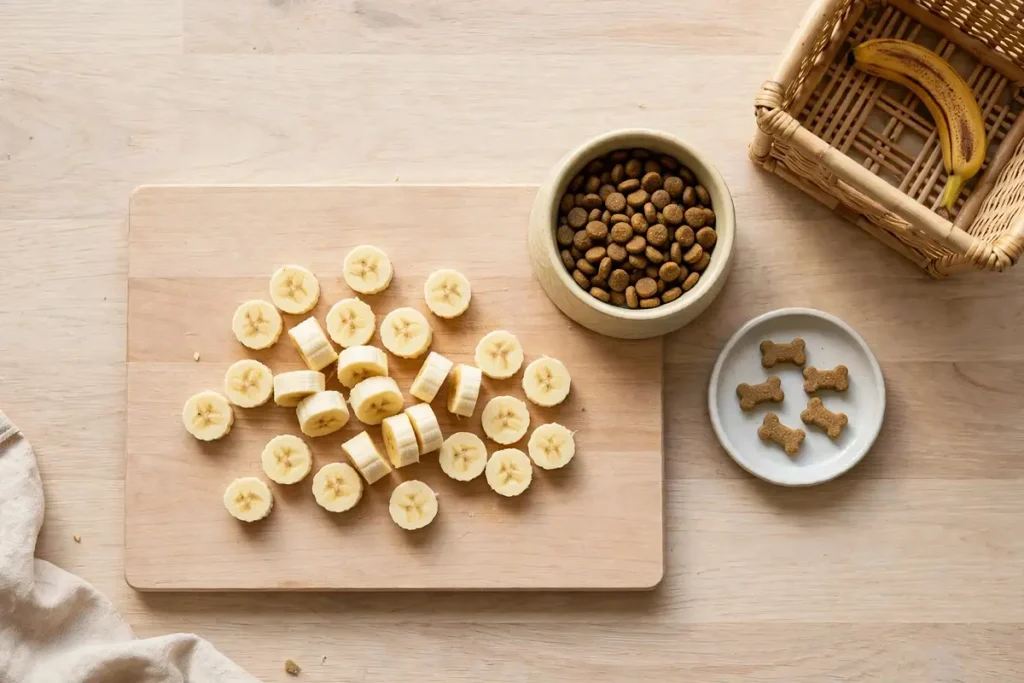
Table of Contents
Are Bananas Safe for Dogs?
Yes, for most healthy dogs. Plain banana flesh is not generally considered toxic to dogs. Peeled and cut into small pieces, it works as an occasional treat.
Three rules keep it safe. Remove the peel. Serve it plain, with no sugar or honey. Keep the total of all treats under 10% of your dog’s daily calories.
That 10% figure is the standard rule vets use. The other 90% should come from a complete and balanced dog food built for your dog’s life stage.
Wash the fruit first. Vets at VCA advise rinsing all fruits and vegetables before your pet eats them.
Are Bananas Good for Dogs?
Bananas carry fiber, potassium, vitamin C, vitamin B6, magnesium, and biotin. The American Kennel Club also notes that it is low in cholesterol and sodium.
PetMD puts it plainly: bananas should complement a balanced diet rather than serve as a significant source of nutrition.
| Nutrient | What it does |
|---|---|
| Potassium | Muscle and nerve function |
| Vitamin B6 | Metabolism and red blood cells |
| Vitamin C | Antioxidant. Dogs make their own |
| Fiber | Normal gut movement |
| Biotin and magnesium | Skin, coat and body function |
At treat-sized servings, banana is too small a portion to be a real source of any of these.
For comparison, one ¼-inch slice (about 5 grams) carries around 4 to 5 calories. VCA’s treat calorie table lists 20 grams of banana at 18 calories, which works out to about 90 calories per 100 grams.
How Much Banana Can Dogs Eat by Weight?
Go by your dog’s weight. The amounts below are examples of small portions, not recommended daily servings or veterinary-prescribed limits. Your dog’s calorie needs and total treat allowance should decide the amount.
| Dog size | Weight | Starting amount |
|---|---|---|
| Extra small | 2–10 lb | 1–2 slices about 4–10 calories |
| Small | 11–20 lb | 2–3 slices about 8–15 calories |
| Medium | 21–50 lb | 3–6 slices about 12–30 calories |
| Large | 51–90 lb | 4–6 slices about 16–30 calories |
| Extra large | 91 lb and up | Up to ½ banana about 50 calories |
Every slice is about ¼-inch thick. These are illustrative starting portions for healthy adult dogs. They are not veterinary-prescribed serving limits, and your dog’s total daily treat allowance takes priority. No published guideline sets an exact dose of banana.
Run the arithmetic before you add other treats. The World Small Animal Veterinary Association sets treats at no more than 10% of daily calories. Its table allows about 26 calories of treats a day for a 10-pound dog. A 20-pound dog gets about 44.
Two slices come to about 8 to 10 calories. A whole medium banana is about 100 calories — most of a small dog’s entire treat allowance.
Can Dogs Eat Bananas Every Day?
Most healthy dogs can eat small amounts of banana regularly, but banana does not need to be a daily treat. PetMD describes it as an occasional snack rather than a daily dietary staple.
Keep portions small, vary your dog’s treats, and count banana toward the 10% allowance. If your dog already gets several treats a day, there may be no room for extra banana.
Watch the sugar, not just the calories. A dog eating banana every day on top of regular treats can drift past their calorie allowance without anyone noticing.
Can Dogs Eat Banana Peels?
No. Always throw the peel away. It is not generally considered toxic to dogs, but it is hard to digest, and a large piece can lodge in the digestive tract.
Two different things can go wrong, and owners often mix them up. Choking means the food blocks the airway. A gastrointestinal obstruction means the food becomes stuck further down, in the stomach or intestine. A peel can cause either one.
Peels may also carry pesticide residue, which is another reason to bin them.
Signs of a blockage in dogs include vomiting, loss of appetite, abdominal pain, weakness, diarrhea, constipation and weight loss. Call your vet straight away if you see these after your dog ate a peel.
My Dog Ate a Banana: What Should I Do?
- A few peeled slices: usually nothing to worry about. Monitor your dog and skip the next treat.
- A whole peeled banana: not a poisoning emergency. Watch for vomiting or diarrhea, especially in a small dog.
- Banana chips or dried banana: a small amount of plain dried banana is not usually a poisoning emergency. Check the ingredient list for added sweeteners or anything unsafe. Call your vet if your dog ate a large amount or starts to show symptoms.
- A banana peel, especially a large piece: call your vet. A peel can block the gut. The signs to watch for are vomiting, abdominal pain, or a loss of appetite.
- Banana bread containing raisins or xylitol: call your vet or an animal poison service at once. Do not wait for symptoms.
US services only. Both charge a fee per case.
ASPCA Animal Poison Control Center: (888) 426-4435
Pet Poison Helpline: (855) 764-7661
Outside the US, call your own vet or the local animal poison service.
Can Dogs Eat Banana Chips, Dried Banana or Banana Bread?
No to all three. Each one adds a risk that fresh banana does not have.
- Banana chips and dried banana: dried banana is far more concentrated in sugar and calories than fresh fruit. PetMD notes that if it is not chewed well, it can absorb water, swell, and contribute to an intestinal obstruction. Store-bought chips often carry added sugar, salt or preservatives.
- Banana bread: the real danger is what is baked into it. Raisins are toxic to dogs, and xylitol can cause a dangerous drop in blood sugar. The sugar and fat content are further reasons to skip it. If your dog eats banana bread containing raisins or xylitol, call your vet straight away.
- Banana pudding: loaded with sugar and preservatives. Skip it.
Frozen banana is the exception, with one condition. Freeze thin slices, or mash a small portion and freeze it inside a toy. Never hand over a whole frozen banana. PetMD warns that the portion is too large and can create choking or intestinal blockage risks.
Can Puppies Eat Bananas?
Yes, once they are eating solid food. Give smaller pieces than you would to an adult dog of the same size, and keep the portion tiny.
Introduce one new food at a time. Puppies have developing digestive systems, so offering banana on its own makes it easier to spot the cause of any stomach upset.
Stop and call your vet if your puppy vomits, has diarrhea, or seems unwell after trying banana.
Risks of Feeding Bananas to Dogs
For a healthy dog eating a few slices, the risks are small. They grow with the portion size.
- Sugar and weight gain. Bananas are sweeter than many fruits. Too much can contribute to weight gain and blood sugar spikes, especially in dogs with diabetes.
- Digestive upset. Too much banana can cause vomiting or diarrhea. Feed it in small amounts and watch how your dog responds.
- Choking and blockage. Large pieces and peels are the problem. Cut small slices and bin the peel.
- Allergic reactions. True banana allergy is uncommon in dogs, but any new food can cause a reaction in an individual dog. Signs include vomiting, diarrhea, itchiness, and skin irritation. PetMD notes that food allergies in dogs can also cause repeat ear infections, though ear problems usually have other causes. Stop feeding banana and ask your vet.
Can Dogs With Diabetes Eat Bananas?
Bananas carry natural sugar, so they may not suit every dog with diabetes. Ask your vet before you offer it, and follow their advice on treat choices and portions. The same applies to a dog carrying extra weight or on a prescription diet.
Never use banana as a home treatment for diarrhea. PetMD is direct on this point: bananas should not be used as a home remedy for diarrhea in dogs. If your dog has loose stools, call your vet instead.
How to Prepare Bananas for Dogs Safely
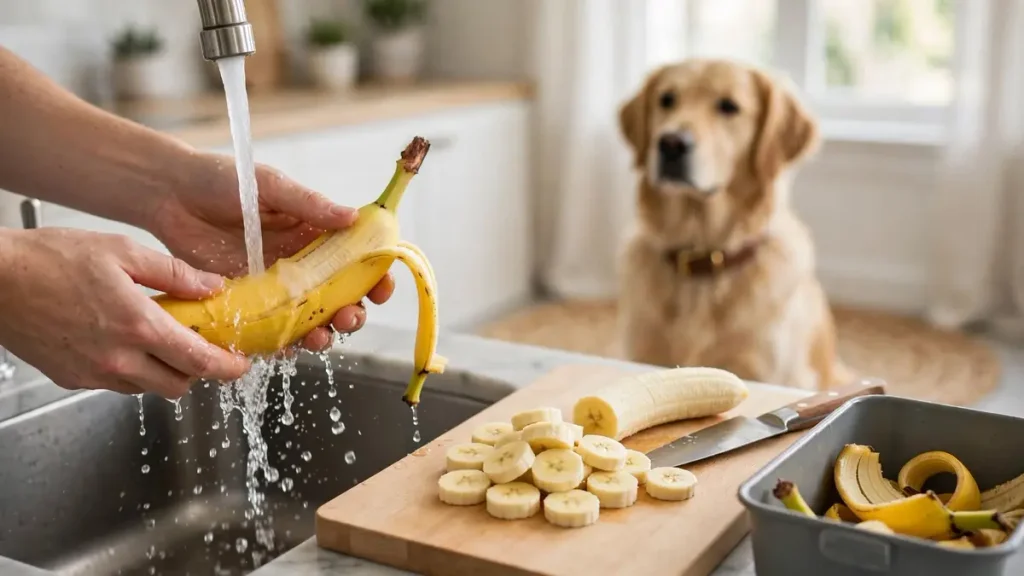
- Wash the banana under cool running water.
- Peel it fully and throw the peel away.
- Cut the flesh into ¼-inch slices or smaller pieces.
- Serve plain. No honey, no sugar, no chocolate.
Choose a ripe, yellow banana. Very green bananas are firmer and less sweet, and some dogs find them harder to digest. A green banana is not toxic — it is just a poorer treat.
Once you have small, plain pieces, you have options:
- Frozen bites: freeze slices for a summer treat. Cut them small for toy breeds.
- Kong stuffers: mash banana with kibble, pack it into a rubber toy, and freeze it.
- Training rewards: use pea-sized bits as a high-value reward.
- Food topper: stir a small spoonful of mashed banana into a meal.
- Smoothie: blend frozen banana with dog-safe fruit and plain, sugar-free yogurt that contains no xylitol.
Count every one of these against the 10% treat allowance. A stuffed toy holds several days’ worth of treats for a small dog.
Healthy Alternatives to Bananas for Dogs
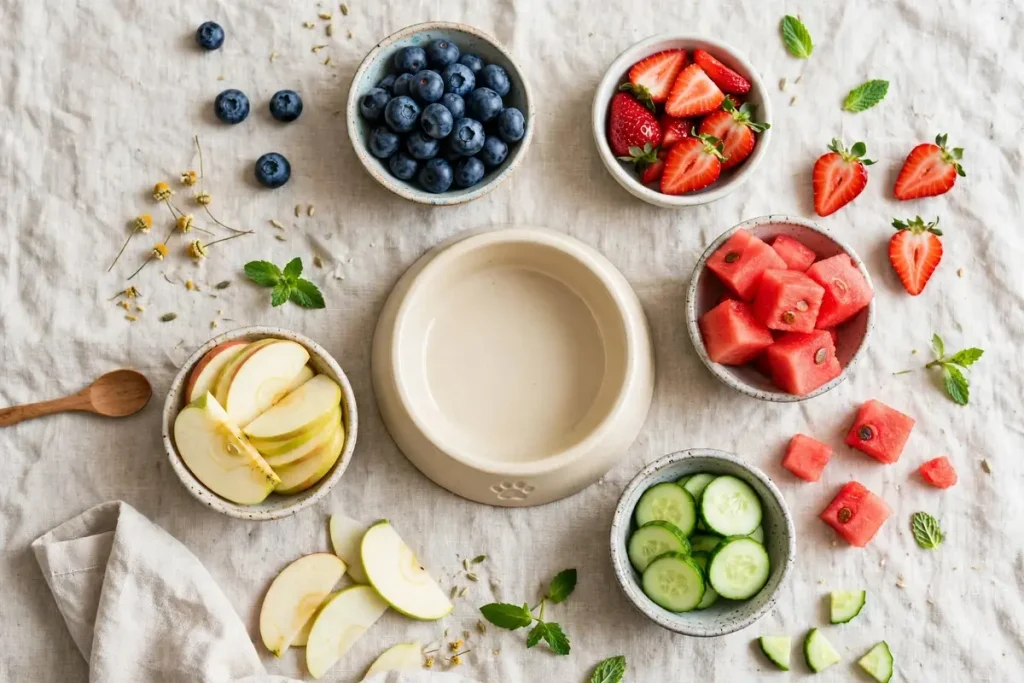
Variety keeps treat time interesting, but portion size still matters. These are all safe when prepared properly:
- Apples, seedless and cut into small pieces.
- Blueberries, which are low in calories.
- Watermelon, with the rind and seeds removed.
- Strawberries, sliced and served plain.
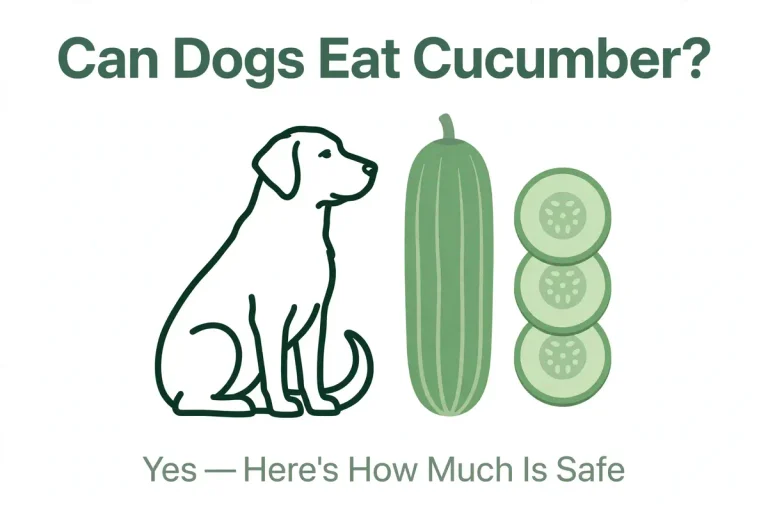
- Cucumber, a crunchy, low-calorie option.
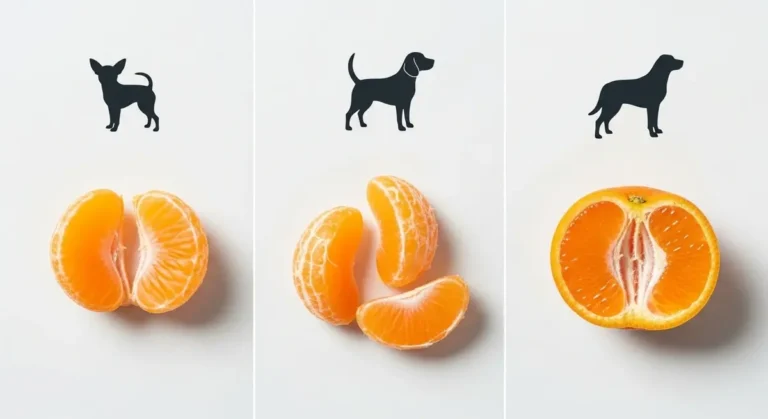
- Mandarins, peeled and given in small segments.
- Tomatoes, ripe and red only, with all green parts removed.
- Pineapple, in small fresh pieces.
- Peanut butter, if it is plain and free of xylitol.
- Popcorn, plain and fully popped, with no butter or salt.
Rotate through them rather than feeding the same treat every day. Every one still counts toward the 10% allowance.
Frequently Asked Questions
Are banana peels safe for dogs?
No. Banana peels are not generally considered toxic to dogs, but they are hard to digest and can cause choking or an intestinal blockage. Always remove the peel before feeding your dog a banana.
Do bananas help with dog diarrhea?
No. Bananas should not be used as a home treatment for diarrhea in dogs. It contains some fiber, but it is also high in sugar. Stop feeding bananas and call your vet for advice on loose stools.
Can puppies eat bananas?
Yes. Puppies can eat small amounts of ripe, peeled banana once they are on solid food. Use pieces smaller than you would give an adult dog, and introduce it on its own so you can spot any stomach upset.
How much banana can I give my dog?
A dog weighing 2–10 pounds can have 1–2 quarter-inch slices, and one over 91 pounds can have up to half a banana. Bananas should not push all treats past 10% of your dog’s daily calories.
What happens if a dog eats too many bananas?
Too much banana usually shows up as digestive upset — vomiting, diarrhea or a drop in appetite. Severe diarrhea, weakness, or collapse mean a vet visit straight away.
Feeding too much banana over time can also add weight and spike blood sugar.
Can dogs eat frozen bananas?
Yes, in small slices, or mashed and frozen inside a toy. Never a whole frozen banana — the portion is too large and carries choking and blockage risks.
Are bananas too sugary for dogs?
Bananas are sweeter than many other fruits, so portion size matters. A few slices are fine for most healthy dogs, but a whole banana is too much for a small dog.
Can a dog with diabetes eat bananas?
Ask your vet first. Bananas contain natural sugar, so they may not be suitable for every dog with diabetes. Follow your vet’s advice on treats and portion sizes.
Can dogs be allergic to bananas?
Uncommon, but any new food can trigger a reaction in an individual dog. Vomiting, diarrhea, and itchiness are the usual signs. Food allergies can also cause repeat ear infections, though those usually have other causes. Stop feeding banana and ask your vet.
Can small dogs eat bananas?
Yes, but a small dog’s treat budget is tiny. A 10-pound dog gets only about 26 calories of treats a day, so one or two quarter-inch slices fill it. Cut them smaller for toy breeds.
Do I need to wash a banana before feeding it to my dog?
Yes. Rinse the banana under cool water and dry it before peeling. Peels can carry dirt and pesticide residue. Washing removes that from the surface, but it does not make the peel safe to eat.
Is banana a good training treat for dogs?
Yes, if you cut it into pea-sized bits. Small pieces let you reward often without using up the day’s treat budget. Banana is soft enough to mash onto a spoon for luring. Count every piece toward the 10% allowance.
Related Dog Nutrition Guides
Glossary
- The 10% rule: the guideline that all treats added together should make up no more than 10% of a dog’s daily calories. It is not 10% for each different treat.
- Treat calories: the share of a dog’s daily energy that comes from treats rather than their main food. For a 10-pound dog, that is about 26 calories.
- Complete and balanced diet: a dog food that meets the nutrient needs for a specific life stage and carries a nutritional adequacy statement.
- Choking: a piece of food blocks the airway, and the dog cannot breathe.
- Gastrointestinal obstruction: food becomes stuck in the stomach or intestine and cannot pass, which can need surgery.
- Xylitol: a sweetener used in sugar-free gum, baked goods, and some peanut butters. It is toxic to dogs.
Sources
- American Kennel Club — Can Dogs Eat Bananas?
- PetMD — Can Dogs Eat Bananas? (reviewed by Hannah Hart, DVM)
- VCA Animal Hospitals — Can you feed pets certain fruits and veggies?
- VCA Animal Hospitals — Vegetarian Diets for Dogs (treat calorie table)
- WSAVA — Feeding Treats to Your Dog (PDF)
Medical & Safety Disclaimer
This guide is for information only and is not a substitute for veterinary advice. Portion sizes are general starting points, not medical limits. Every dog is different, and a dog’s size, health, and diet decide what is safe for them. Ask your vet first if your dog has diabetes, is carrying extra weight, or is on a prescription diet.

Leave a Reply
You must be logged in to post a comment.