
Can Dogs Eat Tahini? What You Need to Know
Yes, dogs can eat plain tahini in tiny amounts. Plain sesame is not generally considered toxic to dogs. The problem is fat: one level tablespoon holds about 90 calories and 8 grams of fat.
For a 10-pound dog, that is nearly three times its whole daily treat allowance. A taste and a spoonful are very different things. Most prepared hummus and tahini dips are also poor choices, because they can include garlic, onion, and added salt.
Key Takeaways
- ✅ Plain tahini is not generally considered toxic. Treat it as a high-fat taste, not a supplement.
- ❌ Skip tahini sauce, hummus, and halva. They add garlic, salt, or sugar.
- ⚠️ One tablespoon is about 90 calories. A 10-pound dog has an estimated treat allowance of about 26 calories a day.
- ⚠️ Large, high-fat meals may raise pancreatitis risk, especially in prone dogs. Know the signs before you share.
- ✅ Check the label for xylitol. Sugar-free spreads can contain it, and it is toxic to dogs.
- ⚠️ Dogs with a pancreatitis history, or a weight problem, are usually better off skipping tahini. Ask your vet.
The short answer: plain tahini, 1/8 teaspoon for a small dog and up to 1 teaspoon for a dog over 60 pounds, as an occasional taste. Never share the dip bowl.
Table of Contents
Is Tahini Safe for Dogs to Eat?
Yes, in small amounts. Tahini is a paste made from ground sesame seeds. Some brands add oil and salt. Plain sesame paste is not a known dog toxin, and small amounts are unlikely to harm a healthy dog.
The problem is not poison. It is fat. Tahini is roughly half fat by weight, which puts it in the same range as peanut butter. That makes it a rare treat, not a topper you use every day.
Treats should make up no more than 10% of your dog’s daily calories. WSAVA’s treats guide sets that cap, and its weight table puts a 10-pound dog’s whole treat allowance at about 26 calories. One teaspoon of tahini holds around 30 calories, so a single teaspoon can exceed the entire day’s allowance. That 10% limit covers all treats combined, not tahini alone.
Those are averages. Your dog’s real needs move with age, activity, body condition, and health.
Tahini does contain nutrients: protein, fiber, calcium, iron, and B vitamins. None of that makes it a dog supplement. Portions that are safe for a dog are far too small to matter nutritionally.
| Per level tablespoon (about 15 g) | Amount | What it means for a dog |
|---|---|---|
| Calories | About 90 | More than 3 times a 10-lb dog’s estimated treat allowance |
| Fat | About 8 g | The main reason to keep portions tiny |
| Protein | About 2.5 g | Too little to count at treat size |
| Calcium | About 60–70 mg | Not a calcium supplement |
| Sodium | Varies by brand | Check the label for heart or kidney cases |
Nutrition figures come from USDA FoodData Central entries for sesame butter and tahini.
How Much Tahini Can Dogs Eat Safely?
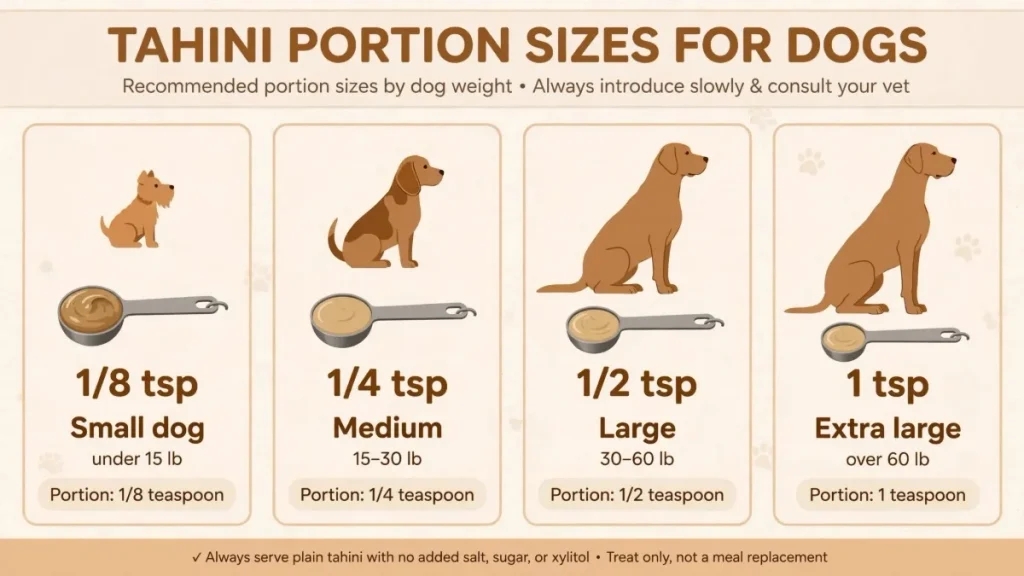
These are conservative example portions for healthy adult dogs, not veterinary-established safe limits. No published guideline sets a tahini dose for dogs.
The amounts are worked backwards from that treat allowance, not from a tahini feeding study. A 1/8 teaspoon holds about 4 calories, a small slice of a 26-calorie budget.
| Dog size | Weight range | Illustrative taste |
|---|---|---|
| Small | Under 15 lb | 1/8 teaspoon |
| Medium | 15–30 lb | 1/4 teaspoon |
| Large | 30–60 lb | 1/2 teaspoon |
| Extra large | Over 60 lb | 1 teaspoon |
A 1/8 teaspoon is a very small amount. Use an actual measuring spoon rather than guessing by eye, especially for a small dog. Do it once, learn what the amount looks like, then watch your dog for 24 hours after the first taste.
Start with less than the table suggests, count the calories toward the daily treat allowance, and skip tahini if your dog needs a low-fat diet. An occasional taste is plenty.
Which Tahini Products Are Safe for Dogs?
Plain ground sesame is fine in small amounts. Almost everything sold next to it is not.
| Product | Rating | Why |
|---|---|---|
| Plain hulled tahini (sesame only) | ✅ Small amounts | No added salt, sugar, or alliums |
| Tahini with salt | ⚠️ Caution | Sodium varies a lot by brand |
| Commercial tahini sauce or dip | ⚠️ Check the ingredients | Many versions contain garlic, lemon, or added salt |
| Hummus | ⚠️ Generally avoid | Many recipes contain garlic or onion powder; others are salty or oily |
| Halva | ❌ No | Mostly sugar and fat; some versions also contain chocolate |
| Sweetened tahini spread | ❌ No | Sugar, and some sugar-free jars use xylitol |
| Tahini chocolate bars or cookies | ❌ No | Chocolate is toxic to dogs |
✅ fine in a small taste · ⚠️ depends on the ingredients · ❌ keep away
A safe ingredient list looks short: sesame. A bad one looks like this: sesame, garlic powder, citric acid, salt. Garlic powder is the worst of those, because dried alliums are more concentrated than fresh.
Xylitol is the other name to hunt for. It is a sugar alcohol used in “no added sugar” spreads. In dogs, it can cause a dangerous drop in blood sugar and, at higher doses, liver failure, as the FDA warns. If the label says xylitol or birch sugar, the jar stays shut.
What to Do If Your Dog Eats Tahini
A small lick of plain tahini: no action needed beyond watching for stomach upset. Offer fresh water and keep the next few treats light.
A large amount, a whole jar, or a salty or sweetened spread: call your vet. Report how much your dog ate and the brand, since fat and salt content vary widely.
Hummus, tahini sauce, or anything with garlic or onion: call your vet, or a US animal poison service such as Pet Poison Helpline at (855) 764-7661 or the ASPCA Animal Poison Control Center at (888) 426-4435. Pet Poison Helpline charges a consultation fee per incident, and the ASPCA may also charge one. Check current fees before calling. Do not wait for symptoms, since garlic poisoning can take a day or more to show up. Outside the US, call your own vet or local poison service.
Anything containing xylitol or chocolate: treat this as an emergency and call right away.
Can Dogs Eat Halva or Sweet Tahini Spreads?
No. Halva is sesame paste plus sugar, and often chocolate or pistachio. Chocolate is toxic to dogs. Pistachio is not toxic on its own, but the sugar and fat make ordinary halva a poor treat either way.
The same goes for jars sold as “tahini spread” or “sesame dessert paste.” Read the label even when the front looks plain. Sugar-free versions are the bigger risk, because some use xylitol.
Can Dogs Eat Hummus or Tahini Sauce?
Most hummus is not a good dog treat. It is chickpeas plus tahini, olive oil, lemon, salt, and often garlic. Many recipes contain garlic, and some include onion powder. Garlic and other Allium plants can damage a dog’s red blood cells.
All forms count: raw, cooked, dried, and powdered. The risk depends on how much was eaten and your dog’s size. If your dog eats hummus or another garlic-containing food, contact your vet for advice rather than waiting to see what happens.
Garlic and onion break down red blood cells. That can lead to weakness, pale gums, and dark urine. Plain cooked chickpeas on their own are a fine treat for most dogs. It is the dip that makes them unsafe.
Can Dogs Eat Sesame Seeds?
Dogs come across small amounts of sesame seeds in foods like bread rolls. A few seeds are unlikely to be a concern for most healthy dogs. Large amounts add fat and can cause digestive upset.
They are not a meaningful source of nutrition for a dog either, and there is very little dog-specific research. Keep portions small.
Can Dogs Eat Sesame Oil?
A small amount is not a known dog toxin, but sesame oil is concentrated fat, with no fiber or protein to slow it down. A teaspoon holds about 40 calories of fat.
Large amounts can cause digestive upset, including vomiting and diarrhea. Do not treat oil as a coat supplement. Ask your vet about a measured omega-3 product instead.
Can Puppies Eat Tahini?
Puppies do not need tahini as a treat. Their calories should come mostly from complete and balanced puppy food. If your puppy eats a small taste of plain tahini by accident, watch for stomach upset. Ask your vet before offering it on purpose, especially if your puppy has digestive problems.
Can Tahini Cause Pancreatitis in Dogs?
This is the main risk with tahini. The pancreas makes digestive enzymes. When it becomes inflamed, those enzymes activate early and start digesting the organ itself.
Large, high-fat meals may raise the risk in dogs that are already prone to it. Eating a fatty food does not automatically cause the condition, and many cases have no clear cause at all. Signs include vomiting, belly pain, poor appetite, and a hunched “praying position.” Severe cases need hospitalization. VCA’s guide to nutrition and pancreatic disease explains why vets often reduce dietary fat in these dogs.
Dogs with a history of pancreatitis, diabetes, or high blood fat levels should skip tahini unless their vet says a tiny taste is fine.
Potential Health Risks of Tahini for Dogs
Weight gain. Two teaspoons a day adds about 60 calories. For a 20-pound dog with a daily target of 500 to 600 calories, that is roughly 10% to 12% of its food, spent on a treat with almost no nutrients. Real targets vary with age, activity, body condition, and health.
Salt. Store tahini ranges from nearly salt-free to fairly salty. A tiny taste is unlikely to cause salt poisoning in a healthy dog, but salty products are still best avoided. Some dogs with heart or kidney disease are on prescribed sodium limits.
Sesame allergy. Reactions appear to be uncommon in dogs, though there is little published data. Any new food can cause a reaction in an individual dog. Watch for itching, hives, or vomiting after the first taste.
Stomach upset. Sesame is high in fiber and fat. Several spoonfuls can cause gas, loose stools, or vomiting. Easy to avoid with portion control.
How to Serve Tahini Safely
- Read the full ingredient list first.
- Choose a jar with sesame as the only ingredient.
- Stir the paste, since oil separates and sits on top.
- Measure once to learn the size of the smear.
- Warm the spoon so the paste spreads thin.
- Smear it inside a lick mat or stuff it in a toy.
- Watch your dog for 24 hours after the first taste.
Mixing the measured amount with water makes the same portion easier to spread across a lick mat. It adds volume but not calories.
Use only the measured portion that fits your dog’s size. These are occasional ways to serve it:
- The measured smear on a lick mat with mashed banana
- The same amount mixed into plain pumpkin
- A tiny amount spread over a small piece of plain cooked chicken
Lower-Fat Alternatives
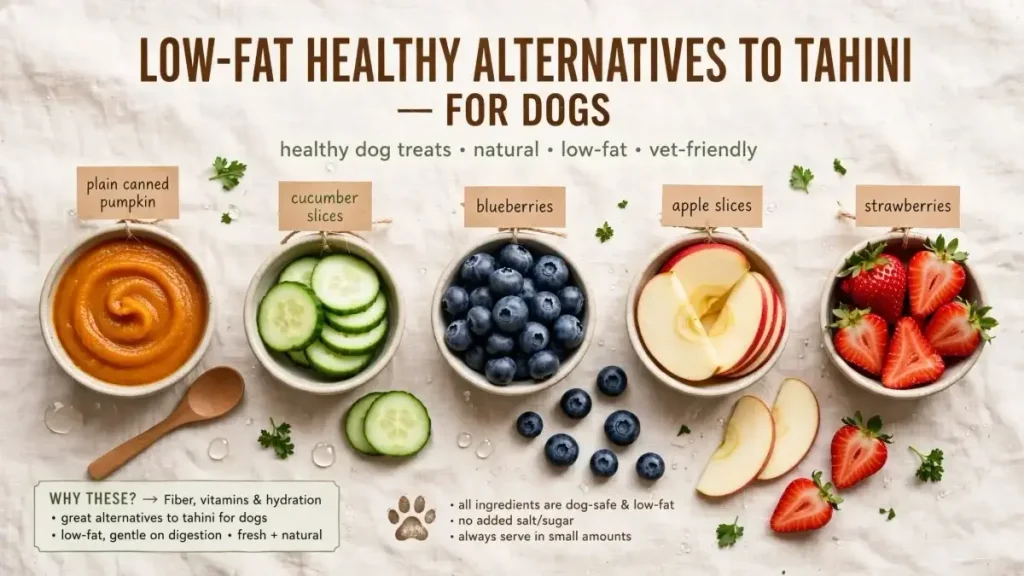
If you want a spreadable treat with less fat, plain canned pumpkin is a better base. It is low in calories and easy to freeze into a toy.
For a hydrating snack on a hot day, see our guide to watermelon for dogs. A few cubes beat a spoon of seed paste on fat and calories.
Other low-fat options from our food guides:
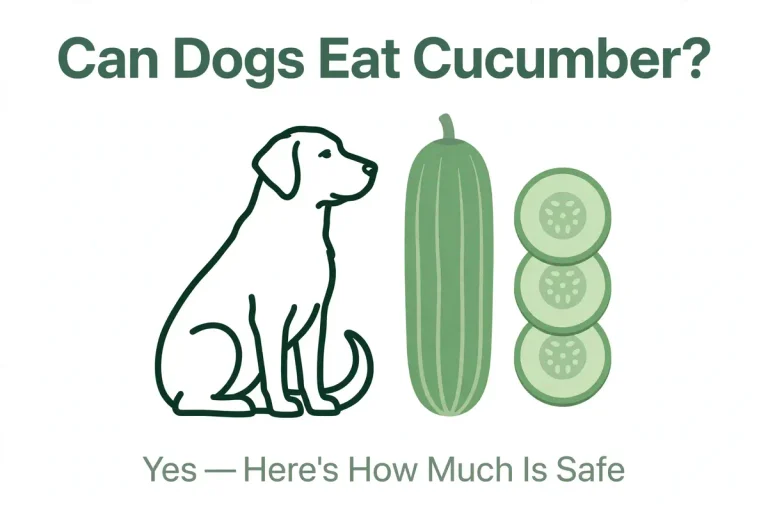
- Cucumber for dogs — mostly water, good for crunch
- Blueberries for dogs — small, easy to portion
- Apples for dogs — no seeds or core
- Strawberries for dogs — cut small for little mouths
Tahini vs Peanut Butter for Dogs
They are close cousins in the bowl. Both are ground seed or nut pastes, both are roughly half-fat, and both run about 90 calories a tablespoon.
Peanut butter is more common in commercial dog treats, but both spreads are calorie-dense and should be offered sparingly. Some peanut butter and some sweetened tahini products contain xylitol, so check the ingredient list before sharing either. Our guide to peanut butter for dogs covers that label check in detail.
Tahini is the option when a dog cannot have peanuts. Neither is a health food. Both are treat-budget items.
When to Call Your Vet
- Vomiting more than once, or vomiting with belly pain
- A hunched posture, restlessness, or a hard belly
- Pale gums, weakness, or dark or red urine
- Refusing food, especially with vomiting, belly pain, or lethargy
- Hives, facial swelling, or trouble breathing
- Any suspected garlic, onion, xylitol, or chocolate exposure
Frequently Asked Questions
Can dogs eat tahini every day?
No. Tahini is too high in fat and calories for daily feeding. An occasional small taste is enough.
Is tahini toxic to dogs?
No. Plain sesame is not generally considered toxic to dogs. The risks come from fat, salt, and added ingredients like garlic and xylitol.
How much tahini can a dog have?
About 1/8 teaspoon for a small dog, up to 1 teaspoon for a dog over 60 pounds. These are cautious guide portions, not vet-set limits. Treats stay under 10% of daily calories.
Can dogs eat tahini sauce or dip?
Usually no. Most versions contain garlic, lemon, or salt. Read the ingredients first, and keep the dip bowl out of reach.
Can dogs eat hummus?
Most hummus is not a good dog treat. Many recipes contain garlic, and some include onion powder. Plain cooked chickpeas are a better choice.
Can dogs eat sesame seeds?
Small amounts are unlikely to be a problem. Large amounts add fat and can cause digestive upset.
Is sesame oil safe for dogs?
A small amount is not a known toxin, but it is pure fat. Do not use it as a supplement, and keep it to a taste.
Can puppies eat tahini?
Puppies do not need tahini. Their calories should come from complete and balanced puppy food.
Can dogs eat halva?
No. Halva is mostly sugar and sesame paste, and some versions contain chocolate, which is toxic. It is a poor treat either way.
What if my dog ate a lot of tahini?
Call your vet. A large fatty meal can cause vomiting, diarrhea, or pancreatitis. Tell them the brand and the amount.
Does tahini cause pancreatitis in dogs?
High-fat foods may add to the risk in dogs already prone to it, but they do not cause it every time. Tahini is a poor choice for a dog with a history of pancreatitis.
Can diabetic dogs eat tahini?
Ask your vet first. Tahini adds fat and calories, and diabetic dogs usually need a tightly controlled diet and weight.
Related Dog Nutrition Articles


Glossary
Tahini — A paste made from ground sesame seeds. Store-bought versions may add oil and salt.
Pancreatitis — Inflammation of the pancreas. It causes vomiting, belly pain, and poor appetite, and it can be serious.
Allium — The plant family that includes garlic, onion, chives, and leeks. These plants can be toxic to dogs, and garlic is the strongest of them.
Xylitol — A sugar alcohol used in sugar-free foods. It can cause low blood sugar and liver failure in dogs.
Treat calories — The share of a dog’s daily energy that comes from treats. Veterinary guidance caps it at about 10%.
Complete and balanced diet — A food that meets all of a dog’s nutrient needs in the right amounts. Treats do not replace it.
Sources
- VCA Animal Hospitals — Pancreatitis in Dogs
- VCA Animal Hospitals — Nutrition and Pancreatic Disease in Dogs
- WSAVA — Feeding Treats to Your Dog (PDF, 2024)
- FDA — Xylitol Is Toxic to Dogs
- VCA Animal Hospitals — Onion, Garlic, Chive, and Leek Toxicity in Dogs
- PetMD — Can Dogs Eat Chickpeas?
- AKC — Is Salt Bad for Dogs?
- VCA Animal Hospitals — Obesity in Dogs
- ASPCA — People Foods to Avoid Feeding Your Pets
- USDA FoodData Central — Sesame butter, tahini (roasted and toasted kernels)
Medical & Safety Disclaimer
This guide is for information only. It is not a substitute for veterinary advice, and the portions above are starting points, not medical limits. Talk to your vet before adding any new food to your dog’s diet. This matters most if your dog has pancreatitis, diabetes, kidney disease, or a weight problem. If you suspect poisoning, call your veterinarian right away. In the US, Pet Poison Helpline is (855) 764-7661.
Leave a Reply
You must be logged in to post a comment.