
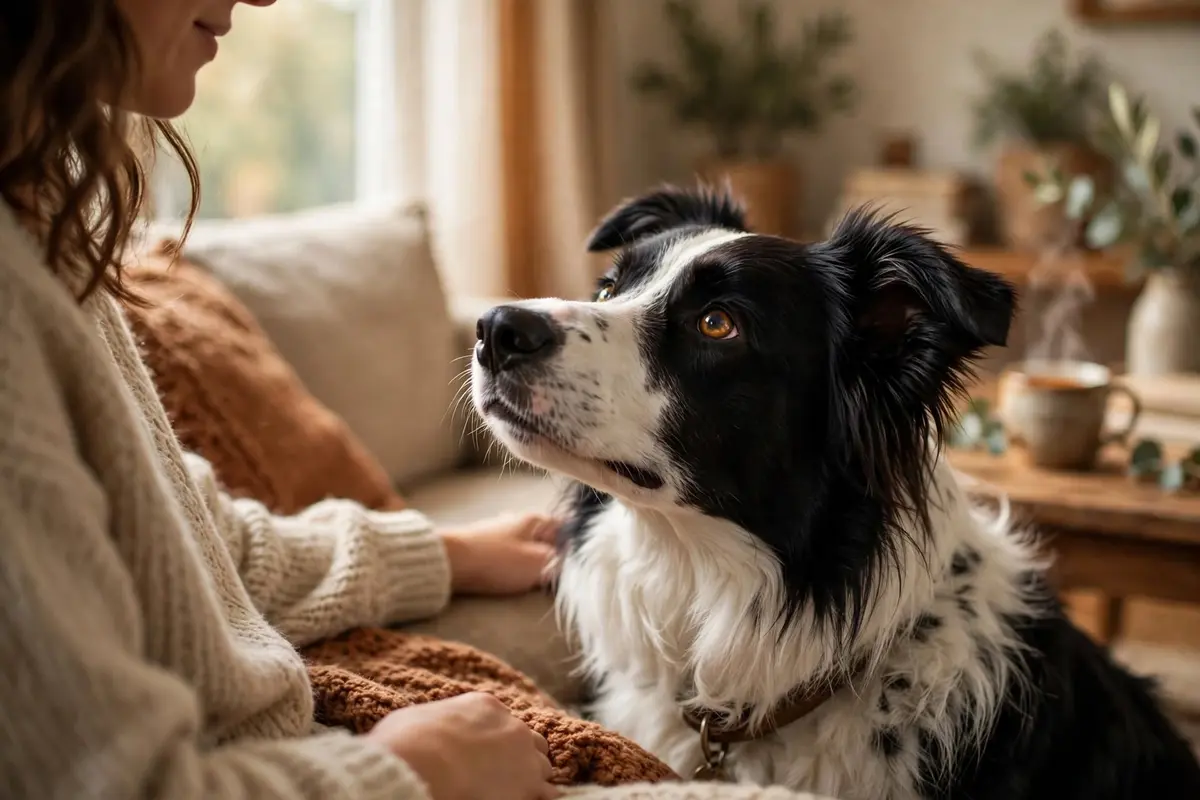
Do Border Collies get attached to one person? Usually, yes. Almost never to only one person. A Border Collie will often form its closest bond with one person, usually the person who handles most of its care and activities. That dog may follow them from room to room and check in all day. Nothing guarantees who it picks. But the same dog will still bond with everyone else in the house. The bond runs deep, not exclusive.
Key Takeaways
- ✅ Many Border Collies form their closest bond with one person, and stay affectionate with the rest.
- ✅ Daily care, training, and shared activities often shape who that person is.
- ✅ The American Kennel Club lists the breed as energetic, affectionate, and smart.
- ⚠️ Strong attachment can tip into separation anxiety. Watch for pacing, howling, and door-chewing within minutes of leaving.
- ⚠️ Punishing an anxious dog makes it worse. The ASPCA calls it distress, not disobedience.
- ❌ Myth: a Border Collie forgets you if you go away.
Table of Contents
Why Do Border Collies Pick a Favorite Person?
Border Collies were bred to herd sheep and to work close to the person running the job. The dog took directions, used its own judgment at a distance, and checked back in. That history is why this breed watches people so closely.
The AKC calls the Border Collie a “remarkably bright workaholic.” It warns the breed can be “a bit too amazing for owners without the time, energy, or means to keep it occupied.” A dog built like that attaches to whoever supplies the work.
In a two-adult home, that is usually the person who does four things:
- Handles obedience training and rewards.
- Runs the daily walk or the sport session.
- Feeds the meals.
- Supplies a job, such as the work this breed was built to do.
Hand all four to one person and you get the bond people describe as one-person. Share them, and the dog’s reliance spreads. It isn’t magic, and it isn’t a breed defect. It’s a job description.
If you are still deciding whether the breed suits you, start with our Border Collie breed guide.
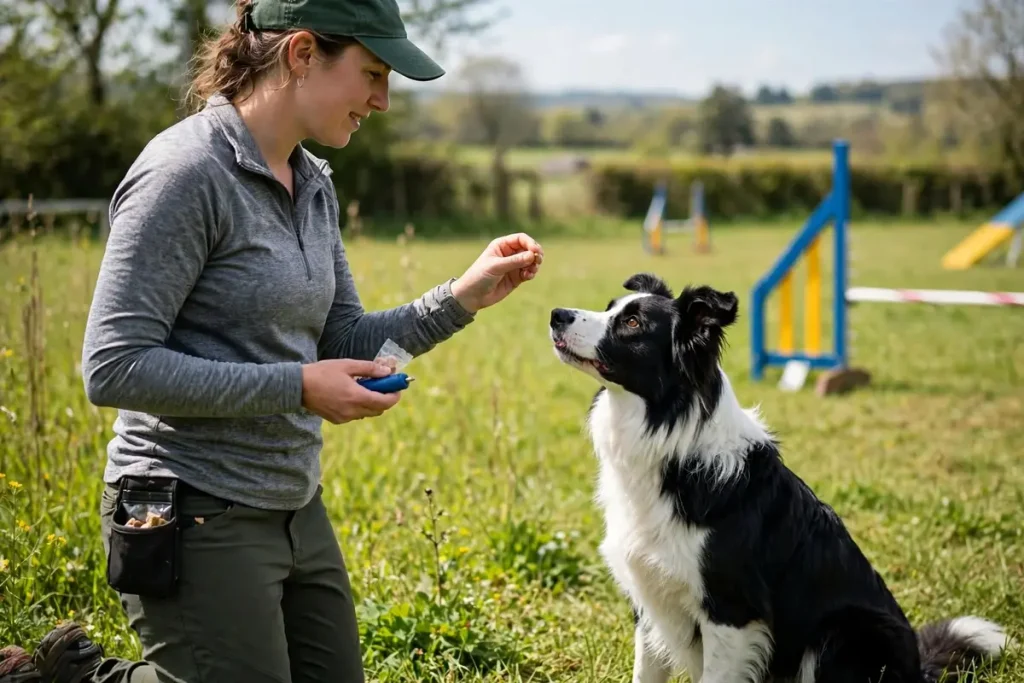
Does a Border Collie Attach to Whoever Feeds It?
Food gets a dog’s attention. Work keeps it. A dog that takes meals from your hand learns that your hand means good things, and that is a real association. It is also the cheapest part of the bond to change.
The stronger pull is usually the person who runs the day. That means the walk, the training, and the game that makes the dog think. Feeding still counts. A dog fed by one person and worked by another tends to keep both, with a different habit attached to each.
Two things follow from that. A dog can prefer the person who feeds it and still work happily for someone else, because food preference is easy to move. And feeding alone will not win a dog that already has a training partner.
The practical version: if you want a closer bond, take one meal and one walk. Do it daily. Regular positive contact is what changes a relationship, and nobody can put a date on it.

Is the “One-Person Dog” Label True?
Half true, which is why the label sticks. Here is what the phrase gets right and wrong.
| What people say | What usually happens |
|---|---|
| “Only loves one person” | False. The dog has a favorite and still greets, follows, and seeks out the rest of the household. |
| “Aloof” | False for most dogs. The AKC lists affectionate as a breed trait. Reserved with strangers is not cold with family. |
| “Picks one handler” | Sometimes. Some Border Collies work most closely with one person. |
| “Clingy” | Depends. Following you is instinct. Panicking when you leave is a different problem. |
The label survives because it describes a real pattern in working homes. It fails because people repeat it as a rule. No study establishes that Border Collies, as a breed, choose one person. What follows is the pattern owners and trainers describe, set against what the sources do say. Owners sometimes call a hard-following dog a velcro dog. That label describes the habit, not a diagnosis.
The Border Collie temperament sets the starting point. The household shapes the outcome.
How Do Border Collies Show Attachment?
Their affection often shows up as attention before touch. The AKC lists being affectionate with family as a breed trait, so the ceiling is high. Plenty of Border Collies still settle in for cuddle time after a day’s work. If the touch question is the one you came for, see whether Border Collies are cuddly.
Common signs your dog has picked you:
- Room-to-room following. Your dog likes to keep you in sight. That may be attachment, habit, or the breed’s habit of watching movement.
- Doorway watching. The dog parks where it can see both you and the door.
- Bringing you things. Toys, socks, a random shoe. Think of it as an invitation to play.
- Checking in on walks. The dog ranges out, then swings back to your position.
- Waiting at the window or the car. The dog holds your departure point.
None of that is neediness by itself. A confident Border Collie does all five and still settles when you leave the room. Following you is not a diagnosis. What matters is how the dog copes once you are actually gone, which is the next question.
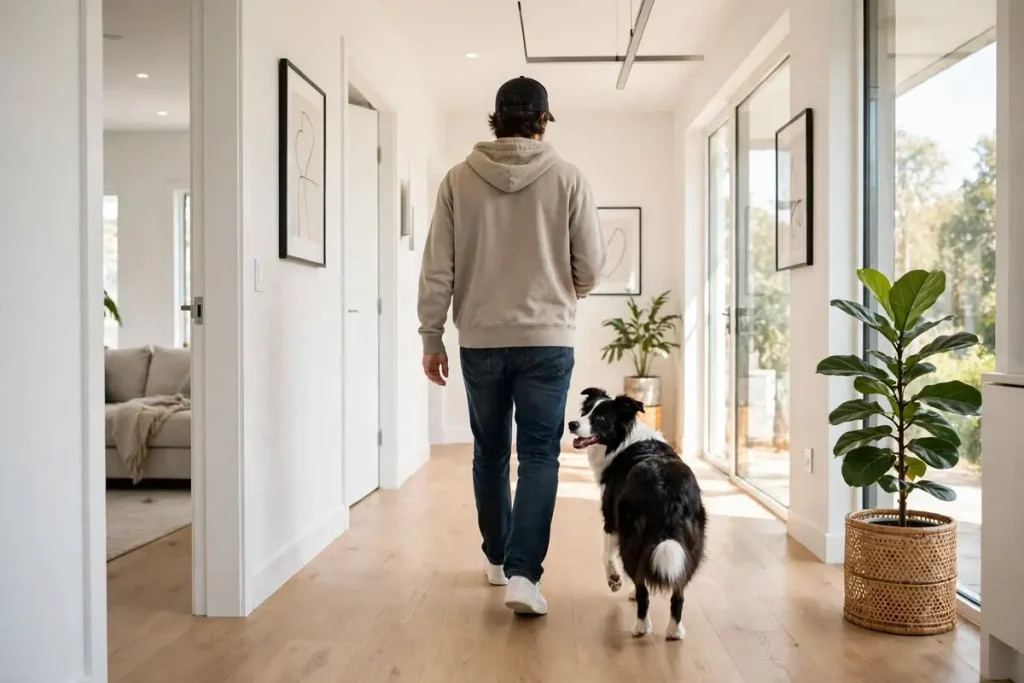
How Do You Share the Bond Across a Household?
If you want the dog to spread its attachment, spread the work. Five changes do most of it.
- Give each adult one owned job. One person trains, another feeds, another runs the evening walk. Ownership beats presence.
- Share the jobs. Let different people take turns with walks, training, and play, so the dog gets good experiences with everyone.
- Let the second person do the fun part. Flirt pole, fetch, or the Border Collie exercise guide. Shared activity gives the two of you something to do together.
- Practice short absences on purpose. Leave for a few minutes, then a bit longer, before you need to.
- Keep departures boring. No long goodbye, no big return. Calm exits teach a calmer dog.
Children and visitors get the same treatment. Let them take part in calm, positive moments. An adult can supervise a child asking the dog to settle on its bed, then reward it. That teaches the dog that people are safe and predictable.
This is also the answer to whether a Border Collie can love more than one person. Yes. The usual split is one person as training partner, another as walker, and a third who sneaks the treats. The dog forms a separate relationship with each of them. That can shift over time too. A new routine can move the favorite. So can a change in who does the daily care. Neither means the dog stopped caring about the first person.
Early socialization counts for a lot here. The American Veterinary Society of Animal Behavior calls the first three months the primary window. That is when a puppy adapts most easily to new people, animals, and experiences. Use that window to let the puppy meet different family members, not just one.

When Does Attachment Become Separation Anxiety?
Following you around is usually normal. Becoming distressed when you leave is a different problem, and it may point to separation-related distress. The ASPCA defines separation anxiety as distress triggered by being apart from “the people they’re attached to.” Same bond, running too hot.
These are the signs the ASPCA lists. They happen when the dog is alone, not while you are in the room:
- Urinating or defecating indoors, even in a house-trained dog
- Barking or howling that starts within minutes of your exit
- Chewing door frames or window sills, or digging at doors
- Escape attempts that can cause broken teeth, cut and scraped paws, or damaged nails
- Pacing in a fixed path
The ASPCA does not treat the cause as settled. It notes that dogs adopted from shelters are more likely to show it. It also lists a change of guardian among the changes that can trigger it.
The AKC compares the experience to a panic attack, quoting the behaviorist Patricia McConnell. She adds that nobody can know for sure what is in a dog’s mind. This is why scolding backfires. The ASPCA says plainly that anxious behavior “is not the result of disobedience or spite,” and that punishment makes the problem worse.
Rule out medical causes first. Then teach the dog that being alone is survivable, starting with very short absences and lengthening them slowly. A severe case needs a veterinary behaviorist, not another week of trial and error.
Boredom is not the same problem as separation anxiety, and a longer walk will not fix a dog that panics alone. This breed does need a daily job. If your schedule is long and fixed, read our guide to the practical downsides of Border Collie ownership before you commit.
Frequently Asked Questions
Do Border Collies only love one person?
No. They usually pick a favorite and still bond with the rest of the household. The favorite is normally the person who trains, feeds, and exercises them.
Do Border Collies get separation anxiety?
Some do. The breed is strongly attached and needs a job, so a quiet house with nothing to do is hard on it. Watch for howling, pacing, and door-chewing that starts within minutes of your exit, and speak to your vet if you see them.
How do I become my Border Collie’s favorite person?
Do the work. Train the dog, feed the dog, and run the main exercise session. Then add a sport or a daily thinking game. Attention follows activity in this breed.
Why does my Border Collie follow me everywhere?
Border Collies watch movement closely, and many like to keep their people in sight. Following can be attachment, habit, or herding behavior. On its own, it is not a sign of separation anxiety.
Will my Border Collie forget me if I go away?
No. Expect a joyful reunion and a short stretch of re-testing the household rules. Keep the routines the same for the first week back.
Do rescue Border Collies attach to one person?
Often to one person first, and the attachment can feel intense. A rescue Border Collie may need time to settle. Keep routines predictable, give it a job, and let the dog build relationships with different family members at its own pace.
Can a Border Collie’s favorite person change?
Yes. A Border Collie’s preferred person can shift as routines and relationships develop. Spending more time with another family member can strengthen that bond. It does not mean the dog has forgotten the first person.
Are male or female Border Collies more attached?
There is no reliable evidence that males are more attached than females. Temperament, early experiences, and who spends the day with the dog matter more.
Related Border Collie Guides

Glossary
| Term | Plain meaning |
|---|---|
| Separation anxiety | Significant distress when separated from the person the dog is attached to. It can include noise, destruction, or house soiling, but not every dog shows every sign. |
| Velcro dog | An owner’s term for a dog that follows you constantly. It describes the habit, not a diagnosis. |
| Socialization window | The early puppy months when new people and places are easiest to accept. |
Sources
- American Kennel Club. Border Collie Dog Breed Information. Breed traits, group, and official description.
- American Kennel Club. Separation Anxiety in Dogs: Signs, Causes, and Prevention.
- American Society for the Prevention of Cruelty to Animals. Separation Anxiety. Symptoms, causes, and treatment guidance.
- American Kennel Club. Why Does My Dog Follow Me Everywhere?
- American Veterinary Society of Animal Behavior. Position Statement on Puppy Socialization.
This article is general information, not veterinary advice. Sudden behavior changes, house soiling, or destruction can have medical causes. Speak to your veterinarian before starting a behavior plan.
Leave a Reply
You must be logged in to post a comment.