
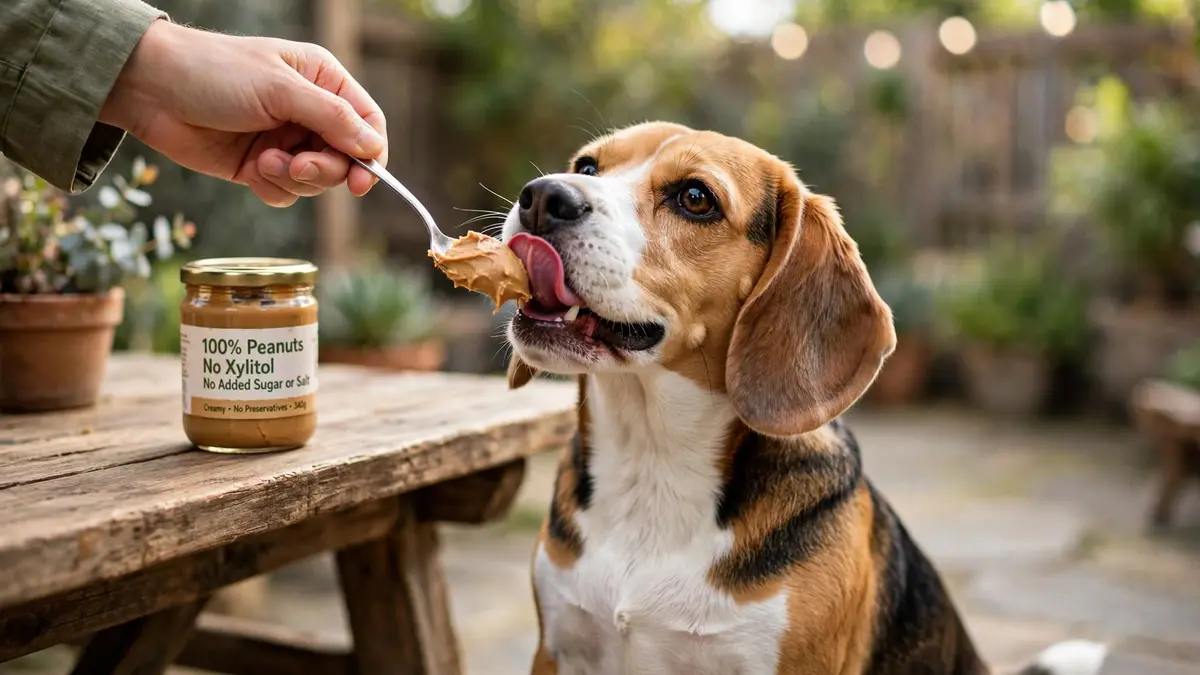
Can Dogs Eat Peanut Butter? Yes — Here’s How Much Is Safe
Yes, most dogs can eat small amounts of plain peanut butter, provided it contains no xylitol. Xylitol is highly toxic to dogs and can cause a life-threatening drop in blood sugar. Plain, unsalted peanut butter without xylitol is safe in moderation.
Important: Never give your dog peanut butter until you have checked the ingredient list. If the jar contains xylitol (also listed as E967), contact a veterinarian or animal poison service immediately — even if your dog currently seems fine.
You are spreading peanut butter on toast, and those big puppy eyes lock onto you. The tail starts wagging. The drool begins to flow. Is sharing a little lick really that bad?
It depends on the ingredients, the amount, and your dog’s individual health. Peanut butter seems like a simple food — just peanuts, right? But some commercial peanut butters contain added sugar, salt, oils, or sweeteners such as xylitol. The good news is you do not have to cut your dog off from this classic treat forever. You just need to know what to look for.
Key Takeaways
- ✅ Plain, unsalted peanut butter without xylitol is safe for most dogs in small amounts
- ❌ Peanut butter containing xylitol or E967 can cause life-threatening poisoning in dogs.
- ✅ Single-ingredient peanut butter (just peanuts) is the simplest choice
- ❌ Never rely on a brand name alone — check the label every time, even on a product you have bought before
- ✅ Peanut butter works well for Kong stuffing, training treats, and hiding medication in small amounts
- ❌ Do not give peanut butter to dogs with a history of pancreatitis or those on a low-fat diet without veterinary approval
Table of Contents
Is Peanut Butter Safe for Dogs?
Plain peanut butter without xylitol can be an occasional treat for many dogs when given in small amounts. The most important rule is simple: plain, unsalted peanut butter with no xylitol.
Treats of all kinds, including peanut butter, should make up no more than 10% of your dog’s daily calorie allowance — and that limit applies to all treats and extras combined, not 10% specifically for peanut butter. The remaining 90% should come from a complete and balanced dog food. According to VCA Animal Hospitals, the 10% guideline helps prevent nutritional imbalances and weight gain.
Here are broad starting points based on dog size. These are approximate guidelines, not strict limits. Your dog’s overall calorie needs, diet, activity level, size, and individual tolerance should determine how much they receive.
- Small dogs (under 10 kg): Start with a pea-sized amount, up to about ½ teaspoon
- Medium dogs (10–25 kg): Start with ¼ teaspoon, up to about 1 teaspoon
- Large dogs (25 kg+): A small amount may be appropriate — the right portion depends on your dog’s calorie needs and overall diet
Dogs with obesity, a history of pancreatitis, diabetes, or other dietary restrictions may need different guidance. Consult your veterinarian if you are unsure.
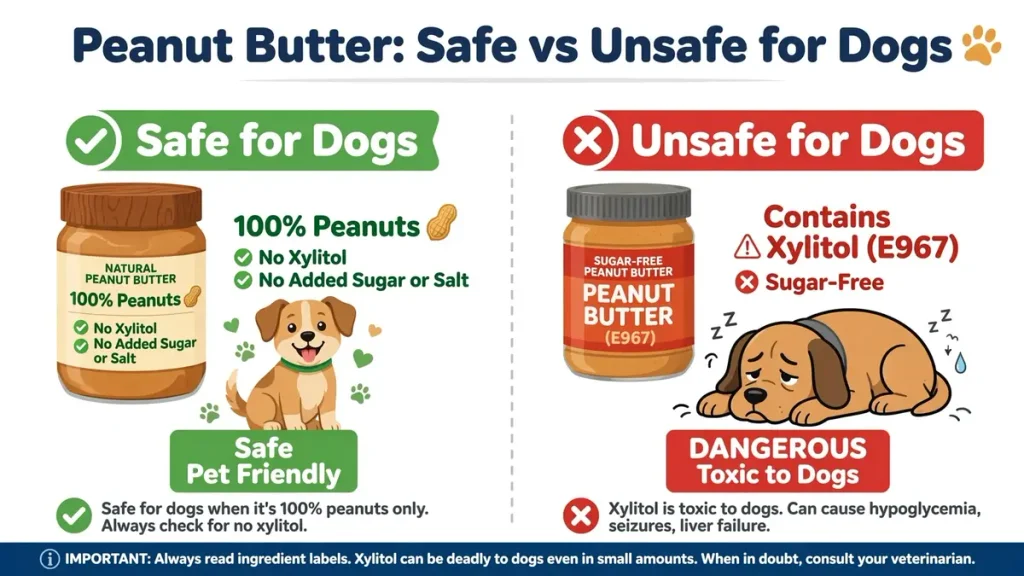
The Xylitol Danger: Why Some Peanut Butter Is Deadly
Xylitol is a sugar alcohol used as a sweetener in many sugar-free and low-carb products. It is perfectly safe for humans but extremely dangerous for dogs.
On ingredient labels, xylitol may also be listed as E967 — this is the European food additive number. Check for both names whenever you buy peanut butter.
In dogs, xylitol can trigger a rapid and excessive release of insulin, causing blood sugar to fall dangerously low. Signs of hypoglycemia can develop rapidly after xylitol ingestion. According to the Pet Poison Helpline, xylitol toxicity can cause hypoglycemia, seizures, liver failure, and even death in dogs. VCA Animal Hospitals confirms that even small amounts of xylitol can be life-threatening. The Merck Veterinary Manual notes that xylitol can cause profound hypoglycemia in dogs and, in some cases, severe liver injury.
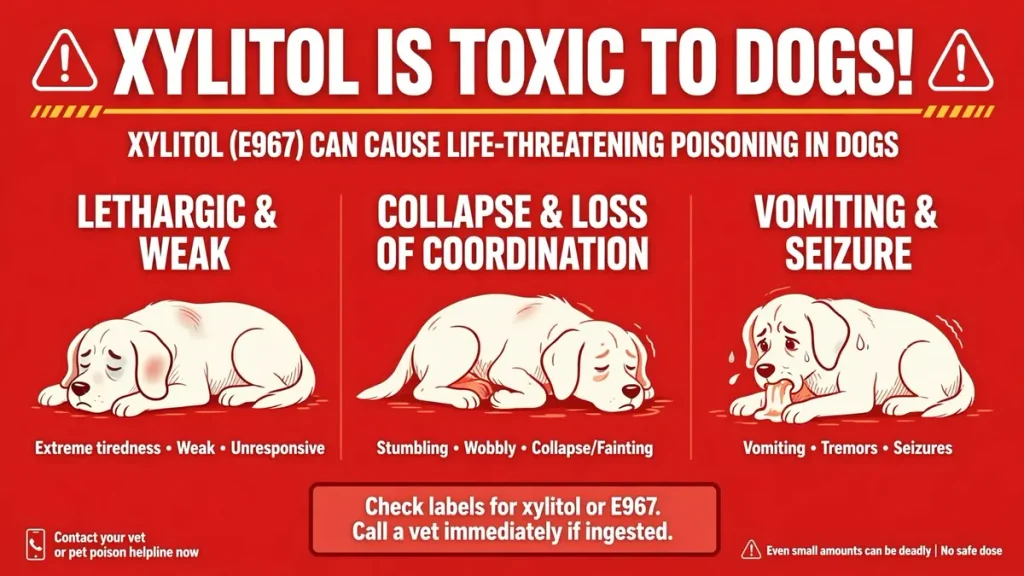
Symptoms of Xylitol Poisoning in Dogs
- Vomiting
- Weakness or lethargy
- Loss of coordination (stumbling or wobbling)
- Tremors or seizures
- Collapse or unconsciousness
Signs of hypoglycemia can develop rapidly, sometimes within 30 minutes, although onset can be delayed depending on the product. If your dog has eaten peanut butter containing xylitol, seek emergency veterinary advice immediately — even if no symptoms are present. Do not wait for symptoms to appear — xylitol poisoning can cause liver damage before visible signs develop.
How to Check Peanut Butter Labels
The safest peanut butter for dogs contains the fewest ingredients. Here is what to check on every jar — even if it is a brand you have bought before, because formulations can change.
| What to Check | Why It Matters |
|---|---|
| Xylitol or E967 | Highly toxic to dogs and can cause life-threatening hypoglycemia |
| Added sugar | Adds unnecessary calories |
| Salt | Dogs generally do not need extra sodium; unsalted is preferable |
| Palm oil | Not inherently toxic, but adds fat and calories |
| Other sweeteners | Check carefully, especially for xylitol or E967 |
Golden rule: Never feed your dog any peanut butter labelled “sugar-free,” “low sugar,” or “reduced sugar” without reading the ingredients first. A simple peanut butter made from peanuts only is an easy choice because there are fewer ingredients to check.
Don’t Rely on Brand Names Alone
Brand formulations differ between products, regions, and time. A brand that is safe in one product line may not be safe in another. The ingredients list on the specific jar you are buying is the only reliable source of information — not the brand name, not what you remember from last time, and not what another website says about that brand. Read the label on your jar, every time.
Ingredients worth avoiding or limiting include xylitol, E967, added sugar, excessive salt, and unnecessary added fats or oils. The simplest peanut butter — made from peanuts only — is an easy choice because there are fewer ingredients to check.
Is Peanut Butter Good for Dogs?
Peanut butter contains protein, fat and several micronutrients, but it is calorie-dense and is not a necessary part of a complete and balanced canine diet. Think of it as an occasional treat rather than a nutritional supplement.
Nutritional Profile
According to USDA FoodData Central, one tablespoon (16 g) of smooth peanut butter contains approximately 94 calories, 8 g of fat, 4 g of protein, and 3 g of carbohydrates.
| Nutrient | Per 1 tbsp (16 g) | Why It Matters |
|---|---|---|
| Calories | ~94 kcal | High calorie density, so portions should be small |
| Protein | ~4 g | Provides protein, although dogs should get most nutrition from their complete diet |
| Fat | ~8 g | Contributes significantly to calorie intake |
| Vitamin B3 (niacin) | ~2 mg | Involved in normal energy metabolism |
| Vitamin E | ~1 mg | An antioxidant nutrient |
| Magnesium | ~25 mg | Involved in normal nerve and muscle function |
Peanut butter contains mostly unsaturated fats along with protein and several micronutrients. However, it is calorie-dense, so these nutrients do not make peanut butter a necessary part of a dog’s diet. Think of it as an occasional treat rather than a nutritional supplement.
Other Benefits
Mental enrichment: A small amount of peanut butter inside a stuffed Kong can keep a dog occupied and engaged.
Training aid: Most dogs find peanut butter highly motivating, which makes it useful as an occasional high-value training reward.
Pill hiding: A small ball of peanut butter can help disguise medication.
How Much Peanut Butter Can Dogs Eat?
Portion size depends on your dog’s size and overall calorie needs. These are conservative starting amounts, not maximum daily servings. Your dog’s calorie needs, overall diet, activity level, body condition, and individual tolerance should determine how much they receive.
| Dog Size | Weight Range | Conservative Starting Amount |
|---|---|---|
| Small | Under 10 kg | Pea-sized dab |
| Medium | 10–25 kg | About ¼ teaspoon |
| Large | 25 kg+ | About ½ teaspoon |
These are conservative starting amounts, not maximum daily servings. The appropriate amount depends on your dog’s total calorie needs, other treats, activity level, body condition, and overall diet. Peanut butter should be offered occasionally rather than daily and counted toward the dog’s total daily treat allowance.
First-time tip: Give a tiny dab the first time and monitor your dog for digestive upset or other signs of an adverse reaction.
Potential Risks of Peanut Butter for Dogs
Xylitol Toxicity
This is the most serious risk. Xylitol (also listed as E967) in peanut butter can cause life-threatening hypoglycemia and, in some cases, severe liver injury or liver failure. Always check the ingredient list — every single time you buy a new jar.
High Fat Content and Pancreatitis
Peanut butter is calorie-dense and high in fat. Excessive amounts can contribute to gastrointestinal upset and unwanted weight gain, while high-fat treats may be inappropriate for dogs with pancreatitis or those on veterinary-prescribed low-fat diets. If your dog has a history of pancreatitis, ask your veterinarian before offering peanut butter.
Choking Risk
Peanut butter is sticky. It can cling to the roof of your dog’s mouth or the back of their throat, creating a choking hazard. Always serve it in a way that is easy to eat — spread thin inside a Kong or on a lick mat. Smooth peanut butter is generally preferable to chunky, because whole peanut pieces can create an additional choking hazard, particularly for small dogs.
Obesity
With 94 calories per tablespoon, peanut butter adds up quickly. Even small amounts given regularly can contribute to weight gain. Factor peanut butter into your dog’s overall daily treat allowance and keep portions modest.
Allergic Reactions
Allergic reactions to peanuts appear to be uncommon in dogs, but any new food can cause an adverse reaction in an individual dog. Possible signs of a food reaction include itching, hives, facial swelling, vomiting, diarrhoea, or other digestive upset. When giving peanut butter for the first time, start with a tiny amount.
Can Puppies Eat Peanut Butter?
Puppies that are eating solid food can generally have a tiny amount of xylitol-free peanut butter, but introduce new foods gradually and use very small portions. For very young puppies, ask your veterinarian if you are unsure. Their calorie needs are small, and treats should remain a minor part of their diet.
Puppy-Specific Considerations
- Smaller airways: Sticky peanut butter is a greater choking risk for puppies
- Sensitive stomachs: Puppies have delicate digestive systems. Start with an extremely small amount
- Training tool: Peanut butter can work well for positive reinforcement training — use tiny dabs
My Dog Ate Peanut Butter — What Should I Do?
Scenario A: Your Dog Ate Safe Peanut Butter (No Xylitol)
If your dog got into a jar of peanut butter that does not contain xylitol, the main concern is digestive upset from the fat content.
- Small amount (a lick or teaspoon) — Usually no immediate action is needed. Monitor your dog for digestive upset.
- Large amount (several tablespoons or more) — Contact your veterinarian for advice, particularly if your dog is small, overweight, has a history of pancreatitis, or develops vomiting, diarrhoea, abdominal pain, or lethargy.
Scenario B: Your Dog Ate Xylitol Peanut Butter — Emergency
This is an emergency. Follow these steps immediately:
- Confirm xylitol was ingested — Check the ingredients list for xylitol or E967
- Call your vet or emergency clinic immediately — Do not wait for symptoms
- Contact a poison helpline: In the US, call Pet Poison Helpline (855-764-7661). In the UK or Ireland, contact your veterinarian or nearest emergency veterinary clinic immediately.
- Do not induce vomiting unless a professional tells you to
What to expect at the vet: Veterinary treatment may include blood-glucose monitoring, IV dextrose and monitoring of liver function. Some dogs require hospitalisation and continued monitoring, depending on the amount ingested and clinical signs. Prompt veterinary treatment can significantly improve the chances of a good outcome.
When to Call Your Vet
Contact your veterinarian if any of the following occur after your dog eats peanut butter:
- Your dog ate peanut butter containing xylitol — call immediately, even without symptoms
- Repeated vomiting or persistent diarrhoea
- Inability to keep water down
- Signs of choking (pawing at the mouth, gagging, difficulty breathing)
- Marked lethargy, weakness, or loss of coordination
- Abdominal pain (hunched posture, whining, restlessness)
- Signs of an allergic reaction (facial swelling, hives, severe itching)
- Your dog ate a very large amount of peanut butter, regardless of ingredients
Puppies and small dogs can deteriorate more quickly and may need veterinary attention sooner than adult dogs of larger breeds. When in doubt, contact your vet.
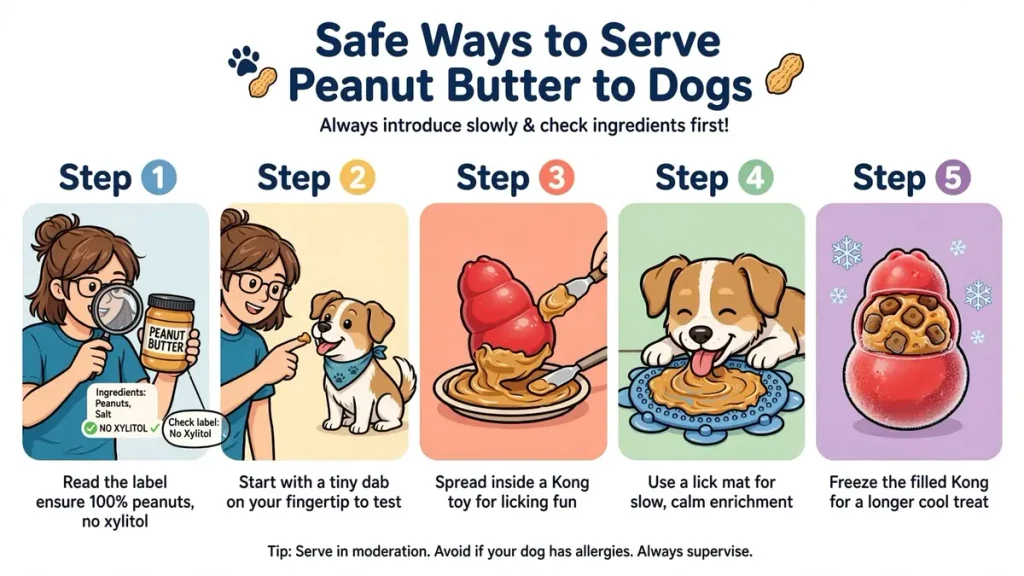
How to Safely Serve Peanut Butter to Your Dog
Follow these steps to serve peanut butter safely:
- Read the label — Confirm no xylitol or E967, minimal added ingredients
- Start small — Give a pea-sized dab for your dog’s first taste
- Spread thin — Peanut butter is sticky. Spread it inside a Kong, on a lick mat, or on a treat. This may make it easier for your dog to manage, but always supervise.
- Watch for reactions — Monitor for signs of allergy or digestive upset, especially the first time
- Count the calories — Factor peanut butter into your dog’s daily treat allowance (10% of total calories across all treats)
Creative Ways to Use Peanut Butter
- Kong stuffing: Fill a Kong with a small amount of peanut butter and freeze. How long it lasts depends on your dog, the amount used, and the toy.
- Training treats: Dip a training treat in a tiny dab of peanut butter for extra motivation during training sessions.
- Frozen pupsicles: Mix a small amount of peanut butter with plain yogurt or pumpkin puree and freeze in an ice cube tray.
- Lick mat distraction: Spread a thin layer on a lick mat and freeze. Useful during nail trims or baths — always supervise.
- Pill hiding: Hide medication inside a small peanut butter ball.
- Enrichment toy filler: Fill a hollow toy with peanut butter mixed with a few pieces of kibble and freeze.
Alternative Treat Options
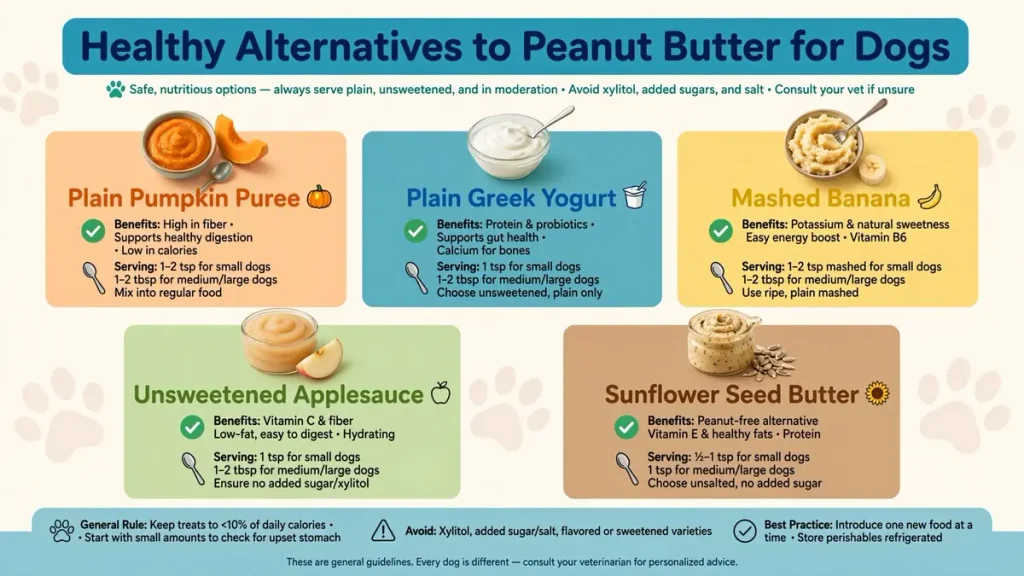
If you want to switch things up, these are alternative treat options:
| Alternative | Potential Benefit | How to Serve |
|---|---|---|
| Plain pumpkin puree | Can provide fibre | Small amounts appropriate for your dog’s diet |
| Plain Greek yogurt | Provides protein; some products contain live cultures | Small amount if your dog tolerates dairy |
| Mashed banana | Fruit-based treat | A few small pieces |
| Unsweetened applesauce | Fruit-based treat | Small amount with no added sugar |
| Sunflower seed butter | Peanut-free alternative | Check ingredients and use small amounts |
Looking for more healthy treat ideas? See our detailed guides:
- Watermelon for dogs – A hydrating, low-calorie alternative.
- Apples for dogs – Fibre-rich and crunchy.
- Blueberries for dogs – Antioxidant-packed.
- Strawberries for dogs – A low-calorie treat.
- Popcorn for dogs – A light, plain snack.
- Pineapple for dogs – A sweet, occasional treat.
- Mandarins for dogs – A vitamin-rich snack.
Frequently Asked Questions
Can dogs eat natural peanut butter?
Yes — natural peanut butter (ingredients: peanuts, sometimes salt) is a good choice, as long as it contains no xylitol or E967. The ingredient list is what matters most, not the label on the front of the jar.
Can dogs eat unsalted peanut butter?
Yes. Unsalted peanut butter is preferable because dogs do not need additional sodium. If only salted peanut butter is available, use a very small amount.
Can dogs eat peanut butter with salt?
Dogs can consume small amounts of salted peanut butter, but unsalted is preferable because dogs do not need the extra sodium. The bigger concern is always xylitol and excessive calories.
Is xylitol the same as birch sugar?
Yes. Xylitol is sometimes called birch sugar because it can be derived from birch bark. It is the same substance and equally toxic to dogs.
What is E967 in peanut butter?
E967 is the European food additive number for xylitol. On ingredient labels, xylitol may appear as either “xylitol” or “E967.” Both are equally toxic to dogs.
Can dogs eat crunchy peanut butter?
Smooth peanut butter is generally preferable to chunky peanut butter because whole peanut pieces can create an additional choking hazard, particularly for small dogs.
Can dogs eat peanut butter and jelly?
Jelly often contains added sugar, while some sugar-free products may contain xylitol or other sweeteners. Check the ingredient list carefully. Plain peanut butter without xylitol is the simpler choice.
Can dogs eat peanut butter cookies?
Not recommended. Cookie dough contains sugar, butter, and often chocolate or raisins — both of which can be toxic to dogs.
Can dogs eat peanut butter with honey?
Honey itself is not toxic to dogs, but peanut butter with added honey contains unnecessary sugar and calories. Plain, unsalted peanut butter is a better choice.
Can dogs eat peanut butter with added sugar?
Not recommended. Added sugar provides no nutritional benefit and contributes unnecessary calories. Choose peanut butter with no added sugar.
Can dogs eat peanut butter with palm oil?
Palm oil is not inherently toxic to dogs, but it adds fat and calories. The more important concern is whether the product contains xylitol or other unsuitable ingredients. A simple peanut butter with fewer added ingredients is an easy choice.
Can dogs eat peanut butter with xylitol?
No. Dogs should never be intentionally given peanut butter containing xylitol. If your dog has eaten xylitol-containing peanut butter, contact a veterinarian or emergency veterinary service immediately, even if your dog appears normal.
Can dogs be allergic to peanut butter?
Allergic reactions appear to be uncommon, but any new food can cause an adverse reaction in an individual dog. Possible signs of a food reaction include itching, hives, facial swelling, vomiting, diarrhoea, or other digestive upset. Introduce peanut butter slowly.
Can puppies eat peanut butter?
Puppies that are eating solid food can generally have a tiny amount of xylitol-free peanut butter, but introduce it gradually and use very small portions. Puppies have relatively small calorie requirements, so treats should remain a minor part of their diet.
Is peanut butter good for dogs with diarrhoea?
No. Peanut butter is high in fat and is not a good choice while your dog has diarrhoea. Make sure your dog has access to fresh water and contact your veterinarian if diarrhoea is severe, persistent, or accompanied by vomiting, blood, lethargy, abdominal pain, or signs of dehydration.
Can diabetic dogs eat peanut butter?
Dogs with diabetes should only be given peanut butter if it fits their veterinarian-approved diet and treatment plan. Never give xylitol-containing peanut butter to a diabetic dog.
Can dogs eat peanut butter if they have pancreatitis?
Dogs with pancreatitis or a history of pancreatitis should generally avoid high-fat treats such as peanut butter unless their veterinarian specifically approves them.
Can dogs eat peanut butter if they are overweight?
Peanut butter is calorie-dense. If your dog is overweight, factor the calories carefully into their daily allowance, or choose a lower-calorie option such as plain pumpkin puree or a few small pieces of apple, as long as it fits your dog’s diet.
Does peanut butter help with dog nail trimming?
Yes. Smear a thin layer on a lick mat or a safe surface. Many dogs focus on licking and tolerate nail trimming more easily. Always supervise.
Can dogs eat peanut shells?
No. Peanut shells are hard to digest and can be difficult for dogs to chew, potentially causing choking or gastrointestinal issues if swallowed. Always remove the shell.
Can dogs eat frozen peanut butter?
Yes. You can freeze a small amount of xylitol-free peanut butter inside a Kong or lick mat as an enrichment activity. Always supervise your dog and use an appropriate amount.
What should I do if my dog ate too much peanut butter?
If the peanut butter does not contain xylitol, monitor for digestive upset or signs of pancreatitis. Contact your vet if you notice vomiting, diarrhoea, abdominal pain, or lethargy. If the peanut butter contains xylitol, treat it as an emergency.
Can dogs eat peanut butter every day?
It is better to offer peanut butter occasionally rather than every day. Peanut butter is calorie-dense and high in fat. Keep portions small and count them toward your dog’s overall treat allowance.
Glossary
Xylitol: A sugar alcohol sweetener that is extremely toxic to dogs. Causes rapid insulin release and dangerous hypoglycemia. Also listed as E967 on European ingredient labels.
E967: The European food additive number for xylitol. Appears on ingredient labels in the same way as “xylitol.”
Hypoglycemia: Dangerously low blood sugar. A primary symptom of xylitol poisoning in dogs, which can cause weakness, seizures, and collapse.
Insulin: A hormone that helps regulate blood sugar. In dogs, xylitol can trigger a rapid and excessive release of insulin, causing dangerously low blood sugar.
Pancreatitis: Inflammation of the pancreas. High-fat foods like peanut butter may increase the risk in susceptible dogs. Symptoms include vomiting, abdominal pain, and loss of appetite.
Choking hazard: When food blocks the airway. Peanut butter is sticky and can pose a choking risk if not served in a way that is easy to swallow.
Calorie density: A measure of how many calories a food contains per gram. Peanut butter has high calorie density, which is why portions must be small.
Sources
- Merck Veterinary Manual — Xylitol Toxicosis in Dogs
- VCA Animal Hospitals — Xylitol Poisoning in Dogs
- WSAVA — Feeding Treats to Your Dog
- American Kennel Club — Can Dogs Eat Peanut Butter? (2026)
- PetMD — Can Dogs Eat Peanut Butter? Benefits and Risks (2025)
- Pet Poison Helpline — Xylitol Toxicity
- USDA FoodData Central — Peanut Butter Nutritional Profile
Medical & Safety Disclaimer
This article is for informational purposes only and does not replace professional veterinary advice. Always consult your veterinarian before introducing new foods to your dog’s diet, especially if your dog has an underlying health condition. If you suspect your dog has ingested xylitol or shows signs of illness after eating peanut butter, seek veterinary care immediately.
Leave a Reply
You must be logged in to post a comment.