
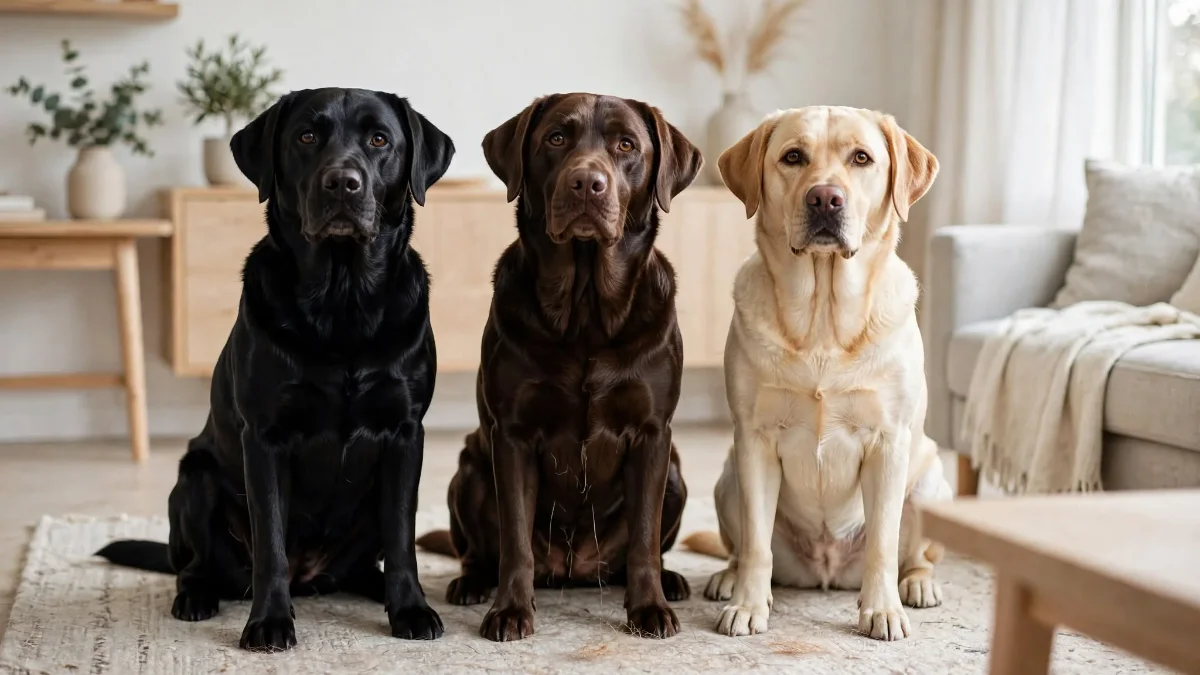
Do Labrador Retrievers Shed?
Yes. Labrador Retrievers shed heavily, and they shed all year. The breed has a thick, water-repellent double coat, which the AKC describes plainly as a coat “that sheds.” Expect loose hair most weeks, with two heavier periods in spring and autumn when the undercoat turns over.
That is not a fault in the dog. It is what a working water retriever’s coat does. This guide covers how much hair to expect, when the heavy shedding hits, which tools actually help, and the point where shedding stops being normal.
Short version: Brush three or four times a week, daily during a coat blow. Comb before bathing, and bathe roughly every four to six weeks for an indoor Lab. Do not shave. If a listing calls a Labrador hypoallergenic, it is wrong.
Key Takeaways
- ✅ Labs shed year-round because of their double coat, with the heaviest shedding in spring and autumn.
- ✅ Brushing several times a week is normal maintenance. During a coat blow, it becomes daily.
- ✅ The puppy coat goes between roughly four and six months of age, and it comes out fast.
- ⚠️ Shaving does not reduce shedding and can affect how the coat grows back.
- ⚠️ There is no hypoallergenic Labrador, and no coat colour that sheds less.
- ⚠️ Patchy loss, itching, or a sudden change in coat quality needs a vet, not a better brush.
Table of Contents
Quick Facts: Labrador Shedding at a Glance
| Question | Answer |
|---|---|
| Do Labs shed? | Yes, heavily, and all year. |
| Coat type | Short, dense double coat with a water-repellent top layer. |
| Heaviest periods | Spring and autumn, when the undercoat turns over. |
| Brushing routine | Three or four times a week; daily during a coat blow. |
| Bathing | About every four to six weeks for many indoor Labs; adjust as needed. |
| Hypoallergenic? | No. Labs shed dander along with hair. |
| Shaving? | Not recommended. It does not stop shedding. |
| Adult size | 21.5–24.5 inches, 55–80 pounds, per the AKC. |
Why Labrador Retrievers Shed So Much
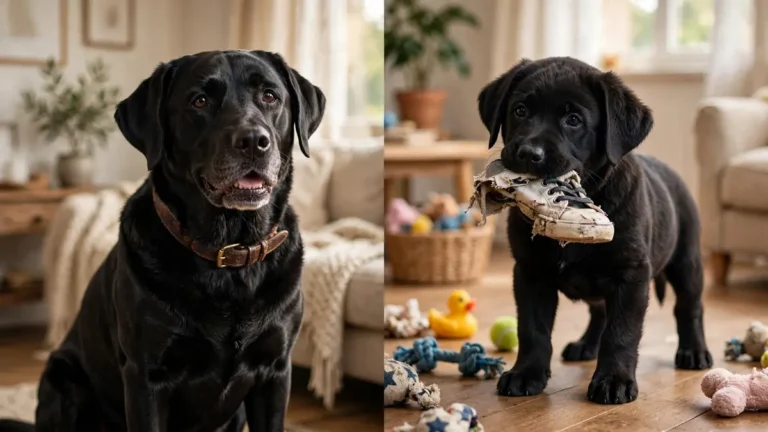
The Labrador’s coat is built for cold water and long retrieves. It has two layers: a short, dense outer coat that resists water, and a soft undercoat that traps warmth. The AKC describes it as a “thick, water-repellent double coat that sheds.”
That combination is efficient, and it is also high-maintenance. The outer coat is short, which is why people assume Labs are low-shedding. Because Labrador hair is short and stiff, it can be surprisingly noticeable on clothing, upholstery, and car seats. The dense double coat, not the hair length, is the main reason regular grooming matters.
Double-coated dogs tend to shed year-round rather than in one short season. The AKC’s shedding guide notes that thick double coats, such as those on Golden Retrievers, are “more likely to shed year-round.” Labs follow the same pattern.
When Do Labrador Retrievers Shed Most?
Most Labs go through two heavy shedding periods a year. The AKC describes the pattern plainly: in spring, dogs drop the heavier winter coat to stay cooler, and in autumn they shed lighter hair to make way for thicker insulation.
Daylight and temperature influence timing more than the calendar does. A Lab living indoors with central heating and artificial light may shed on a less predictable schedule than one that lives outside. How much each individual dog sheds, and when, varies.
| Season | What is happening | What to do |
|---|---|---|
| Spring | The winter undercoat comes out. Expect tufts, not just loose hairs. | Brush daily, use an undercoat rake, and bathe once the worst is over. |
| Summer | Steady low-level shedding, plus more if the dog swims often. | Brush three times a week and rinse after swimming. |
| Autumn | The second coat blow, as the new winter coat comes in. | Daily brushing again, for roughly two to four weeks. |
| Winter | Shedding continues, though some Labs shed less than during a seasonal coat change. Indoor conditions affect the pattern. | Keep brushing and adjust frequency to how much loose hair you find. |
The two to four weeks above is a practical estimate from experience, not a measured figure. Some Labs finish a coat blow in ten days, and some take a month.
How Much Do Labradors Shed?
More than most new owners expect. During a heavy shedding period, you may collect large amounts of loose undercoat in a single grooming session. The amount varies by dog, coat condition, season, and grooming routine, and steady shedding between seasonal peaks is normal too.
AKC’s Labrador grooming guidance puts it more vividly: the breed “sheds twice a year in handfuls,” with daily combing recommended during the heavy periods.
A few things change the volume without changing the breed:
- Time indoors: dogs kept inside in steady warmth may shed more evenly across the year rather than in two sharp bursts.
- Climate: mild winters mean a less dramatic spring blow.
- Age: puppies and seniors tend to shed differently from adults in their prime.
- Health: a dull, thin, or suddenly heavy coat can be a symptom rather than a season.
When Do Labrador Puppies Start Shedding?
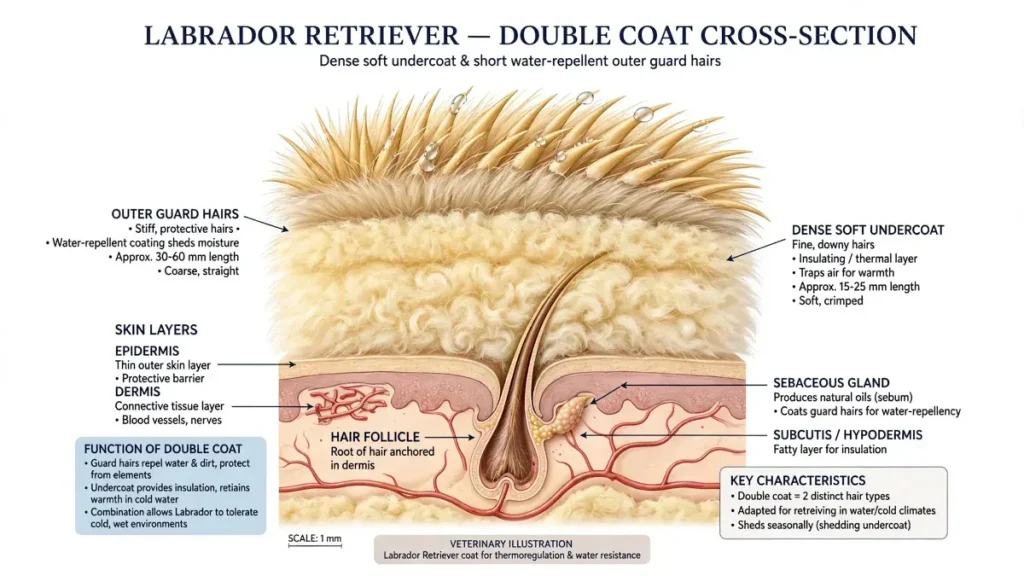
Lab puppies do not stay fluffy. The AKC notes that puppies lose their puppy coats between four and six months of age, and that the adult coat is usually thicker and stiffer than the puppy coat it replaces.
As your puppy’s adult coat develops, you may notice loose puppy hair and changes in coat texture or colour. The transition often begins around four to six months, although timing varies. Distinct bald patches, redness, or persistent itching are not part of ordinary coat change, so contact your vet if they appear. Keep a brush near the door and expect to use it more than usual during that month.
Our Labrador puppy guide covers the rest of the first year, including feeding and growth.

A Grooming Routine That Actually Works
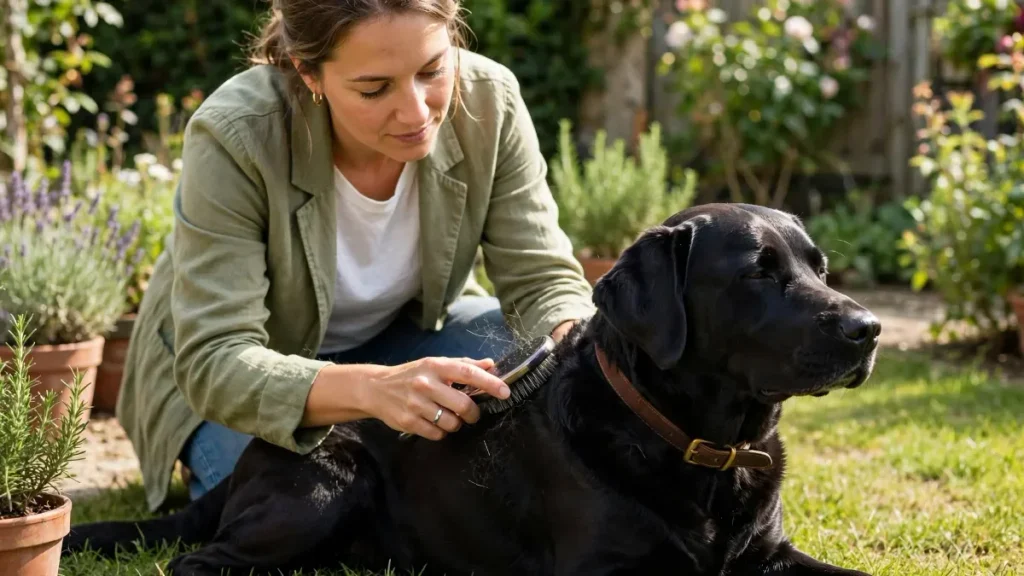
Consistent brushing is the whole game with this breed. Regular, short brushing sessions make it easier to remove loose hair before it spreads around the house. Start with about ten minutes three or four times a week, then brush daily during a heavy shedding period. Adjust the routine to your dog’s coat and tolerance.
| Need | Tool | Notes |
|---|---|---|
| Everyday maintenance | Rubber grooming mitt, curry comb, or a brush suited to a short coat | Three or four times a week. VCA’s coat-care guidance notes that combs and stiff-bristle brushes suit shedding retrievers. Choose a tool that removes loose hair without scratching the skin. |
| Heavy shedding | Undercoat rake, or a deshedding tool used gently | Daily during a coat blow. Use light pressure and stop if the skin goes pink. |
| Optional equipment | Grooming vacuum or high-velocity dryer | Useful, not required. Blow out loose hair outdoors if you buy one. |
The list above is deliberately short. A mitt or brush and an undercoat rake cover most of what a Lab needs, and the extras only help if you will actually use them.
Two cautions. Deshedding tools remove a lot of coat quickly, so use light pressure and stop if the skin goes pink. And never brush a dry coat that is matted behind the ears; work the mat loose with your fingers first or ask a groomer to do it.
Bath time is a good moment to brush out loosened undercoat, because warm water and shampoo release hair that a dry brush misses.
Bathing Without Making Shedding Worse
The AKC’s breed-specific grooming guidance is the best starting point here. For Labs who spend most of their time indoors, it recommends a bath about once every four to six weeks, and it advises combing the dog before the bath to remove loose hair and tangles.
Adjust to your dog’s activity and coat condition. Rinse off dirt after outdoor adventures and bathe when the coat needs cleaning. After a swim in chlorinated water, a thorough rinse or a bath with dog shampoo may help remove residue. If your dog has a skin condition, ask your vet about the right schedule. Use a dog-specific shampoo, rinse thoroughly, and dry the ears afterwards, because drop ears trap water.
Do not shave the coat to reduce shedding. Shaving does not stop the undercoat turning over, and it can interfere with how the coat grows back and how it protects the skin from sun and weather. If your Lab is too hot, use shade, water, and early-morning walks instead.
Diet, Supplements, and Coat Condition
Food affects coat quality more than it affects shedding volume. A complete, balanced diet is the baseline. Omega-3 supplements may be appropriate for some dogs, but the right product and dose depend on the dog’s diet and health. Ask your vet before adding fish oil, especially if your dog takes medication or has an existing health condition.
No food or supplement stops a Labrador from shedding. If a product claims otherwise, it is selling hope. What diet can do is make the coat that stays on the dog look better and come out less brittle.
Weight matters too. An overweight Lab cannot groom itself properly, which shows up as a dull coat and mats in places the dog cannot reach.
Living With a Shedding Labrador
You will not beat the hair. You can keep it from taking over.
- Vacuum often, ideally with a machine designed for pet hair and a HEPA filter.
- Wash the dog’s bedding weekly rather than wiping it down.
- Use washable throws on the sofa and the car seat.
- Keep lint rollers in the car, by the door, and at work if the dog travels with you.
- Brush outside during a coat blow, so the hair leaves the house.
- Air purifiers help with floating hair and dander, but they are not a substitute for brushing.
Clothing choice is a real strategy too. Mid-tones and patterns hide light and dark hair better than solid black or solid white.
Myths About Labrador Shedding
“Short hair means less shedding.” Short hair means less visible hair on the floor and more of it woven into upholstery. Labs shed heavily.
“There is a hypoallergenic Lab.” There is not. Labrador allergies come from dander and saliva proteins as much as from hair, and no Lab coat prevents that.
“Shaving helps.” It does not reduce shedding, and it can affect coat regrowth.
“A black Lab sheds less than a yellow one.” Colour changes what you notice on your clothes, not how much hair the dog produces.
“Indoor Labs shed less.” They often shed more evenly across the year instead of in two bursts, which can feel like more.
When Shedding Means Something Is Wrong
Normal shedding is even and seasonal. These signs are not:
- Bald patches, or hair loss in a defined patch rather than an even thinning
- Constant scratching, licking, or red skin
- A coat that has turned brittle, greasy, or dull over a few weeks
- A sudden jump in shedding outside the usual seasons
- Mats forming despite regular brushing
Any of those is a vet visit, not a grooming problem. Thyroid disease, skin infections, parasites, and allergies all show up in the coat first.
Is a Lab Right for You if You Hate Dog Hair?
Probably not. This is a breed that will put hair in your car and on your clothes every day for a decade or more. If that is a dealbreaker, be honest about it before you fall for a puppy.
If it is not a dealbreaker, the trade is generous. Labs are famously friendly, trainable, and good with children. Our guide to whether a Lab is a good family dog covers the temperament side, and the Labrador breed guide covers the rest.
High shedding also means high grooming effort, and that has a cost. If you are budgeting, our dog cost calculator helps you build a yearly figure.
Frequently Asked Questions
Do Labrador Retrievers shed a lot?
Yes. Labs have a dense double coat and shed year-round, with heavier periods in spring and autumn.
How often should I brush my Lab?
Three or four times a week is normal maintenance. During a coat blow, brush daily until the undercoat stops coming out.
When do Labs shed the most?
Spring and autumn. Spring removes the winter undercoat, and autumn clears the way for the new winter coat.
Do Labs shed in winter?
Yes. Labs continue to shed in winter, although shedding may be lighter than during seasonal coat changes. Indoor temperatures, daylight, and individual coat cycles can affect the pattern.
Are Labradors hypoallergenic?
No. Labs shed dander as well as hair, and no coat type makes a dog allergy-free.
Should I shave my Lab in summer?
No. Shaving does not reduce shedding and can affect coat regrowth and skin protection. Use shade, water, and cooler walk times instead.
Does coat colour change how much a Lab sheds?
No. Colour changes how visible the hair is on your clothes, not how much the dog produces.
How much hair is normal?
A Labrador can release a large amount of loose undercoat during a seasonal coat blow. The amount varies by dog, season, and grooming routine. Steady shedding between seasonal peaks is normal too.
At what age do Labs shed their puppy coat?
Between roughly four and six months, according to the AKC. The adult coat usually comes in thicker and slightly darker or lighter than the puppy coat.
Does bathing make shedding worse?
Not if you do it sensibly. Bathing loosens undercoat that is ready to come out. Over-bathing dries the skin, which is a different problem.
Why is my Lab shedding more than usual?
It may be a season, a change in temperature, or a health issue. A sudden increase with itching, bald patches, or a dull coat needs a vet visit.
Related Labrador Retriever Guides

Glossary
Double coat: Two layers of hair: a weather-resistant outer coat and a soft insulating undercoat.
Undercoat: The dense lower layer that traps warmth and comes out in a coat blow.
Coat blow: The heavy shedding period when a double-coated dog drops its undercoat, usually in spring and autumn.
Deshedding tool: A blade or comb designed to pull loose undercoat out in larger amounts than a brush.
Dander: Tiny flakes of dead skin that carry the proteins most dog allergies react to.
Guard hairs: The longer, stiffer outer hairs that shed water and protect the skin.
Sources
- AKC — Labrador Retriever breed page: akc.org/dog-breeds/labrador-retriever — Double coat, size, and basic grooming guidance.
- AKC — How to groom a Labrador Retriever: akc.org/expert-advice/health/how-to-groom-a-labrador-retriever — Breed-specific bathing frequency, comb-before-bath advice, and the “sheds twice a year in handfuls” description.
- AKC — Dog shedding: what to expect and how to manage it: akc.org/expert-advice/health/dog-shedding-what-to-expect-and-how-to-manage-it — Seasonal pattern, grooming frequency, and double-coat shedding.
- AKC — Why do puppies shed their coats?: akc.org/expert-advice/health/why-puppies-shed — Puppy coat timing at four to six months.
- AKC — Double-coated dog breeds: akc.org/expert-advice/dog-breeding/double-coated-dog-breeds — How double coats work and how to care for them.
- AKC — Dog allergies: akc.org/expert-advice/health/dog-allergies — What triggers dog allergies in people.
- VCA Hospitals — Grooming and coat care for your dog: vcahospitals.com/know-your-pet/grooming-and-coat-care-for-your-dog — Normal coat and skin appearance, and when changes need a vet.
How this guide was researched: This article draws on breed-specific grooming guidance from the American Kennel Club and veterinary resources on skin and coat health, including VCA’s coat-care guidance. Practical grooming recommendations are presented as general guidance, because individual dogs vary in coat density, skin condition, and shedding pattern. Where a number is an estimate rather than a measured figure, the text says so. This guide does not claim first-hand ownership of a Labrador.
Medical Disclaimer: This article is for informational purposes only and is not a substitute for professional veterinary advice. Always consult a qualified veterinarian about your dog’s health, nutrition, and care.

Leave a Reply
You must be logged in to post a comment.