

French Bulldog Lifespan
French Bulldogs have a shorter lifespan than many other dog breeds, but individual dogs can live much longer than the breed’s population averages. A 2024 UK study estimated their median lifespan at 9.8 years. Genetics, breathing problems, and weight all play a role. This article looks at what the research says, what affects how long Frenchies live, and what you can actually do about it.
French Bulldogs are brachycephalic, meaning they have a shortened skull and flat face. That anatomy can cause breathing trouble, poor heat tolerance, and other problems. How bad it gets varies from dog to dog. Knowing the signs of BOAS and checking in with your vet are key.
Quick Facts
- ✅ Research-based median lifespan — 9.8 years in a 2024 UK study
- ✅ Good for apartment living — Low exercise needs, adaptable
- ✅ Loyal and affectionate — Strong bonds with owners
- ❌ Brachycephalic health risks — Breathing problems, heat stroke, dental issues
- ❌ Prone to obesity — Weight management is critical for health
- ❌ Higher vet costs — Breed-specific health issues mean more visits
French Bulldog Lifespan at a Glance
| Factor | Details |
|---|---|
| Research median lifespan | ~9.8 years (2024 UK study) |
| Senior age begins | Around 7–8 years |
| Main health risks | Brachycephalic syndrome, obesity, IVDD, skin infections |
| Important preventable risk | Heat stroke (requires immediate vet attention) |
| Best longevity factors | Healthy weight, good breeding, regular vet care, heat management |

Table of Contents
French Bulldog Lifespan vs Other Dog Breeds
A 2024 UK study published in Scientific Reports estimated median lifespan across different dog breeds. These figures provide a more consistent comparison than combining lifespan ranges from different sources.
| Breed | Median lifespan (2024 study) |
|---|---|
| French Bulldog | 9.8 years |
| Pug | 11.6 years |
| Labrador Retriever | 13.1 years |
| Border Collie | 13.1 years |
| Miniature Dachshund | 14.0 years |
These are population-level estimates, not a prediction for any individual dog. Individual lifespan varies with genetics, health, and care.
Source: McMillan et al. (2024), Scientific Reports.

How Long Do French Bulldogs Live According to Research?
A 2024 study in Scientific Reports by McMillan et al. looked at data from French Bulldogs and found a median lifespan of 9.8 years. A separate 2022 VetCompass study by Teng et al. reported a much lower life expectancy at birth — which shows how different methods can give very different numbers.
These are population averages, not predictions for any one dog. Some Frenchies live well past 10. No age is guaranteed, but knowing the numbers helps you plan.
What Affects a French Bulldog’s Lifespan?
Brachycephalic Obstructive Airway Syndrome (BOAS)
French Bulldogs have flat faces, which means their airways are squished into a smaller space. But not every Frenchie has the same degree of airway obstruction — severity varies between dogs. Possible issues include:
- Noisy breathing and snoring
- Exercise intolerance — they tire faster than other dogs
- Heat stroke risk — they cannot cool down by panting as well
- Higher risk during anesthesia — always use a vet experienced with brachycephalic breeds
BOAS (Brachycephalic Obstructive Airway Syndrome) is a breathing disorder linked to the flat faces of dogs like Frenchies. Not every Frenchie has BOAS, and severity varies. If your dog has persistent noisy breathing, poor exercise tolerance, or takes a long time to recover after activity, ask your vet for an assessment. AKC has more on brachycephalic health.
Obesity
French Bulldogs can be prone to weight gain. Extra pounds make breathing harder, put pressure on joints, and raise the odds of heart disease, diabetes, and cancer. Keeping your Frenchie at a healthy weight eases strain on their airways and joints. Feed measured portions, keep treats under 10% of daily calories, and check body condition with your vet regularly.
IVDD (Intervertebral Disc Disease)
French Bulldogs are at higher risk for IVDD, a spinal condition where the discs between the vertebrae bulge or burst. This can cause pain, weakness, or even paralysis. Keeping your Frenchie at a healthy weight and limiting jumps off furniture may help reduce the risk, though no prevention method is guaranteed.
Skin Fold Infections
Those adorable wrinkles trap moisture and bacteria. Without regular cleaning, skin fold infections (dermatitis) develop. Clean folds weekly with a vet-approved wipe and dry thoroughly. Untreated infections can spread and cause more serious health problems.
Heat Stroke (Emergency Warning)
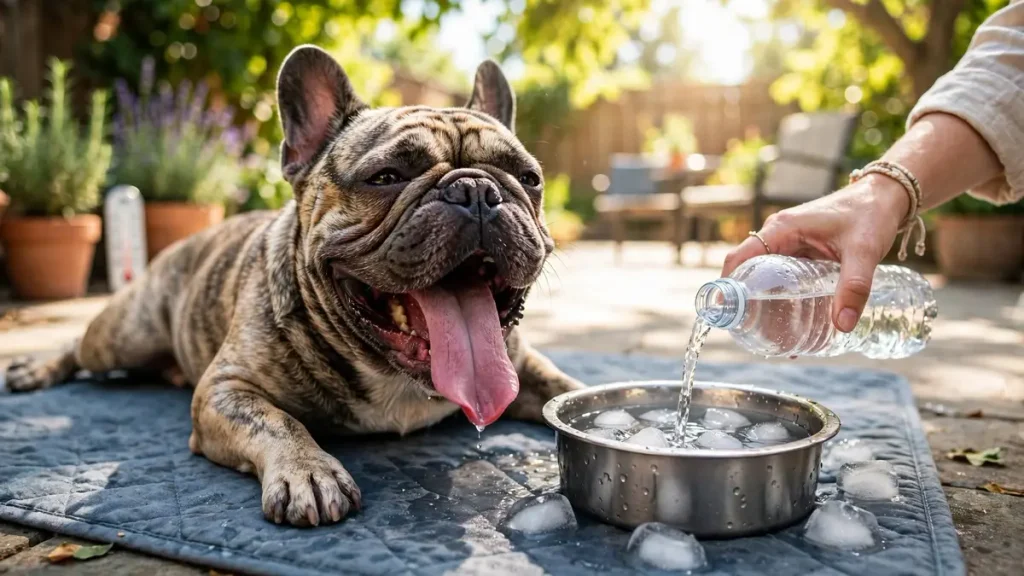
Heatstroke is a medical emergency, and French Bulldogs are especially vulnerable. Because they cannot pant effectively, they overheat fast. Never leave a Frenchie in a parked car. Watch for heavy panting, drooling, weakness, vomiting, or collapse. If you suspect heatstroke, move your dog out of the heat, begin cooling them with cool (not ice-cold) water, and contact a vet immediately. Do not delay veterinary care while trying to cool your dog.
Allergies
French Bulldogs often have food or environmental allergies. These show up as itchy skin, ear infections, or digestive upset. Working with your vet to find the trigger can improve quality of life and prevent secondary infections.
French Bulldog Life Stages & Senior Care
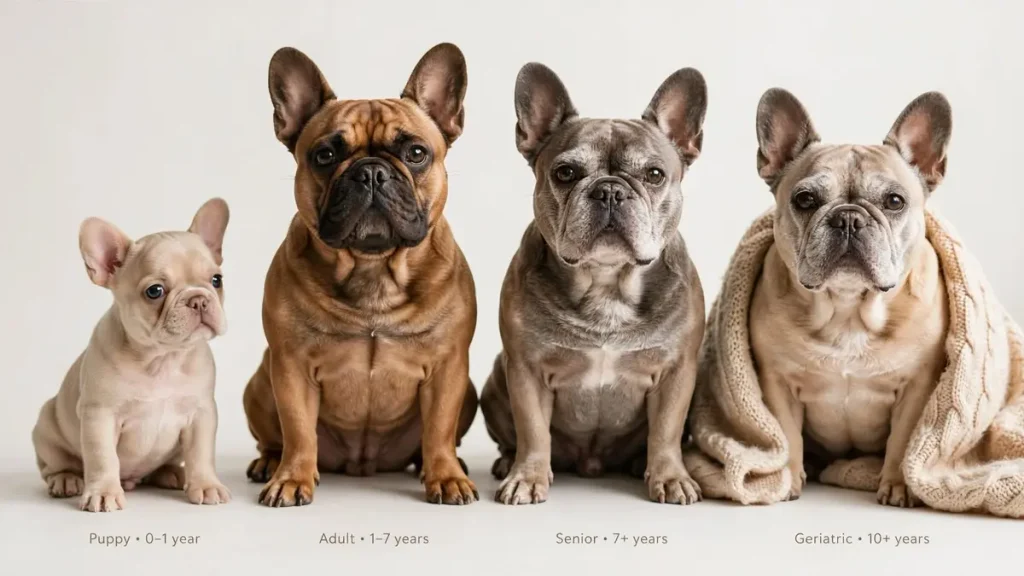
| Life Stage | Age | What to Focus On |
|---|---|---|
| Puppy | 0–1 year | Vaccinations, socialization, gentle exercise, crate training |
| Adult | 1–7 years | Weight management, yearly vet checks, dental care, allergy management |
| Senior | 7+ years | Twice-yearly vet visits, joint health, senior diet, vision/hearing checks |
| Geriatric | 10+ years | Comfort care, mobility aids, quality-of-life monitoring, more frequent vet checks |
At around 7 years old, French Bulldogs are considered seniors. Ask your vet if twice-yearly check-ups make sense for your dog. Watch for signs of arthritis, vision loss, dental disease, and cognitive decline. Catching problems early makes them easier to manage.
How to Extend Your French Bulldog’s Life
Diet & Weight Management
Feed a complete and balanced diet suited to your Frenchie’s age, activity level, and health needs. Measure every meal. Treats should make up no more than 10% of daily calories. VCA has a guide on treat calories. A lean Frenchie with a visible waist has less strain on their airways and joints.
Exercise Guidelines
French Bulldogs need gentle exercise, but how much depends on the dog — especially ones with BOAS. Two short walks a day works for most. Watch for signs of breathing trouble (heavy panting, tongue changing color, collapsing) and stop right away. If your Frenchie struggles with normal walks, ask your vet. Mental stimulation helps too — puzzle toys, sniffing games, and training sessions keep them sharp.
Heat Management (Critical)
- Walk early morning or late evening in summer
- Always carry water on walks
- Never leave your Frenchie in a parked car
- Use cooling mats, vests, or damp towels on hot days
- Provide shade and fresh water at all times outside
- Watch for signs of heat stroke: heavy panting, drooling, bright red gums, weakness, collapse
Veterinary Care Schedule
- Yearly check-ups (ages 1–7): vaccinations, dental check, weight check, ear/skin check
- Senior check-ups (ages 7+): ask your vet whether visits every six months are right for your dog
- BOAS assessment: if your Frenchie struggles to breathe, ask your vet about surgical options
- Dental cleaning: Frenchies are prone to dental disease; professional cleanings as recommended by your vet
Daily Skin & Wrinkle Care
Check your Frenchie’s face folds regularly. Clean them as often as needed with a vet-approved wipe and dry thoroughly. Ask your vet how often your dog’s folds need cleaning. Check for redness, odor, or discharge — these are signs of infection. Keep the tail pocket (area under the tail) clean too, as Frenchies often have a deep corkscrew tail that traps dirt.

Signs It’s Time to See the Vet
- Difficulty breathing that gets worse or doesn’t improve with rest
- Collapsing or fainting after mild exercise
- Sudden weight gain or loss
- Limping, trouble standing, or reluctance to move
- Changes in appetite, thirst, or bathroom habits
- Persistent scratching, ear infections, or skin redness
- Behavior changes — confusion, restlessness, or hiding
Frequently Asked Questions
How long do French Bulldogs live?
A 2024 UK study estimated a median lifespan of 9.8 years for French Bulldogs. Some live longer, but lifespan varies between individual dogs. Good veterinary care, healthy weight management, and attention to breathing problems can support your dog’s health and quality of life.
What do French Bulldogs usually die from?
Respiratory problems from their flat faces are a big concern for this breed. Heart disease, cancer, and age-related issues also show up. Many of these can be managed with good vet care.
Why do French Bulldogs have short lifespans?
Their flat faces cause breathing problems that make exercise, heat, and anesthesia harder to handle than for other dogs. Obesity and spinal issues add to the mix.
Can a French Bulldog live 15 years?
Some individuals live to 14 or 15 years, but this is not typical. Population-level research estimates a median lifespan around 9.8 years. Genetics, care, and luck all play a role.
Do male or female French Bulldogs live longer?
Some large dog-population studies have found a small average lifespan advantage for females overall. But that does not mean every female Frenchie will outlive a male. Individual health, genetics, and care matter more than sex.
At what age is a French Bulldog considered a senior?
Around 7–8 years old. Ask your vet whether twice-yearly check-ups make sense for your dog. Watch for joint issues, dental disease, and weight changes.
What is the biggest health risk for French Bulldogs?
Heat stroke is an urgent danger. Frenchies cannot cool themselves well and can overheat quickly. Never leave them in hot cars or exercise them in high heat. If you suspect heat stroke, cool them with cool (not ice-cold) water and get to a vet right away.
How can I help my Frenchie live longer?
Keep them lean. Manage their breathing. Avoid heat. Clean their wrinkles. Take them to the vet. Brush their teeth. Good breeding from the start helps too.
Are French Bulldogs high maintenance?
They need more daily care than many breeds — wrinkle cleaning, breathing management, heat avoidance, weight watching, and higher vet bills all add up. But their low exercise needs make them easier in other ways.
Do French Bulldogs need surgery to breathe better?
Some do. If your Frenchie has severe BOAS symptoms (loud breathing, collapsing, poor exercise tolerance), ask your vet about BOAS surgery. It can improve quality of life significantly.
How much does a French Bulldog cost in vet bills?
Vet costs vary by location and the dog’s specific health needs. Breathing issues, allergies, skin infections, and dental disease can add up. It’s a good idea to discuss expected costs with your vet and compare pet insurance options.
How do I know if my Frenchie is overheating?
Watch for heavy panting, drooling, bright red gums, weakness, vomiting, or collapse. If you see these signs, move your dog to shade, offer cool (not ice-cold) water, wet their body with cool water, and call your vet.
Glossary
- Brachycephalic — Having a flat, short face and shortened airways. French Bulldogs, Pugs, and Boston Terriers are brachycephalic.
- BOAS — Brachycephalic Obstructive Airway Syndrome. A condition where flat-faced dogs struggle to breathe due to their anatomy.
- IVDD — Intervertebral Disc Disease. A spinal condition where discs between the vertebrae bulge or burst, causing pain or paralysis.
- Dermatitis — Skin inflammation or infection, often found in skin folds if not cleaned regularly.
Sources
- AKC — French Bulldog breed information
- AKC — On the Road Again: Keep Your Pup Cool on Summer Vacation
- PetMD — French Bulldog breed guide
- VCA — French Bulldog breed information
- VCA — Dog treat calorie guidelines
- McMillan et al. (2024) — Dog longevity study, Scientific Reports
- Teng et al. (2022) — Life tables for companion dogs, Scientific Reports
- Life at Her Paw — Dog lifespan guide
This guide is for informational purposes only and is not a substitute for professional veterinary advice. Always consult your veterinarian for health decisions about your dog.
Leave a Reply
You must be logged in to post a comment.