
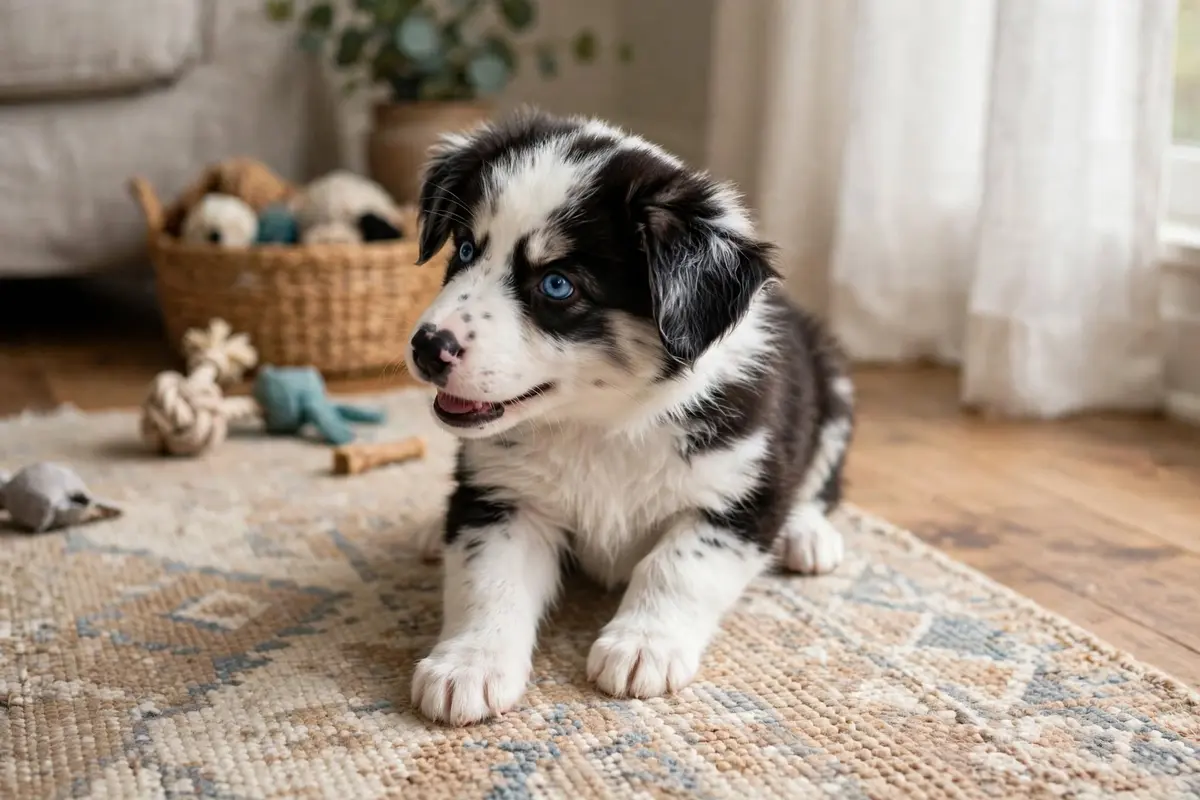
What to Expect From a Husky Border Collie Mix
A Husky Border Collie mix is a cross between a Siberian Husky and a Border Collie. Some people call the mix a Border Husky or a Colsky. These dogs usually combine high stamina with a strong work drive, and most need a lot of daily activity. Adult size, coat, personality, and energy level depend on which parent the puppy takes after and on the genes it inherits.
This is not a standardized breed, so nobody can tell you exactly how a puppy will turn out. This guide covers what to expect from a Husky Border Collie mix: size, temperament, exercise, grooming, health, lifespan, cost, and how to decide whether one fits your home.
Note: Because this is a mixed breed rather than a standardized breed, individual dogs can differ a lot in size, coat, energy, personality, and health. Most of what follows comes from research on Siberian Huskies and Border Collies, not from large studies of this cross.
Key Takeaways
- ✅ A Husky Border Collie mix is a cross, not a breed. Expect variation, even within one litter.
- ✅ Most adults need a lot of daily activity: roughly 90 minutes to two hours, adjusted to the dog.
- ⚠️ The double coat sheds heavily. This is not a low-shedding cross.
- ⚠️ Both parents are known for escaping. A secure fence and a solid recall matter.
- ⚠️ Independence from the Husky side can make training slower than people expect.
- ⚠️ Mixed-breed health risk depends on the parents, so ask for their test results.
Table of Contents
Quick Facts Table
| Feature | Details |
|---|---|
| Parent breeds | Siberian Husky × Border Collie |
| Other names | Border Husky, Colsky, Borskie, Husky Collie |
| Adult weight | About 30–60 lb. A rough estimate from the parent breeds, not a breed standard. |
| Adult height | About 18–24 inches at the shoulder. Another estimate, and the range is wide. |
| Estimated lifespan | Around 12–15 years, based on the parents. No mix-specific data exists. |
| Coat | Double coat, usually medium to long. Heavy seasonal shedding. |
| Energy level | High to very high. Rarely a couch dog. |
| Best suited for | Active homes able to provide daily exercise, training, and a secure yard or leash routine |
What to Expect From a Husky Border Collie Mix
A Husky Border Collie mix has one Siberian Husky parent and one Border Collie parent. The cross shows up in two ways. Some breeders plan it. Many litters happen when the two breeds share a home or a yard.
The Husky comes from the Chukchi people of Siberia, who bred dogs to pull light loads over long distances in extreme cold. The breed is built for endurance, not speed, and it worked in packs. The AKC describes the Husky as “friendly, fastidious, and dignified.”
The Border Collie comes from the border country between Scotland and England, where shepherds bred dogs to move sheep on command. The AKC describes the breed as “energetic, intelligent, and keen.” That is a good summary of a dog bred to think while it works.
Put them together, and you get a dog with two kinds of drive. One side wants to run for hours. The other wants a job and a handler. Some dogs lean hard one way. Others sit in the middle. That is why two puppies from the same litter can behave like different breeds.
Husky Border Collie Mix Size and Appearance
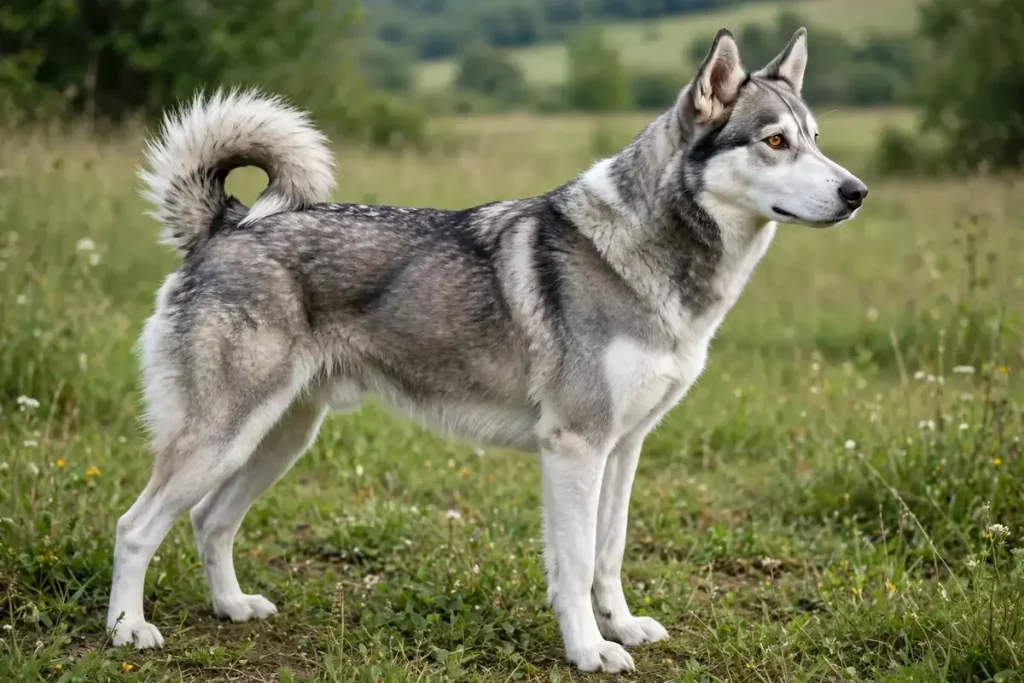
There is no breed standard for this cross, so size and build vary. A puppy that takes after the Husky parent tends to be stockier and heavier. One that takes after the Border Collie tends to be lighter and finer boned.
For reference, the AKC lists Huskies at 20–23.5 inches and 45–60 pounds for males, and 20–22 inches and 35–50 pounds for females. Border Collies run 18–22 inches and 30–55 pounds. A mix usually lands somewhere inside those ranges, around 18–24 inches and 30–60 pounds. Some dogs fall outside it.
Body and Build
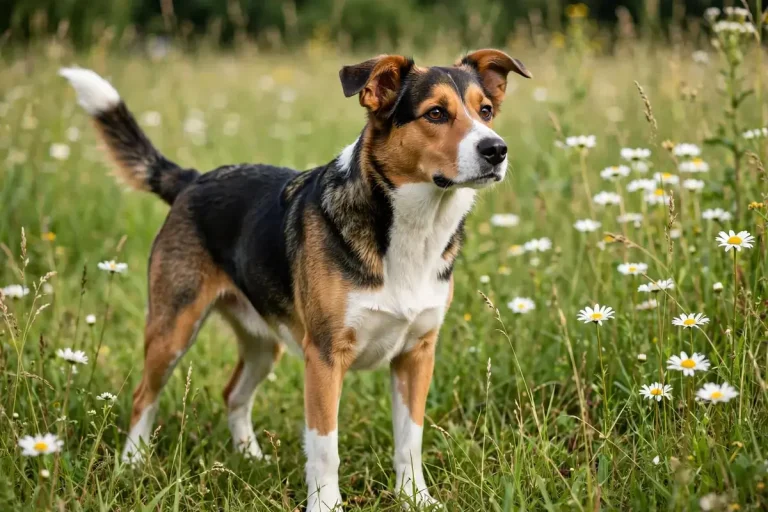
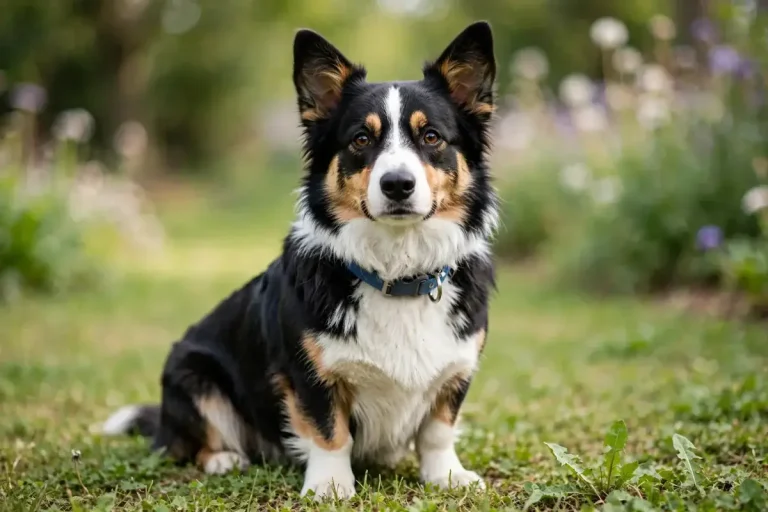
Most of these dogs look like a lean, athletic herding dog with a heavier coat. The chest is usually deep, the legs are built for distance, and the frame carries less fat than a Husky’s. Because this is a mixed breed, adult size and build can vary a lot, even between siblings.
Coat and Colors
The coat is usually a double coat: a soft undercoat for warmth and a longer topcoat that sheds water. Length runs from medium to fairly long, and many dogs carry a ruff around the neck. Colors depend on both parents. Huskies come in almost any shade from black to white, often with white markings on the face, chest, and legs. Border Collies add black and white, red and white, tricolor, sable, and merle.
Merle needs its own warning. It is a coat pattern tied to a genetic variant found in Border Collies and several other breeds. Coat appearance alone cannot confirm a dog’s ancestry or its merle genotype. Breeding two dogs that carry merle variants can produce puppies at higher risk of hearing and eye problems (AKC on merle genetics). Ask any breeder how they avoid merle-to-merle pairings.
Eyes and Ears
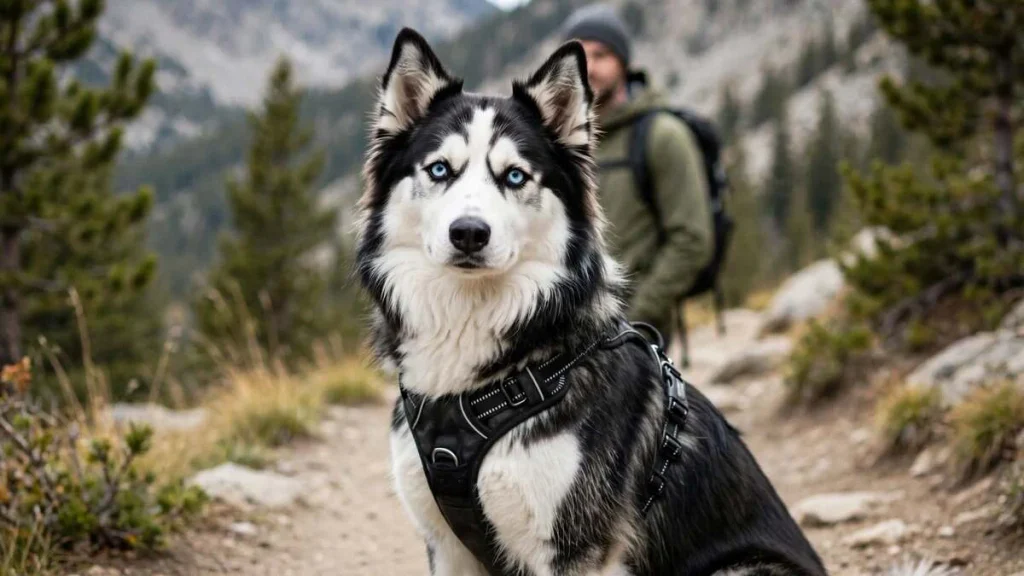
Eye color is where the Husky side often shows up. Blue eyes, brown eyes, and one of each all happen, and so does partial blue in one eye. Ears can be upright, semi-upright, or tipped. No single look is correct for a mix.
Husky Border Collie Mix Temperament
Both parent breeds are smart and both were bred to work with people, but they work for different reasons. Border Collies usually want to cooperate. Huskies usually want to run. A mix can inherit either outlook, and that shapes how easy the dog is to live with.
Common traits include alertness, playfulness, and a strong bond with the family. Many are friendly with visitors but not clingy. Some are affectionate and follow you from room to room. Others prefer their own space and check in when they feel like it.
| Trait | Husky side | Border Collie side | What a mix may show |
|---|---|---|---|
| Bred for | Pulling sleds in a team | Herding sheep on command | Endurance plus a strong urge to work |
| Response to training | Independent, easily bored | Eager, quick to learn | Fast learner that may test the rules |
| Voice | Howls, rarely barks | Barks to move stock | Howling, barking, or both |
| Roaming drive | Very strong | Strong, especially around movement | Needs a secure fence and a solid recall |
| Affection | Friendly but independent | Intensely bonded to one person | Varies from shadow dog to independent partner |
Are Husky Border Collie Mixes Good Family Dogs?
Many make good family dogs when the family can meet their activity needs. The honest caveat is that this is a lot of dog for a home that wants a calm companion.
With children: Older kids usually do well. Herding instinct can show up as circling, nudging, or nipping at heels when children run. Supervision matters with toddlers, and any dog can react if it is startled or handled roughly.
With other dogs: Many do fine with other dogs, especially when socialized young. Huskies were bred to work in packs, so some are quite social. Others are choosy about which dogs they accept. Dog parks are not the best place to find out.
With cats and small pets: Prey drive runs high in both parent breeds. Some dogs learn to live calmly with a resident cat. Many never fully drop the urge to chase. Slow introductions and close supervision are the minimum, and no dog should be left alone with a small pet until you trust the pair.
Do Husky Border Collie Mixes Howl or Bark a Lot?
They can be vocal, and the type of noise varies. A dog with more Husky influence may howl, especially when left alone or when it hears sirens. A dog with more Border Collie influence may bark at movement, visitors, or the doorbell.
Both habits respond to the same things: enough exercise, less access to windows and triggers, a settle cue, and reward for quiet. Noise complaints are a real risk in apartments and townhouses.
How Much Exercise Does a Husky Border Collie Mix Need?
There is no published exercise requirement for this cross. Based on both parent breeds, most adults need roughly 90 minutes to two hours of activity a day, and some need more. That total can include walks, running, training, and mental work. Age, health, and the individual dog set the real number.
The Husky side brings endurance. These dogs were bred to pull for hours in cold weather. The Border Collie side brings speed, quick turns, and a need to solve problems. A short walk around the block will not cover either drive.
- Physical work: running, hiking, brisk walks, bikejor or canicross with a proper harness, swimming in safe water
- Mental work: scent games, puzzle feeders, trick training, obedience drills, nose work
- Dog sports: agility, rally, flyball, sled-dog sports, treibball
When these needs go unmet, some dogs chew, dig, howl, or pace. More activity helps with boredom, but it does not fix everything. Those behaviors have other causes too, including pain and anxiety, so a sudden change deserves a vet visit or a call to a qualified trainer. Our guide to Border Collie exercise needs has more on building a routine that tires the body and the brain.
Puppies should not run long distances. Their joints are still forming, so short sessions and free play work better than forced mileage. Ask your vet when it is safe to start running with your dog.
Training a Husky Border Collie Mix
These dogs learn fast, and that cuts both ways. A Border Collie-type dog picks up a new cue in a few repetitions. A Husky-type dog learns just as quickly and then decides whether the cue is worth doing. Training works best when the reward is worth more than whatever the dog would rather be doing.
Start early. Socialize during puppyhood, following your vet’s advice on vaccines and disease risk. New people, surfaces, sounds, and friendly dogs all help.
Use rewards. Treats, toys, praise, and play are the tools that work. Harsh or inconsistent corrections damage trust and make a dog that is already independent dig in harder.
Keep sessions short. Ten to fifteen minutes with a clear goal beats a long drill. End while the dog still wants more.
Train recall like your dog’s life depends on it. For this mix, it might. A reliable recall is the difference between a safe dog and a dog running toward a road.
Give the herding an outlet. Fetch, treibball, and impulse-control games channel the stalk-and-chase sequence. Our beginner’s guide to dog agility covers a structured option.
Smart dogs that are not taught what to do will invent something. Chewing, hole digging, and fence testing are all jobs a bored dog assigns itself.
Herding Instinct, Prey Drive, and Escape Behavior
Both parent breeds can wander. Huskies are famous for it, and Border Collies will chase anything that moves. A mix may inherit both habits.
Common behaviors include staring at moving objects, stalking other animals, chasing bikes and joggers, and testing fence lines. Some dogs dig under fences. Some climb. Some learn to open gates.
Practical management looks like this: a tall, secure fence with a dig guard, locks on gates, no off-leash time in open areas, and a recall that has been practiced around distractions. Invisible fences are a poor choice for a dog with this much drive. They do not stop a determined dog, and they can add stress to the yard.
Our guide to Border Collie temperament explains where the stalking and chasing come from, and how to work with them instead of against them.
Husky Border Collie Mix Grooming and Shedding
The coat is the part of this mix people underestimate. It is a double coat built for cold weather, and it sheds. There is no low-shedding version of this dog.
Brushing: Two or three sessions a week with an undercoat rake and a slicker brush keeps loose hair under control. During the spring and fall coat blow, daily brushing helps. Expect tufts of undercoat on the floor for a couple of weeks.
Bathing: Bathe when the dog is dirty or when your vet or groomer suggests it. Frequent bathing can dry out skin. A high-velocity dryer is the most useful tool during shedding season, because it pushes out loose undercoat that a brush misses.
Do not shave the coat to cool the dog down. Shaving removes the layer that buffers heat and sun, and the coat often grows back unevenly. Ask your vet before clipping for a medical reason, since some skin conditions do call for it.
Other care: Check ears weekly, especially if they are tipped or folded. Brush teeth regularly and trim nails about monthly. Trim fur between the paw pads for traction.
Heat and Cold: Living in a Warm Climate
This is a cold-weather dog with a heavy coat, and heat is the bigger risk. Most can live in warm places with planning, but they should not be treated like a short-haired breed.
- Walk and run early in the morning or after sunset.
- Carry water and use shade on every outing.
- Skip hard exercise on hot, humid days.
- Never leave the dog in a parked car, even briefly.
- Watch for heavy panting, wobbling, or confusion, and treat those as an emergency.
Cold is rarely a problem for this mix. Huskies were bred for it, and many enjoy cold weather. Use judgment in extreme cold and check paws for ice and salt.
Husky Border Collie Mix Health Problems
Both parent breeds carry health risks, and a mix can inherit from either side. The table below lists concerns that appear in Huskies, Border Collies, or both. It is not a list of what your dog will develop.
| Condition | Associated parent breed | What to know |
|---|---|---|
| Hip dysplasia | Both breeds | A joint problem where the hip socket fits poorly. The AKC describes the incidence of hip dysplasia in Huskies as relatively low, but Border Collies carry some risk. Ask for hip scores on both parents (OFA hip dysplasia). |
| Collie eye anomaly (CEA) | Border Collie | An inherited eye disorder present from birth. Severity ranges from no visible problem to blindness. A vet ophthalmologist can diagnose it in puppies as early as 6 to 8 weeks, and there is no treatment (OFA CEA page). |
| Cataracts and other eye disease | Both breeds | Clouding of the lens that can affect vision. Some forms are inherited in both parent breeds, which is why eye exams matter (VCA on cataracts). |
| Zinc-responsive dermatosis | Siberian Husky and other northern breeds | A skin condition tied to zinc that causes crusty, scaly patches, often around the eyes, muzzle, and paws. It responds to zinc supplementation under veterinary care (VCA on zinc-responsive dermatosis). |
| Shaking puppy syndrome (SPS1) | Siberian Husky | An inherited neurologic condition that appears in young puppies. A DNA test exists, and the Siberian Husky Club of America recommends testing breeding dogs (SHCA on SPS1). |
| Siberian Husky polyneuropathy (SHPN1) | Siberian Husky | An inherited nerve condition that can cause weakness and loss of coordination. DNA testing is available (SHCA on SHPN1). |
| MDR1 drug sensitivity | Border Collie lines | A gene variant that changes how some dogs handle certain drugs. It is not universal in Border Collies, so relevance depends on the dog’s line (Cornell on MDR1). |
| Bloat (GDV) | Deep-chested dogs | A life-threatening emergency where the stomach twists. Signs include unproductive retching, a swollen belly, and sudden distress. Suspected bloat needs immediate veterinary care (VCA on GDV). |
Weight matters for this mix. Extra weight puts strain on joints that are already doing a lot of work. Regular checkups catch small problems before they get expensive.
Health Testing: What to Ask a Breeder
There is no breed-wide testing standard for a mix. What matters is that the breeder tested both parents for the problems found in their own breeds and lines.
For the Siberian Husky parent, the national breed club requires a yearly eye exam by a board-certified ophthalmologist, registered with SHOR or OFA’s CAER program, plus a hip evaluation through OFA, OVC, or PennHIP. The club also recommends DNA testing for SPS1, and the AKC list adds SHPN1 (SHCA health statement).
For the Border Collie parent, the AKC lists hip evaluation and an ophthalmologist exam as the recommended screening. The breed’s health foundation adds CEA DNA testing, which matters because CEA is recessive: two clear parents cannot produce an affected puppy, but two carriers can (Border Collie Society of America).
Those are the core screens. Extra DNA tests are a different decision: a breeder chooses them based on family history, the line, and their breeding plan, and not every dog needs every test. The OFA CHIC program shows which tests each breed club recommends and publishes the results. A CHIC number means the required tests were completed. It does not mean every result was normal, so read the actual numbers.
Two limits are worth knowing. A DNA test only covers the conditions it is designed to detect, and a clear dog is not clear of everything. Two healthy parents also do not guarantee a healthy puppy. Ask for the full records and read them.
Husky Border Collie Mix Lifespan
Around 12 to 15 years is the usual estimate for this mix. That range comes from the parents: the AKC lists the Siberian Husky at 12–14 years and the Border Collie at 12–15 years. There is no published lifespan study for the cross, so treat the number as a rough guide.
These are population-level estimates, not predictions for your dog. Body condition, dental care, preventive vet visits, and luck all play a part. For more on how vets think about longevity, see our guide to how long dogs live.
Husky Border Collie Mix Puppies
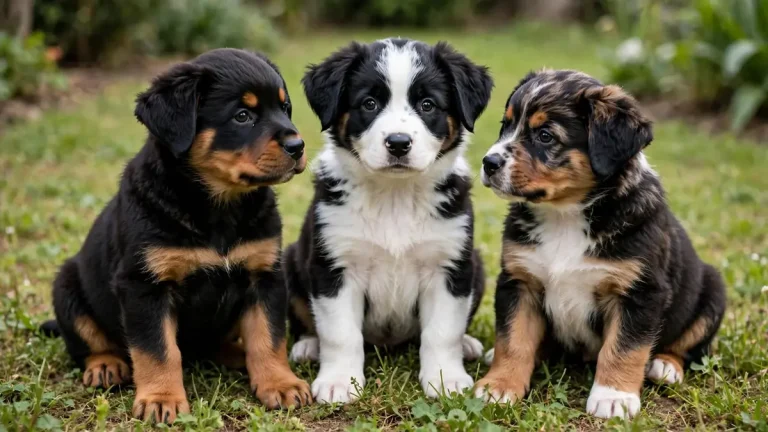
Start with the parents. Ask for hip scores, a current eye exam, and the DNA results that match each breed. A breeder who cannot explain those results is a breeder to walk away from.
Ask to meet the mother, and ask how the puppies were raised. Puppies raised indoors with household noise, handling, and new surfaces tend to be more confident adults. If a breeder will not let you visit, that is a red flag.
Growth varies with the parent sizes. Feed a complete and balanced diet for a growing, active dog, and let the puppy grow steadily. Long forced runs before the growth plates close are a bad idea. Your vet can check body condition at each visit.
How Much Does a Husky Border Collie Mix Cost?
These are illustrative U.S. estimates, not quotes. Prices vary by region, breeder, and bloodline, and rescue costs far less.
| Expense | Typical U.S. estimate |
|---|---|
| Planned breeder litter | $800–$2,500+ |
| Adoption or rescue | $150–$600 |
| Food | $500–$900 per year |
| Veterinary care | $500–$1,200 per year |
| Grooming tools | $80–$200 per year (rake, slicker, dryer) |
| Training classes | $100–$300 per course |
| Fence or containment | Varies widely, and this mix needs a real one |
| Pet insurance (optional) | Varies by age, location, and coverage |
The first year costs the most, thanks to vaccines, spay or neuter, gear, and training. After that, food and vet care dominate. Our cost calculator can help you estimate your dog’s yearly costs for your situation.
Husky Border Collie Mix vs. Husky vs. Border Collie
The two tables below compare the mix with each parent. Treat every number as a range, not a promise.
Husky Border Collie mix vs. Siberian Husky
| Trait | Husky mix | Siberian Husky |
|---|---|---|
| Size | About 30–60 lb, varies with the Border Collie parent | 35–60 lb, with a written standard |
| Coat | Double coat, medium to long, heavy shed | Double coat, heavy seasonal shed |
| Trainability | Varies; some are far more responsive than a Husky | Independent, easily bored, not known for obedience |
| Voice | Howling, barking, or both | Howling and “talking” |
| Exercise | High, with more mental work than a Husky usually wants | High, mostly endurance |
Husky Border Collie mix vs. Border Collie
| Trait | Husky mix | Border Collie |
|---|---|---|
| Size | About 30–60 lb | 30–55 lb |
| Biddability | Mixed; independence from the Husky side shows up often | Very high, bred to work on cue |
| Herding drive | Can be strong, sometimes aimed at cars and bikes | Very strong, the defining trait |
| Cold tolerance | High | Moderate |
| Grooming | More coat, more shedding | Double coat, moderate to heavy shed |
Husky Border Collie Mix vs Other Herding Mixes
Every cross here is variable. The weights below are rough ranges that depend on the actual parents, not fixed breed values.
| Trait | Husky Border Collie | Border Aussie | Shollie | Bodacion |
|---|---|---|---|---|
| Parents | Husky × Border Collie | Border Collie × Australian Shepherd | Border Collie × German Shepherd | Border Collie × Dalmatian |
| Rough adult weight | 30–60 lb | 30–55 lb | 40–80 lb | 35–65 lb |
| Coat | Double, medium to long | Medium double coat | Medium to long double coat | Short, dense |
| Shedding | Heavy, seasonal | Moderate to heavy | Moderate to heavy | Moderate |
| Cold tolerance | High | Moderate | Moderate to high | Low |
The practical difference is coat and cold. If you want a herding mix that handles winter and does not mind a hard run, this cross is a strong option. If heavy shedding is a dealbreaker, look at our Border Aussie mix guide or our German Shepherd and Border Collie mix guide instead. Neither is low-shedding, and grooming effort depends on the coat each dog inherits, not on the cross alone.
Is a Husky Border Collie Mix Right for You?
Good fit if you:
- Can give roughly 90 minutes to two hours of activity and training most days
- Enjoy training and want a dog that can learn real skills
- Have experience with high-drive dogs, or are ready to take classes
- Can provide a secure fence and keep the dog leashed elsewhere
- Do not mind hair in the house, especially twice a year
- Want a running, hiking, or dog-sport partner
Poor fit if you:
- Are away from home most of the day, every day
- Want a calm lap dog with low exercise needs
- Live somewhere an occasional escape would be dangerous
- Cannot commit to daily activity in bad weather
- Need a dog that is reliably off-leash without training
- Expect a low-shedding or hypoallergenic dog
Apartment living is possible, but it is harder. These dogs are loud enough to create neighbor problems and active enough to need real daily work. A yard helps. It does not replace walks and training. Our guide to Border Collies in apartments covers routines that work in small spaces, and our dog breed suitability quiz is a quick check on whether a high-drive herding dog suits your week.
Finding a Husky Border Collie Mix
Reputable Breeders
Ask what the breeder tested on both parents, and ask to see the actual paperwork. Look for hip results, a current eye exam, and the DNA tests that fit each breed. A breeder should welcome questions and a visit.
Walk away from breeders who cannot name the tests they ran, refuse a visit, always have puppies available, or let puppies go before eight weeks. Ask how they choose pairings, especially around merle.
Adoption and Rescue
This cross turns up in rescue often, usually as an unplanned litter. Adult dogs are an advantage here: you can see the real size, coat, and energy level before you commit.
Try Husky House, Siberian Husky Rescue, and National Border Collie Rescue. Local shelters and Petfinder are worth checking weekly, since most mixes never reach a breed-specific rescue.
Frequently Asked Questions
What is a Husky Border Collie mix?
A cross between a Siberian Husky and a Border Collie. It is also called a Border Husky, Colsky, or Borskie. It is a mixed breed, not a recognized breed with a standard.
How big do Husky Border Collie mixes get?
Most land somewhere around 18–24 inches tall and 30–60 pounds. That is an estimate based on the parent breeds, not a breed standard, and some dogs fall outside it.
How much exercise does this mix need?
There is no published requirement for the cross. Most adults need roughly 90 minutes to two hours of activity a day, including training and mental work, adjusted to the individual dog.
How long do Husky Border Collie mixes live?
Around 12 to 15 years is the usual estimate, based on the parent breeds. There is no lifespan study specific to this cross, so treat it as a rough guide.
Do Husky Border Collie mixes shed a lot?
Yes. The double coat sheds year-round, with heavy “coat blows” in spring and fall. Brushing two or three times a week, and daily during a blow, keeps it manageable.
Are they hypoallergenic?
No. This mix has a heavy double coat and produces plenty of dander and loose hair. Anyone with a dog allergy should spend time with the individual dog before committing.
Do they howl?
Many do, especially dogs with more Husky influence. Others bark instead, or do both. Extra exercise, less access to triggers, and reward-based quiet training reduce the noise.
Can they live in an apartment?
It is possible but difficult. The main obstacles are noise, daily exercise needs, and shedding. Apartment life works better when the dog gets real exercise outside the building every day.
Are they good with kids?
Many are good with older children who respect a dog’s space. Herding behavior can include nipping at heels when kids run. Supervise young children closely.
Are they good with cats?
It depends on the individual dog. Prey drive is strong in both parent breeds. Some learn to live calmly with a resident cat, and some never stop chasing. Supervise, always.
Are they escape artists?
Often, yes. Huskies are known for climbing, digging, and bolting, and Border Collies chase movement. A tall, secure fence, locked gates, and a trained recall are the basics.
Can they live in hot weather?
With care. Exercise early or late, carry water, and avoid hard work on hot days. Do not shave a double coat to cool the dog down. Watch for heavy panting and confusion, which are signs of heat stroke.
Are they easy to train?
They learn fast, which is not the same thing. Independence from the Husky side means a dog may understand a cue and still decline it. Short, reward-based sessions work best.
Are they good for first-time owners?
Usually not the easiest choice. The mix combines high energy, strong roaming drive, and a loud voice. A first-timer who takes classes and commits to daily work can still succeed.
How much does a Husky Border Collie mix cost?
A planned litter typically runs $800–$2,500 or more in the U.S., and adoption runs $150–$600. Plan on food, vet care, and gear every year after that.
Where can I adopt a Husky Border Collie mix?
Start with Husky House, Siberian Husky Rescue, National Border Collie Rescue, and local shelters. Petfinder is worth checking weekly.
What health problems do they have?
Hip dysplasia, inherited eye conditions, zinc-responsive skin disease, MDR1 sensitivity in Border Collie lines, and the Husky-specific nerve conditions SPS1 and SHPN1. Risk depends on the parents.
Related Mixed Breeds Guides
Glossary
CEA (collie eye anomaly): An inherited eye disorder present at birth, found in Border Collies and related breeds. Severity varies from mild to blindness.
Merle: A mottled coat pattern caused by a variant in the SILV gene. It comes from the Border Collie side in this mix.
Double merle: A dog with two copies of the merle variant, which raises the risk of deafness and eye problems.
MDR1: A gene variant that changes how some dogs process certain medications. Testing is done by DNA swab, and results should be discussed with a vet.
SPS1 (shaking puppy syndrome): An inherited neurologic condition in Siberian Huskies that appears in young puppies. A DNA test exists.
SHPN1 (Siberian Husky polyneuropathy): An inherited nerve condition in Siberian Huskies that can cause weakness and coordination loss.
CHIC: The OFA’s Canine Health Information Center program, which lists the tests each breed club recommends.
Coat blow: The heavy shed that happens when a double-coated dog drops its undercoat, usually in spring and fall.
How this guide was researched: It draws on the AKC breed pages for both parent breeds, the health statements of the Siberian Husky Club of America and the Border Collie Society of America, OFA screening information, and veterinary references from Cornell and VCA. It does not claim first-hand ownership of this cross. Where evidence about the mix itself is missing, the article says so rather than filling the gap.
Sources
- AKC — Siberian Husky breed page: akc.org/dog-breeds/siberian-husky — Breed history, size, lifespan, temperament, and health notes.
- AKC — Border Collie breed page: akc.org/dog-breeds/border-collie — Breed purpose, size, lifespan, and the “energetic, intelligent, and keen” description.
- AKC — Working group health testing requirements: akc.org — Recommended Siberian Husky tests, including SPS1 and SHPN1.
- AKC — Herding group health testing requirements: akc.org — Recommended Border Collie tests.
- Siberian Husky Club of America — Health statement: shca.org/health — Eye exam, hip evaluation, and SPS1 testing requirements.
- SHCA — Shaking puppy syndrome (SPS1): shca.org/sps1 — Condition description and testing guidance.
- SHCA — Siberian Husky polyneuropathy (SHPN1): shca.org/shpn1 — Condition description and DNA testing.
- Border Collie Society of America — Health overview: bordercolliesocietyofamerica.com — Inherited conditions and CEA testing.
- OFA — Collie eye anomaly: ofa.org/collie-eye-anomaly — Genetics, diagnosis at 6–8 weeks, and DNA results.
- OFA — Hip dysplasia: ofa.org/diseases/hip-dysplasia — Screening and grading.
- OFA — CHIC program: ofa.org/programs/chic-program — Breed-specific recommended testing.
- Cornell University Riney Canine Health Center — MDR1 drug sensitivity: vet.cornell.edu — How the variant affects drug response.
- VCA Hospitals — Zinc-responsive dermatosis in dogs: vcahospitals.com — Signs, affected breeds, and treatment.
- VCA Hospitals — Cataracts in dogs: vcahospitals.com — Causes, diagnosis, and management.
- VCA Hospitals — Gastric dilatation and volvulus: vcahospitals.com — Bloat signs and emergency care.
- AKC — Merle in dogs: akc.org — How merle works, and the risks of double-merle pairings.
Medical Disclaimer: This article is for informational purposes only and is not a substitute for professional veterinary advice. Always consult a qualified veterinarian about your dog’s health, nutrition, and care.
Leave a Reply
You must be logged in to post a comment.