
Boxer Border Collie Mix: What to Expect
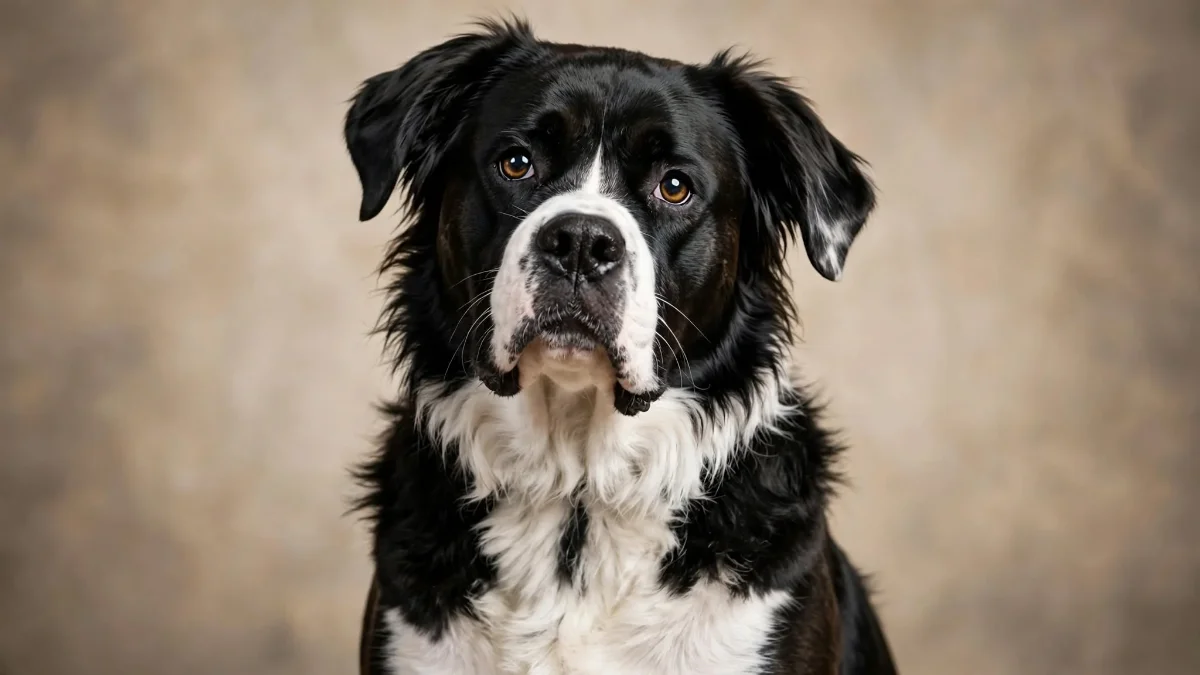
A Boxollie is a cross between a Boxer and a Border Collie. The name is a portmanteau, not a recognized breed, so there is no standard for size, coat, or personality. Many are athletic, people-focused dogs that need regular exercise, training, and mental stimulation. The Border Collie side may bring strong herding instincts, while the Boxer side makes heart-health screening particularly important.
This guide covers what the two parent breeds actually pass on, how big a Boxollie gets, what the health risks are, and how to tell whether this cross fits your home.
Note: This is a mixed breed, not a recognized breed with a written standard. Most of what follows comes from research on Boxers and Border Collies, not from studies of the cross itself. Where a claim is an estimate, the article says so.
Key Takeaways
- ✅ A Boxollie is a Boxer and Border Collie cross. Adult size and coat depend on which parent the puppy takes after.
- ✅ Expect roughly 60 to 90 minutes of activity a day, adjusted to the individual dog.
- ⚠️ The Boxer side brings real heart risk: aortic stenosis and Boxer cardiomyopathy. Ask for screening results.
- ⚠️ Herding instinct from the Border Collie side can show up as chasing children, bikes, or cars.
- ⚠️ This is not a low-shedding dog. Both parents shed, though the coat types differ.
- ⚠️ Health risk depends on the parents. Ask for hip, heart, thyroid, and eye results.
Table of Contents
Quick Facts Table
| Feature | Details |
|---|---|
| Parent breeds | Boxer × Border Collie |
| Other names | Boxollie, Border Boxer, Boxer Collie |
| Adult weight | About 40–70 lb. A rough estimate from the parent breeds, not a breed standard. |
| Adult height | About 19–25 inches at the shoulder. Also an estimate, and the range is wide. |
| Estimated lifespan | Around 10–14 years, based on the parents. No mix-specific data exists. |
| Coat | Short and smooth to medium double coat. Sheds year-round. |
| Energy level | High. Usually needs daily exercise plus mental work. |
| Best suited for | Active homes ready for training, daily exercise, and a secure fence |
What Is a Boxer Border Collie Mix?
A Boxollie has one Boxer parent and one Border Collie parent. The cross is usually a first-generation mating between two purebreds. Some breeders produce backcrosses, but there is no registry, no breed club, and no standard to measure a puppy against.
The Boxer comes from Germany, where it was developed as a hunting and guard dog. The AKC lists Boxers at 23–25 inches for males and 21.5–23.5 inches for females, with males at 65–80 pounds and females about 15 pounds lighter. Lifespan is 10–12 years. The breed is known for being playful, people-oriented, and slow to mature.
The Border Collie comes from the border country between Scotland and England, where shepherds bred dogs to move sheep on command. The AKC lists the breed at 18–22 inches and 30–55 pounds, with a lifespan of 12–15 years. That is a smaller, lighter dog than a Boxer, and a far more intense one when there is work to do.
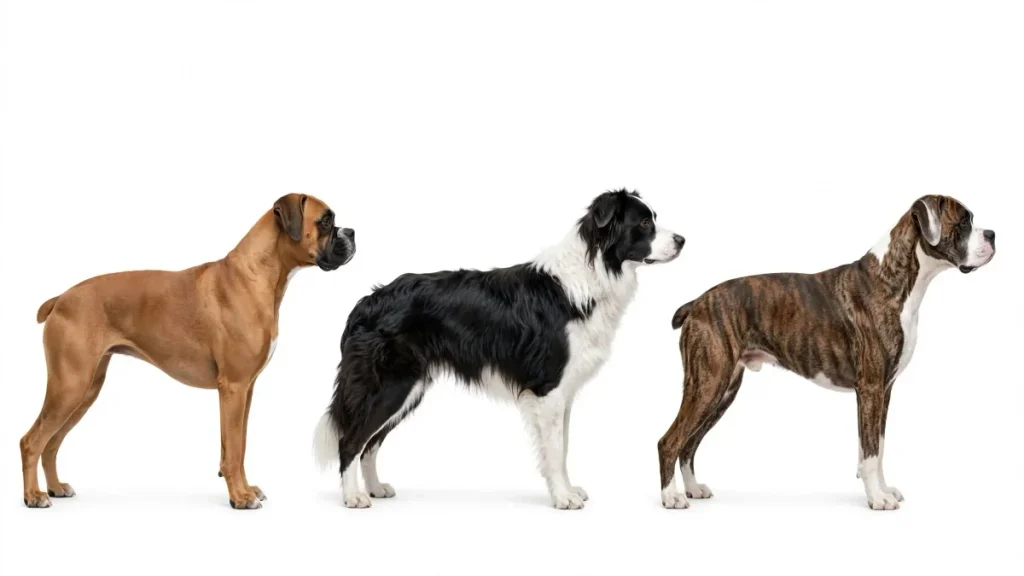
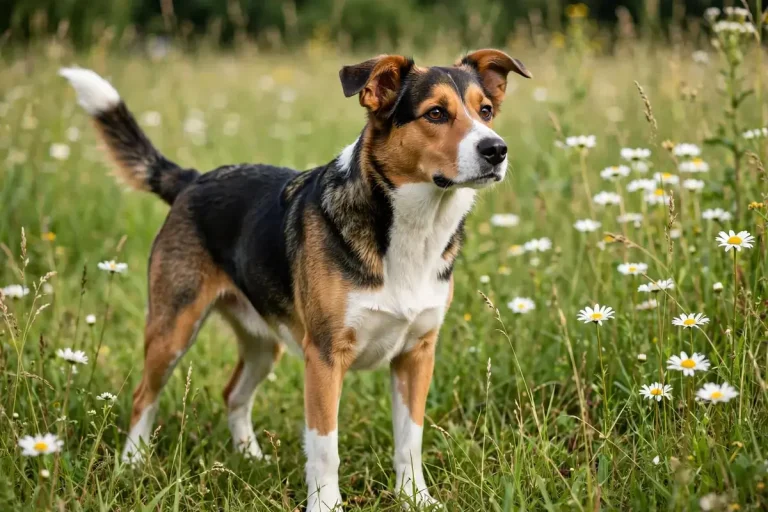
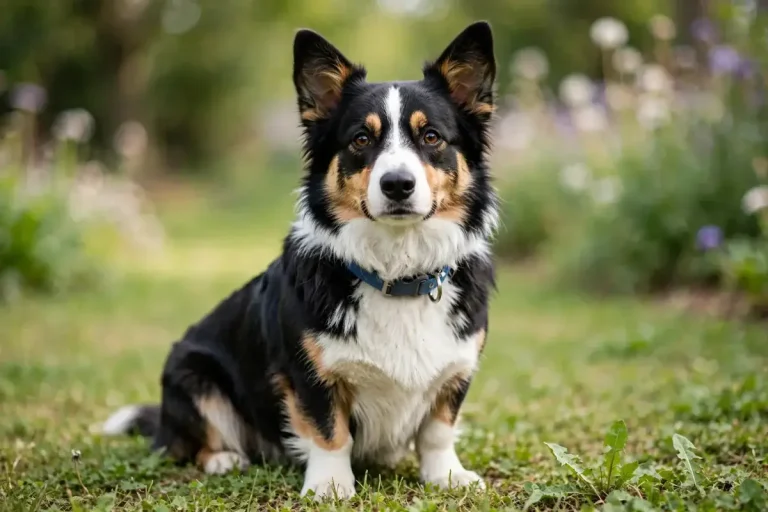
Put those two together and the result is unpredictable. A puppy can take the Boxer’s build and short coat, the Collie’s build and double coat, or a blend of both. The temperament usually follows the same rule: some Boxollies are goofy and pushy, and some are focused and quick to learn.
Boxer Border Collie Mix Size and Appearance
There is no breed standard, so size is a range rather than a target. Adult size depends on the size and genetics of both parents. Many Boxollies may fall somewhere between typical Boxer and Border Collie sizes, roughly 19–25 inches and 40–70 pounds, but individual dogs can be smaller or larger than that estimate.
A Boxollie’s growth rate depends on the size and development of both parents. Some dogs continue filling out after reaching adult height, so monitor body condition and growth with your veterinarian.
Body and Build
Most Boxollies are athletic and lean, with a deep chest and long legs. The muzzle can be pushed in slightly on the Boxer side, which affects how the dog breathes and how much it tolerates heat. Body condition varies with diet and activity, so judge the dog by shape rather than by weight on the scale.
Coat and Colors
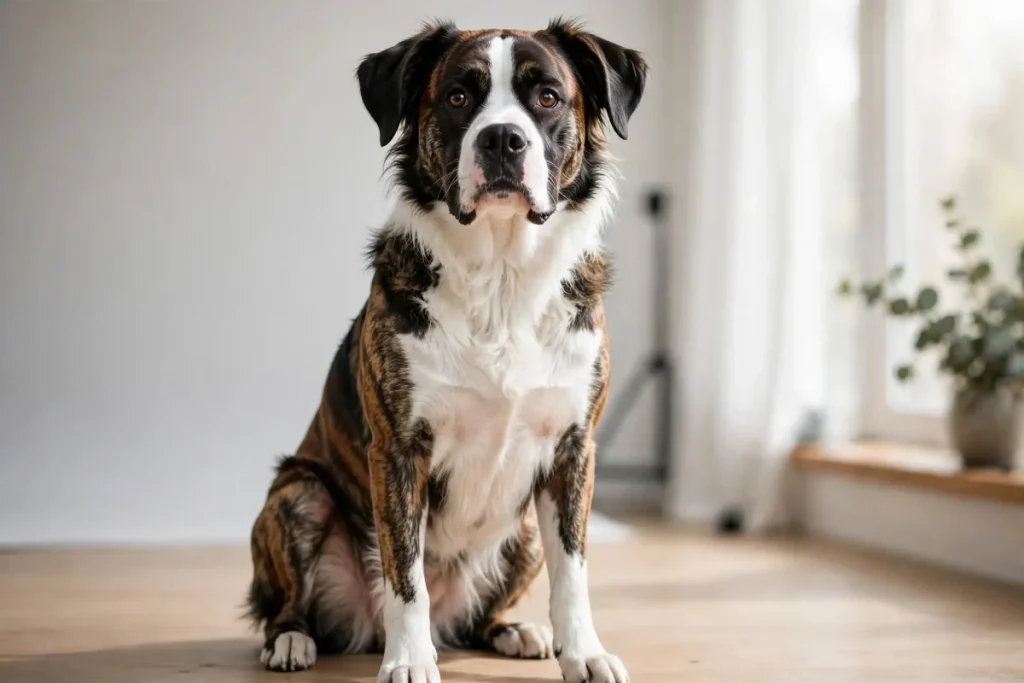
The coat depends on which parent dominates. A short, smooth Boxer-type coat needs little brushing. A medium double coat from the Collie side needs more, especially during seasonal shedding. Colors can come from either side: fawn, brindle, and white markings from the Boxer; black and white, red and white, tricolor, or sable from the Border Collie.
Face and Expression
Boxollies often have a Boxer’s square head and dark mask with a Collie’s alert expression. Ears can be floppy, semi-pricked, or tipped. Eye color is usually brown, and blue eyes are uncommon.
Boxer Border Collie Mix Temperament
Both parent breeds were built to work with people, but they work for different reasons. Boxers want to be with you and will happily bounce through a training session. Border Collies want a job and will fixate on it. A Boxollie can inherit either outlook, or a mix of both.
| Trait | Boxer side | Border Collie side | What a mix may show |
|---|---|---|---|
| Bred for | Hunting, guarding, and holding prey | Moving sheep on command | Drive plus a strong urge to work |
| Learning style | Playful, slow to mature, repeats well | Fast, focused, easily over-aroused | Quick learner that needs an off-switch |
| Bond | Family-centred, often clingy | Intensely bonded to one handler | Affectionate and prone to following you |
| Energy | Bursts of play with rest between | All-day endurance | High, with a need for mental work |
| Watchdog instinct | Alert to strangers | Alert to movement | May bark at visitors and passing dogs |
Common traits include affection, playfulness, and a strong need for company. Some Boxollies may struggle when left alone for long stretches, which is a Boxer trait rather than a Collie one. Others show the Collie’s habit of staring at moving objects, which owners find either endearing or exhausting.
Are Boxollies Good Family Dogs?
Many are, with the right family. The honest caveat is that this is a big, bouncy, high-drive dog, and both parent breeds can be too much for a quiet household.
With children: Older children usually do well. Boxers play physically and can knock a small child over without meaning to, and herding instinct can turn into nipping at heels when children run. Supervision matters with toddlers.
With other dogs: Many do fine with other dogs, especially when socialized young. Same-sex pairs can be tense, and Boxers often play rough. Introductions should be gradual.
With cats and small pets: Prey drive from both sides makes this a risk. Some Boxollies learn to live calmly with a resident cat. Many never fully drop the urge to chase. Supervise every interaction and separate them when you cannot.
How Much Exercise Does a Boxollie Need?
There is no published exercise requirement for the cross. Based on both parent breeds, most adults need roughly 60 to 90 minutes of activity a day, and some need more. That total can include walks, running, training, and mental work. Age, health, and the individual dog set the real number.
The Boxer side brings speed and play. The Border Collie side brings endurance and problem-solving. A short walk around the block covers neither.
- Physical work: brisk walks, running, hiking, fetch, swimming in safe water
- Mental work: puzzle feeders, scent games, trick training, obedience drills, nose work
- Dog sports: agility, rally, flyball, treibball, and scent work all suit this cross
When these needs go unmet, some dogs chew, dig, bark, or bolt. Those behaviours have other causes too, including pain and anxiety, so a sudden change deserves a vet visit or a call to a qualified trainer. Our guide to Border Collie exercise needs covers how to structure a routine that tires the body and the brain.
Puppies should not run long distances while their joints are still forming. Short sessions and free play are safer than forced mileage. Ask your vet when it is safe to start running with your dog.
Training a Boxollie
These dogs learn fast, and they learn best when the training is fun. A Boxer-type dog will repeat anything that gets a laugh and a treat. A Collie-type dog will repeat anything that looks like work. Both need clear rules from the start.
Start early. Socialize during puppyhood, following your vet’s advice on vaccines and disease risk. New people, surfaces, sounds, and friendly dogs all help.
Use rewards. Treats, toys, praise, and play are the tools that work. Harsh or inconsistent corrections damage trust and make a pushy dog pushier.
Teach an off-switch. Settle and place cues matter as much as sit and recall with this cross. A dog that cannot relax is a dog that gets exhausting to live with.
Keep sessions short. Ten to fifteen minutes with a clear goal beats a long drill, especially for a young dog.
Train recall early. A reliable recall is the difference between a safe dog and a dog chasing a bike into traffic.
Give the drive a job. Fetch, treibball, and impulse-control games channel the stalk-and-chase sequence. Our guide to Border Collies in dog sports covers structured options.
Herding Drive, Prey Drive, and Escape Behaviour
Both parent breeds can wander, and both react to movement. Boxers were bred to chase and hold; Border Collies were bred to stalk and control. A Boxollie may inherit either reaction, or both.
Common behaviours include staring at moving objects, chasing bikes and joggers, stalking other animals, and testing fence lines. Some dogs dig under fences. Some learn to open gates.
Practical management means a tall, secure fence with a dig guard, locked gates, no off-leash time in open areas, and a recall practised around distractions. Invisible fences are a poor fit for a dog with this much drive.
Our guide to Border Collie temperament explains where the stalking and chasing come from, and how to work with them instead of against them.
Boxollie Grooming and Shedding
Grooming depends on the coat the dog inherits. A short Boxer-type coat is close to wash-and-wear. A medium double coat from the Collie side needs regular brushing.
Short coats: brush once or twice a week and bathe when dirty.
Double coats: brush two or three times a week with an undercoat rake and a slicker brush, and daily during the spring and fall coat blow.
Avoid shaving a double coat simply to keep your dog cool. Shaving can interfere with coat regrowth and skin protection. Regular brushing, shade, fresh water, and avoiding exercise in hot weather are safer ways to keep your dog comfortable. Ask your vet about clipping for medical reasons.
Other care: check ears weekly, especially on drop-eared dogs. Brush teeth regularly and trim nails about monthly. Boxer-type muzzles and faces wrinkle, so clean and dry skin folds to prevent irritation.
Boxer Border Collie Mix Health Problems
Both parent breeds carry health risks, and a mix can inherit from either side. The table below covers selected concerns that appear in Boxers, Border Collies, or both. It is not every inherited condition either breed can carry, and it is not a list of what your dog will develop. The Border Collie Society of America lists several more genetic conditions than the two on this table.
| Condition | Associated parent breed | What to know |
|---|---|---|
| Hip dysplasia | Both breeds | A joint problem where the hip socket fits poorly. Ask for hip scores on both parents (OFA hip dysplasia). |
| Elbow dysplasia | Both breeds | A developmental joint problem that can cause pain and arthritis. The Boxer club lists elbow radiographs as recommended screening. The Border Collie society lists elbow dysplasia among conditions that can occur, though it is not routinely screened in the breed. Ask about documented results for both parents (OFA elbow dysplasia). |
| Aortic stenosis (AS/SAS) | Boxer | A narrowing below the aortic valve that makes the heart work harder. Boxers are screened by auscultation and Doppler echocardiogram (VCA on aortic stenosis). |
| Boxer cardiomyopathy (ARVC) | Boxer | An inherited heart rhythm disorder and a leading cause of sudden death in the breed. A 24-hour Holter monitor records the rhythm, and a DNA test reports the dog’s genotype. They measure different things, so one does not replace the other (NC State on Boxer ARVC). |
| Hypothyroidism | Boxer | An underactive thyroid that can cause weight gain, low energy, and skin problems. It is managed with medication after blood testing (VCA on hypothyroidism). |
| Bloat (GDV) | Deep-chested dogs | A life-threatening emergency where the stomach twists. Signs include unproductive retching and a swollen belly. Suspected bloat needs immediate veterinary care (VCA on GDV). |
| Collie eye anomaly (CEA) | Border Collie | An inherited eye disorder present at birth, ranging from no visible problem to blindness. A veterinary ophthalmologist can diagnose it in puppies from 6 to 8 weeks, and there is no treatment (OFA CEA page). |
| MDR1 drug sensitivity | Border Collie lines | A gene variant that changes how some dogs handle certain drugs. It is not universal in Border Collies, so relevance depends on the line (Cornell on MDR1). |
Epilepsy appears in both parent breeds and is usually managed with medication. Cancers are also more common in Boxers than in many breeds. None of this means a Boxollie will be sick. It means the parent records matter more than the puppy’s looks.
Health Testing: What to Ask a Breeder
There is no breed-wide testing standard for a cross. What matters is that the breeder tested both parents for the problems found in their own breeds and lines.
For the Boxer parent, ask for documented heart screening. The American Boxer Club lists auscultation for aortic valve disease, a Doppler echocardiogram for AS/SAS at 24 months, a Holter monitor at 12 months and annually for breeding dogs, and an ARVC DNA test. A DNA result and a Holter report assess different aspects of risk, so neither substitutes for the other. The club also recommends hip and elbow radiographs and a thyroid panel (American Boxer Club screening guidelines).
For the Border Collie parent, the AKC lists hip evaluation and an ophthalmologist exam as the recommended screening. The breed’s health foundation adds CEA DNA testing, which matters because CEA is recessive: two clear parents cannot produce an affected puppy, but two carriers can. That club list also includes conditions this article does not cover in detail, such as trapped neutrophil syndrome, glaucoma and goniodysgenesis, and early-onset adult deafness, so ask which extra tests fit the parents’ lines (Border Collie Society of America health overview).
The recommended tests differ between the parent breeds. Hip screening is relevant to both. The Boxer parent needs particular attention to heart and thyroid screening, while the Border Collie parent needs appropriate eye screening and consideration of relevant inherited conditions. Ask for documented results from both parents, and discuss additional tests with a veterinarian who understands the family lines. The OFA CHIC program lists what each breed club recommends and publishes the results. A CHIC number means the required tests were completed. It does not mean every result was normal, so read the actual numbers.
One limit is worth stating plainly. A clear parent is not a guarantee for the puppy, and a DNA test only covers the conditions it is designed to detect. Ask for the full records and read them.
How Long Does a Boxer Border Collie Mix Live?
Around 10 to 14 years is the usual estimate for this cross. The range sits between the two breed figures, since the AKC lists the Boxer at 10–12 years and the Border Collie at 12–15 years. Those are breed-level estimates, not measurements of the cross, and no published study tracks Boxollie longevity. Treat the figure as a rough guide rather than an average that predicts any individual dog.
Body condition, dental care, preventive vet visits, and luck all play a part. For more on how vets think about longevity, see our guide to how long dogs live.
Boxollie Puppies
The health testing section above covers what to ask about the parents. This section covers the puppy itself.
Ask how the puppies were socialized. Good early experiences include gentle handling and positive, age-appropriate exposure to household sounds, different surfaces, people, and safe environments. Puppies should approach new things at their own pace rather than being pushed into frightening situations.
Ask to meet the mother, and ask how the puppies were raised indoors. If a breeder will not let you visit, that is a red flag.
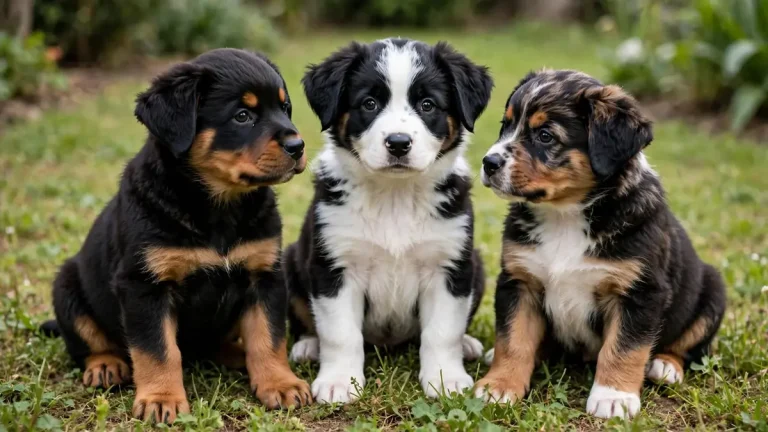
Growth varies with the parent sizes. Feed a complete and balanced diet for a growing, active dog, and let the puppy grow steadily. Long forced runs before the growth plates close are a bad idea. Your vet can check body condition at each visit.
How Much Does a Boxer Border Collie Mix Cost? (U.S. Estimates)
These figures are illustrative U.S. dollar estimates, not quotes. Prices vary by region, breeder, and bloodline, and rescue costs far less. Readers in Ireland and the UK should treat the amounts as a shape rather than a price: adoption fees, food, veterinary care, and insurance differ enough that a currency conversion would mislead.
| Expense | Typical U.S. estimate |
|---|---|
| Planned breeder litter | $800–$2,500+ |
| Adoption or rescue | $150–$600 |
| Food | $500–$900 per year |
| Veterinary care | $600–$1,200 per year, more if heart screening is needed |
| Grooming tools | $60–$200 per year, depending on coat type |
| Training classes | $100–$300 per course |
| Fence or containment | Varies widely, and this cross needs a real one |
| Pet insurance (optional) | Varies by age, location, and coverage |
The first year costs the most, and the table does not capture everything. Add vaccines, spay or neuter, a crate, bedding, a leash and harness, and starter training. After that, food and vet care dominate. Our cost calculator can help you estimate your dog’s yearly costs for your situation.
Boxollie vs Boxer vs Border Collie
The two tables below compare the cross with each parent. Treat every number as a range, not a promise.
Boxollie vs Boxer
| Trait | Boxollie | Boxer |
|---|---|---|
| Size | About 40–70 lb | 65–80 lb male, about 15 lb less for females |
| Coat | Short to medium double coat | Short, smooth, single coat |
| Exercise | High, with more mental work than a Boxer needs | High, mostly play and running |
| Biddability | Variable, often sharper than a Boxer | Playful, slow to mature, food-motivated |
| Temperature tolerance | Depends on coat, build, and individual dog | Has limited tolerance for extreme heat and cold |
Boxollie vs Border Collie
| Trait | Boxollie | Border Collie |
|---|---|---|
| Size | About 40–70 lb | 30–55 lb |
| Biddability | Mixed; the Boxer’s independence shows up often | Very high, bred to work on cue |
| Herding drive | Can be strong, sometimes aimed at cars and bikes | Very strong, the defining trait |
| Grooming | Depends on coat type | Double coat, moderate to heavy shed |
| Health focus | Heart screening from the Boxer side | Eye and hip screening |
Boxollie vs Other Border Collie Mixes
Every cross here is variable. The weights below are rough ranges that depend on the actual parents, not fixed breed values.
| Trait | Boxollie | Border Aussie | Shollie |
|---|---|---|---|
| Parents | Boxer × Border Collie | Border Collie × Australian Shepherd | Border Collie × German Shepherd |
| Rough adult weight | 40–70 lb | 30–55 lb | 40–80 lb |
| Coat | Short to medium double | Medium double coat | Medium to long double coat |
| Shedding | Moderate to heavy | Moderate to heavy | Moderate to heavy |
| Health focus | Boxer heart screening | MDR1 and eye screening | Hip and elbow screening |
If you want a herding mix with a lighter build and a more predictable coat, look at our Border Aussie mix guide or the German Shepherd and Border Collie mix guide. Neither is low-shedding, and both need the same daily work.
Is a Boxollie Right for You?
Good fit if you:
- Can give roughly 60 to 90 minutes of activity and training most days
- Enjoy training and want a dog that can learn real skills
- Have experience with high-drive dogs, or are ready to take classes
- Can provide a secure fence and keep the dog leashed elsewhere
- Are home most of the day, or can arrange company and enrichment
- Are prepared to fund heart screening and read the results
Poor fit if you:
- Are away from home most of the day, every day
- Want a calm lap dog with low exercise needs
- Live somewhere an occasional escape would be dangerous
- Cannot commit to daily activity in bad weather
- Need a dog that is reliably off-leash without training
- Expect a low-shedding or hypoallergenic dog
Apartment living is possible but harder. These dogs are loud enough to create neighbour problems and active enough to need real daily work. Our guide to Border Collies in apartments covers routines that work in small spaces, and our breed quiz is a quick check on whether a high-drive herding dog suits your week.
Finding a Boxollie
Reputable Breeders
Ask to see the actual paperwork behind the tests listed above, not just the claim that testing was done. A breeder should welcome questions and a visit.
Walk away from breeders who cannot name the tests they ran, refuse a visit, always have puppies available, or release puppies earlier than your local law and responsible-breeding guidance allow.
Adoption and Rescue
Boxollies may be available through general shelters, Boxer rescues, Border Collie rescues, and mixed-breed rescues. Availability varies by location, so check listings regularly. An adult dog makes it easier to assess size, coat, and energy level before you commit.
Boxollies may be available through general shelters, mixed-breed rescues, or breed-specific rescue organisations. Availability varies, so check listings regularly.
In the United States, search Petfinder for adoptable dogs and use the AKC Rescue Network to find Boxer and Border Collie rescue organisations in your area. You can also contact local shelters about Boxer mixes and other dogs with similar traits.
Frequently Asked Questions
What is a Boxollie?
A cross between a Boxer and a Border Collie. It is a mixed breed with no standard, so size, coat, and temperament vary from dog to dog.
How big do Boxollies get?
Most land around 19–25 inches tall and 40–70 pounds. That is an estimate based on the parent breeds, not a breed standard.
How much exercise does a Boxollie need?
There is no published requirement for the cross. Most adults need roughly 60 to 90 minutes of activity a day, including training and mental work, adjusted to the individual dog.
How long do Boxollies live?
Around 10 to 14 years is the usual estimate, based on the parents. Boxers run 10–12 years and Border Collies 12–15, and there is no study specific to the cross.
Do Boxollies shed a lot?
It depends on the coat. Short Boxer-type coats shed moderately year-round. A double coat from the Collie side sheds heavily in spring and fall.
Are Boxollies hypoallergenic?
No. Both parent breeds shed and produce dander. Anyone with a dog allergy should spend time with the individual dog before committing.
Are Boxollies good with kids?
Many are good with older children who can handle a bouncy dog. Herding behaviour can include nipping at heels when kids run, and Boxer play is physical. Supervise young children.
Are Boxollies good with cats?
It depends on the dog. Prey drive is real on both sides of the cross. Some learn to live calmly with a resident cat, and some never stop chasing.
Are Boxollies easy to train?
They learn quickly, which is not the same thing. The Boxer side can be playful and pushy, and the Collie side can get over-aroused. Short reward-based sessions and a settle cue work best.
Are Boxollies good for first-time owners?
Usually not the easiest choice. The cross combines size, speed, and a strong need for company. A first-timer who takes classes and commits to daily work can still succeed.
What health problems should I worry about?
Heart disease from the Boxer side matters most: aortic stenosis and Boxer cardiomyopathy. Hip and elbow dysplasia, hypothyroidism, bloat, and eye conditions from the Collie side are also worth screening for.
How much does a Boxollie cost?
A planned litter typically runs $800–$2,500 or more in the U.S., and adoption runs $150–$600. Plan on food, vet care, and gear every year after that.
Can a Boxollie live in an apartment?
It is possible but difficult. The main obstacles are noise, daily exercise needs, and shedding. Apartment life works better when the dog gets real exercise outside the building every day.
Where can I adopt a Boxollie?
Start with the Boxer Rescue Foundation, National Border Collie Rescue, and local shelters. Petfinder is worth checking weekly.
Related Mixed Breeds Guides
Glossary
ARVC (Boxer cardiomyopathy): An inherited heart rhythm disorder in Boxers that can cause sudden death. Screening uses a 24-hour Holter monitor.
Aortic stenosis (AS/SAS): A narrowing below the aortic valve that forces the heart to work harder. Screened by auscultation and Doppler echocardiogram.
Holter monitor: A portable ECG worn for 24 hours to record heart rhythm. It catches arrhythmias that a brief exam misses.
CEA (collie eye anomaly): An inherited eye disorder present at birth in Border Collies and related breeds. Severity ranges from mild to blindness.
MDR1: A gene variant that changes how some dogs process certain medications. Testing is done by DNA swab.
GDV (bloat): Gastric dilatation and volvulus, where the stomach fills with gas and twists. A surgical emergency.
CHIC: The OFA’s Canine Health Information Center program, which lists the tests each breed club recommends.
Sources
- AKC — Boxer breed page: akc.org/dog-breeds/boxer — Size, lifespan, history, and the national breed club’s recommended tests.
- AKC — Border Collie breed page: akc.org/dog-breeds/border-collie — Size, lifespan, and recommended screening.
- American Boxer Club — health screening recommendations: americanboxerclub.org/health-screening — Hips, elbows, thyroid, aortic valve, AS/SAS echo, and Holter protocol.
- Border Collie Society of America — health overview: bordercolliesocietyofamerica.com — Inherited conditions and CEA testing.
- OFA — Hip dysplasia: ofa.org/diseases/hip-dysplasia — Screening and grading.
- OFA — Elbow dysplasia: ofa.org/diseases/elbow-dysplasia — Grading and screening.
- OFA — Collie eye anomaly: ofa.org/collie-eye-anomaly — Genetics, diagnosis, and DNA results.
- OFA — CHIC program: ofa.org/programs/chic-program — Breed-specific recommended testing.
- NC State College of Veterinary Medicine — Boxer ARVC: hospital.cvm.ncsu.edu — The condition and why Holter screening matters.
- Merck Veterinary Manual — ARVC in dogs: merckvetmanual.com — Clinical description of the arrhythmia.
- VCA Hospitals — Aortic stenosis in dogs: vcahospitals.com — Diagnosis and management.
- VCA Hospitals — Hypothyroidism in dogs: vcahospitals.com — Signs, testing, and treatment.
- VCA Hospitals — Gastric dilatation and volvulus: vcahospitals.com — Bloat signs and emergency care.
- Cornell University Riney Canine Health Center — MDR1: vet.cornell.edu — How the variant affects drug response.
How this guide was researched: Parent breed facts come from the AKC breed pages, and health-testing guidance comes from the two national breed clubs, OFA, and veterinary teaching and referral sources. There is no published research on this cross itself, so size, lifespan, and exercise figures are labelled as estimates. This article does not claim first-hand ownership of a Boxollie.
Medical Disclaimer: This article is for informational purposes only and is not a substitute for professional veterinary advice. Always consult a qualified veterinarian about your dog’s health, nutrition, and care.

Leave a Reply
You must be logged in to post a comment.